




Vintage Walnut Foyer Table
These vintage walnut foyer tables combine rich grain and practical proportions to anchor an entrance hall.
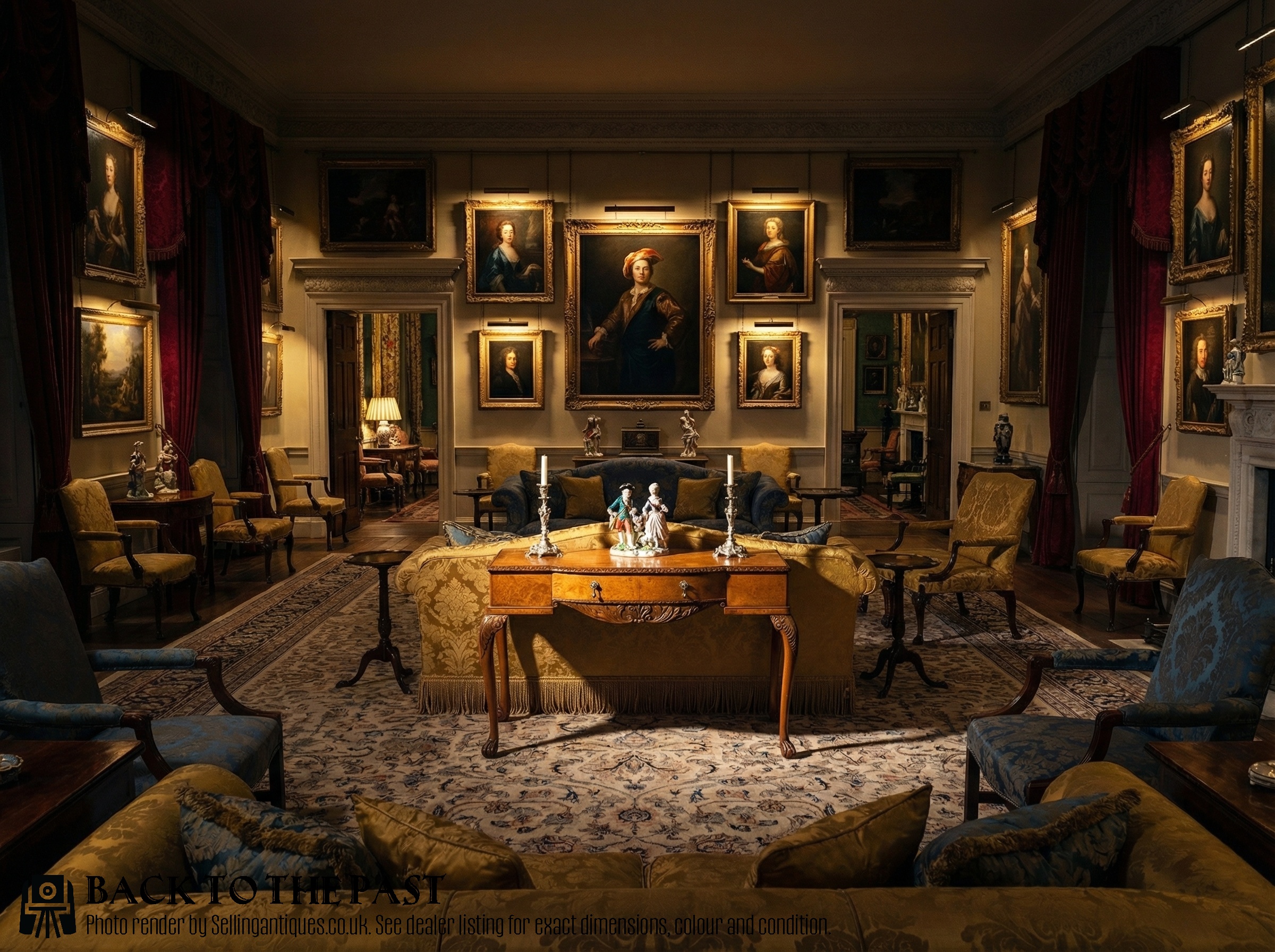
Vintage Walnut Foyer Table
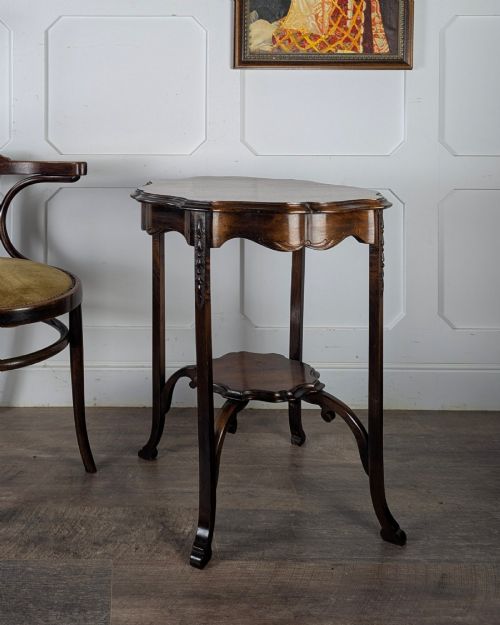
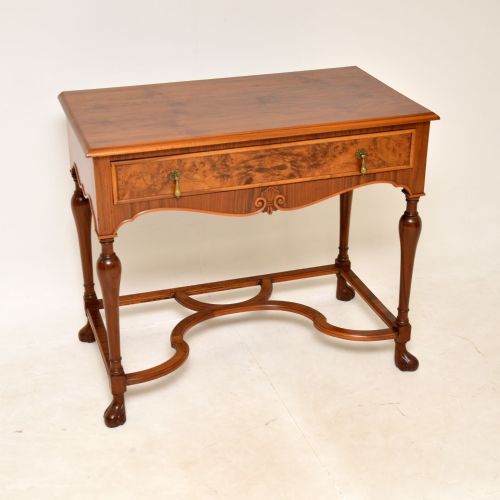
A vintage walnut foyer table serves as a functional and decorative surface in an entrance hall, often taking the form of a console or side table. These pieces range from early twentieth-century examples to older periods, including Edwardian and Victorian eras. The selection frequently includes console tables and centre tables designed to sit against a wall or occupy the middle of a room.
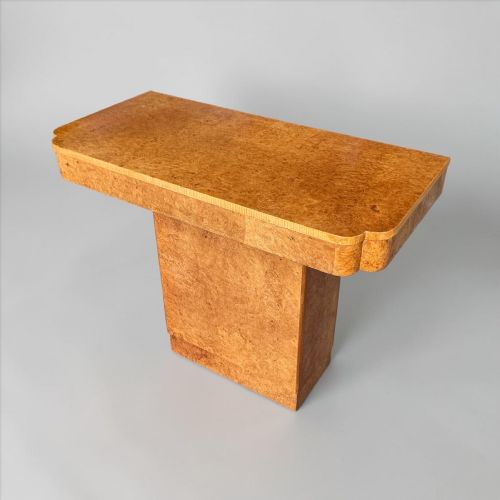
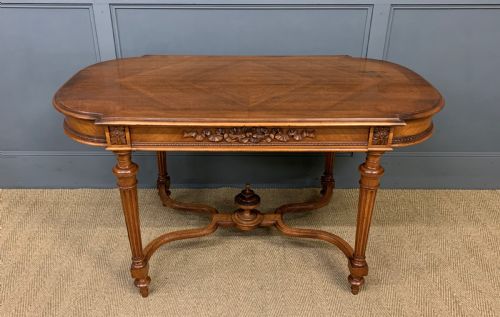
Makers and designers from various decades shaped these pieces into distinct regional styles, such as French, Italian, and British revivals. Buyers encounter Queen Anne style curves, Art Deco geometric lines, and Rococo or Louis XVI revival details. The primary form is built to display decorative objects or provide a drop zone for daily essentials upon entry.
The materials span plain timber and richly figured veneers, frequently paired with contrasting elements like marble tops or brass fittings. Pieces from the nineteen-thirties lean towards streamlined Art Deco silhouettes, while nineteenth-century items draw on earlier decorative traditions. Each example reflects the prevailing taste of its decade of origin while maintaining the sturdy utility expected of hallway furniture.
What varies in quality
The choice of timber veneer dictates much of the visual impact, with highly figured burr walnut commanding attention through its dense pattern. The selection of supplementary materials, such as genuine marble tops versus simpler wooden surfaces, shifts the character and substance of the piece. Craftsmanship shows in the precision of the marquetry inlay and the fluid shaping of serpentine and cabriole forms.
Provenance influences standing, as documented pieces from known makers carry distinct markers of workshop origin. The integrity of the structure and the preservation of the original polish affect how the timber ages and reflects light in a hallway setting. Balance in proportion between the top surface and the supporting legs determines the overall elegance of the table.
Vintage Walnut Foyer Table Retail Price Guide 2026
Typical asking prices for vintage walnut foyer table among the pieces listed under this phrase on Sellingantiques today, from the lower quarter to the upper quarter. They describe what is for sale here now, not the wider market.
Listings feature walnut foyer tables spanning the eighteenth century through the nineteen-thirties, incorporating materials like marble, brass, and burr walnut veneer.
Hille·Maple and Co
The Vintage Walnut Foyer Table Glossary
- Burr walnut
- A prized timber harvested from the knot growths of the walnut tree, showing swirling, organic grain patterns. It was frequently sliced into thin veneers for tabletops.
- Console table
- A table designed to stand against a wall, historically supported by wall brackets or decorative legs. In a foyer, it provides a surface for display without blocking the walkway.
- Marquetry
- The art of applying pieces of veneer to a structural structure to form decorative patterns or pictures. Craftsmen used various woods to create contrasting pictorial designs on table surfaces.
- Serpentine
- A curved furniture front that undulates outward at the centre and inward at the sides, or vice versa. This shaping requires expert woodworking skill to execute smoothly.
- Centre table
- A freestanding piece designed to be viewed from all sides, often placed in the middle of a room or a large entrance hall. These tables lack a flat back designed for a wall.
Vintage Walnut Foyer Table: Frequently Asked Questions
How do I style a walnut table?
Pair your table with a decorative mirror or artwork hung directly above the surface to anchor the entrance space. Keep the top uncluttered by using a single tray or a small lamp to highlight the wood grain.
Allow the natural finish of the walnut or the contrast of a marble top to remain visible rather than covering the surface completely.
How do I identify Art Deco tables?
Art Deco tables from the nineteen-thirties feature clean geometric lines, streamlined silhouettes, and symmetrical designs. They often showcase figured walnut veneers without excessive ornamentation.
Makers of this era focused on the natural beauty of the wood grain and structural simplicity rather than historical revival motifs.
Are marble top tables heavy?
Marble top tables are considerably heavier than all-wood versions due to the weight of the stone slab. This added mass provides excellent stability when the table stands freestanding or against a wall.
Care should be taken when moving these pieces to avoid straining the wooden frame beneath the heavy stone.
Where were these tables made?
These tables originate from various European workshops, with British, French, and Italian examples appearing frequently. Each region brought distinct design sensibilities, from Edwardian revival styles to Italian serpentine forms.
Local timber traditions and regional cabinetmaking techniques heavily influenced the final appearance of each piece.