




Vintage Walnut Fireside Chair
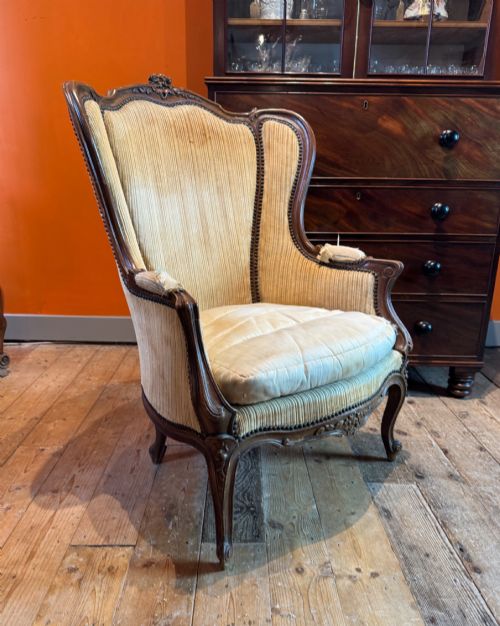
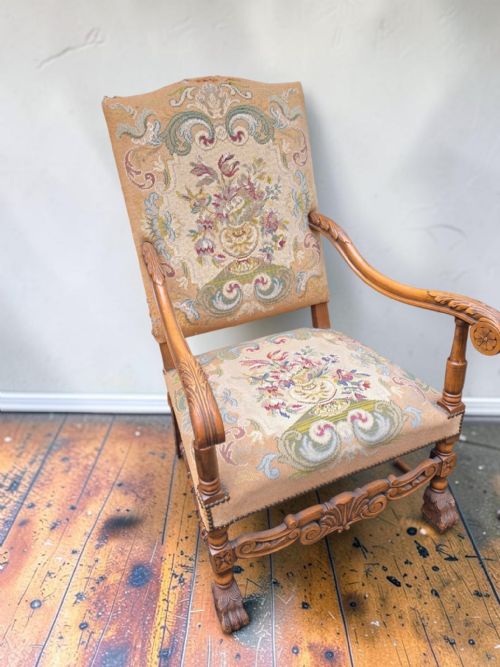
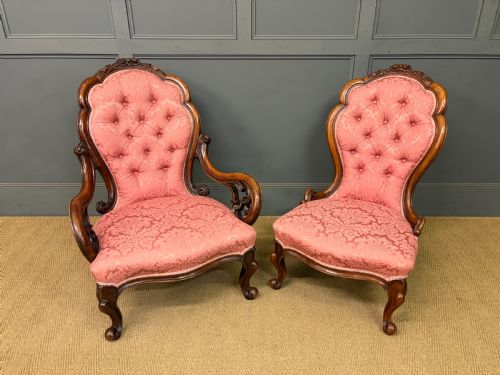
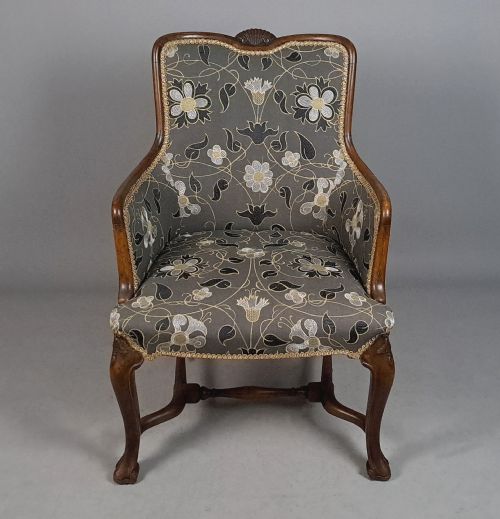
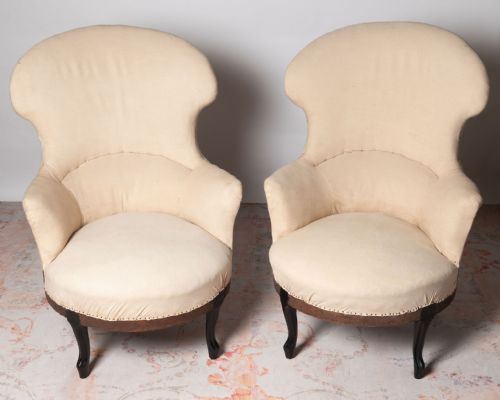
These vintage walnut fireside chairs combine dark timber frames with deep upholstery, offering low seating designed for warmth.
Vintage Walnut Fireside Chair
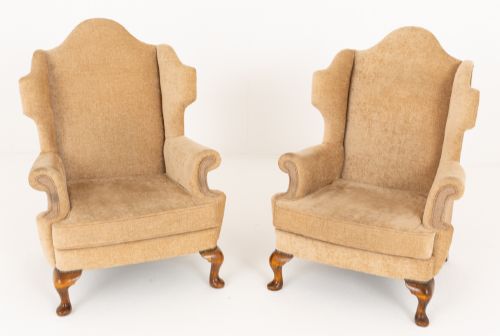
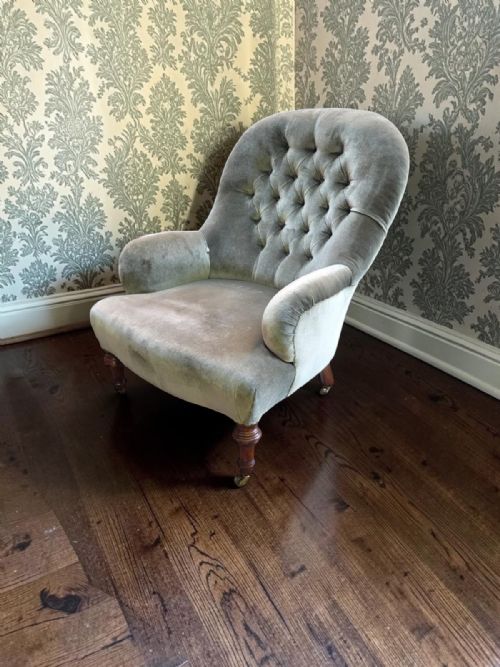
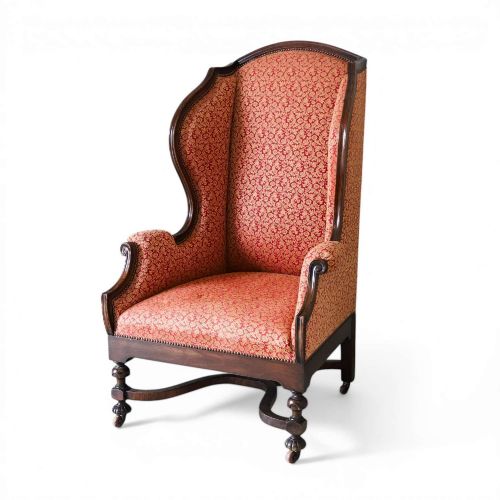
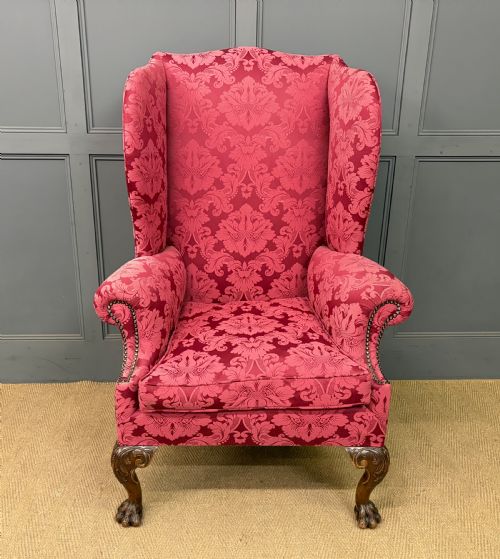
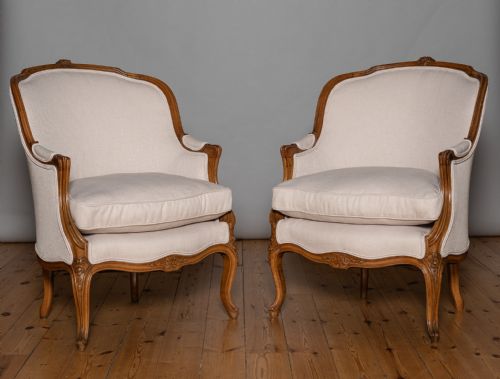
A vintage walnut fireside chair provides low-slung, comfortable seating originally positioned close to a hearth for warmth. The selection on this page ranges from compact nursing seats and elbow chairs to large wingback armchairs.
The periods represented span from the nineteenth century through the Edwardian era and into the 1920s and 1930s. These pieces often draw on earlier aesthetics, with revival designs in the Queen Anne, Georgian, and Carolean styles appearing frequently alongside French interpretations.
How they were made
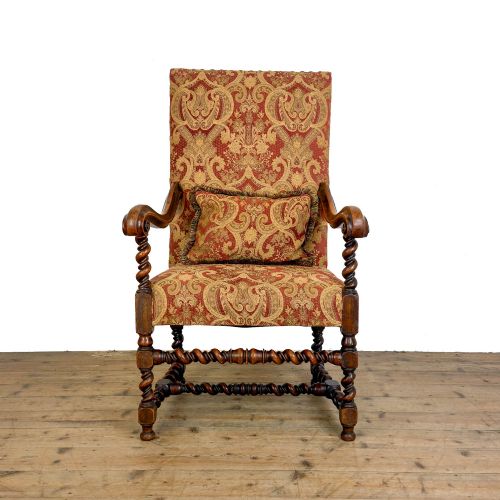
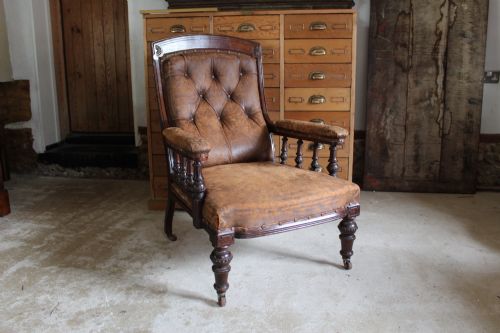
Makers utilised hardwood frames, predominantly walnut, which allowed for durable construction and deep carving on arms and legs. Timber components were frequently shaped with turned details such as barley twists or supported by brass elements.
Upholstery techniques involved layering textiles such as velvet, linen, tapestry, and leather over sprung or padded interiors. Many examples feature button-backed detailing or exposed timber framing around the seat back and arms.
One winged armchair carries the name of a nineteenth-century Newcastle manufacturer, proving that heavy reading furniture travelled far from London.
What varies in quality
The distinction between ordinary and exceptional examples rests in the crispness of the timber carving and the integrity of the walnut grain. Finer frames display deliberate proportion and careful joinery that supports the upholstered body without heaviness.
Quality also shows in the choice of covering material and the precision of the upholstery work. Retaining original textile choices or period-appropriate fabric adds substantial character to the piece.
Howard And Sons·Thomas Sopwith·William Morris
The Vintage Walnut Fireside Chair Glossary
- Walnut
- A dense hardwood valued for its rich dark tone and fine grain, used extensively for chair frames. It accepts carved detail cleanly.
- Wingback
- An armchair featuring protective side panels designed to shield the occupant from drafts near a fireplace. This form appears frequently in Georgian and Queen Anne revival styles.
- Nursing chair
- A low-seated upholstered chair designed originally for nurseries or for holding infants comfortably. They often feature an open frame and a high back.
- Carolean style
- A revival of late seventeenth-century design characterised by ornate carved woodwork and scroll legs. Pieces in this manner reflect restoration-era aesthetics.
- Barley twist
- A turned wooden furniture leg resembling a twisted rope. This technique was popular on Victorian and Edwardian frames.
Vintage Walnut Fireside Chair: Frequently Asked Questions
How do I date a walnut armchair?
Dating relies on observing the combination of frame style, turning techniques, and upholstery methods. Reviewing the specific revival period referenced in the design helps place the construction era.
Comparing leg shapes, such as cabriole legs versus barley twists, alongside the timber grain provides further clarity on the decade of manufacture.
Were these chairs meant for firesides?
Many low-seated armchairs and wingbacks were positioned near hearths to keep occupants warm from drafts. The winged sides specifically served to trap heat around the head and shoulders.
Over time, these versatile forms moved from hearths into parlours, bedrooms, and drawing rooms as general seating.
What fabrics were used originally?
Traditional upholstery materials included heavy velvet, woven tapestry, linen, and leather. These textiles provided durability and warmth suited to domestic interiors.
Many surviving pieces have undergone reupholstery in period-appropriate fabrics to maintain their utility.
How do I maintain walnut frames?
Walnut woodwork benefits from occasional gentle cleaning with a soft cloth to remove dust. Avoiding direct sunlight and extreme moisture preserves the natural timber finish.
Applying a traditional wax polish occasionally helps nourish the hardwood and maintains a subtle lustre on carved surfaces.