


Vintage Walnut Desk Chair
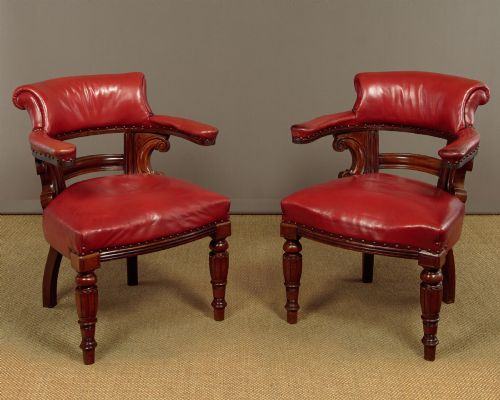
A vintage walnut desk chair brings warmth and grain to a working space, offering sturdy support through long hours at the ledger.
How they were made
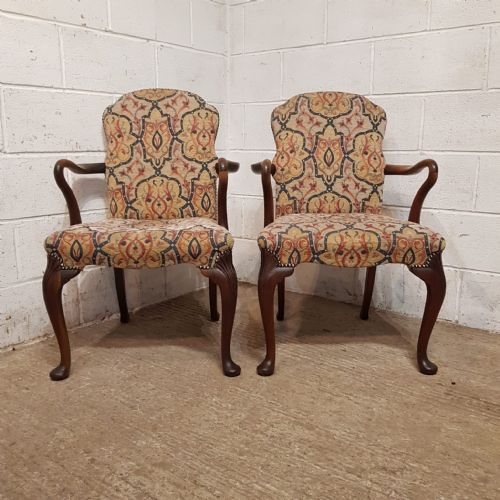
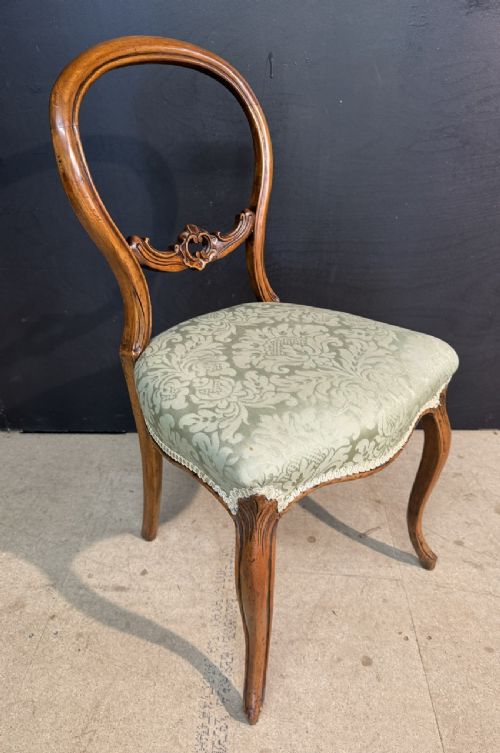
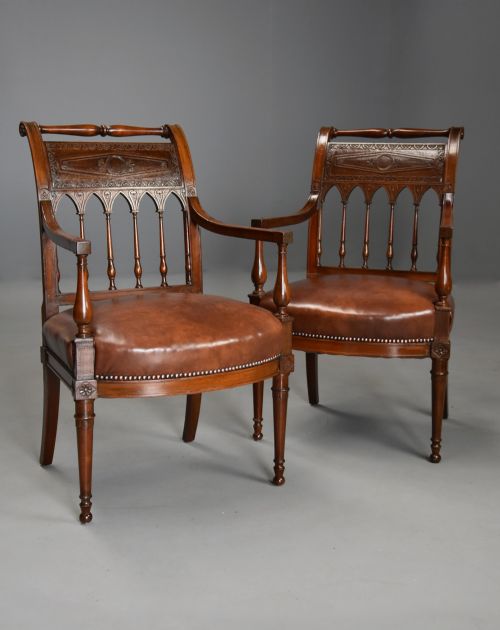
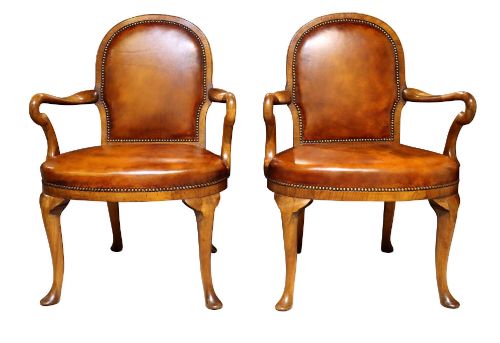
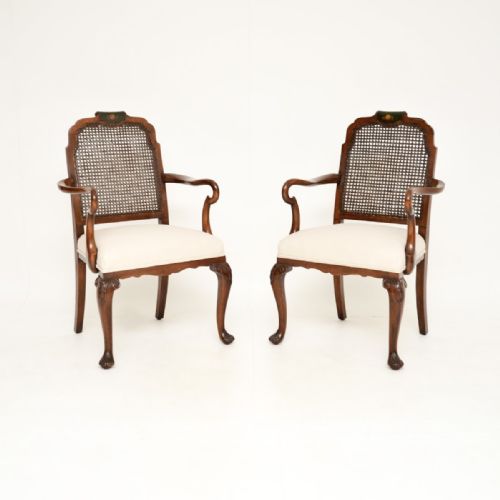
Construction relies heavily upon solid and lacquered walnut timber, chosen for its rich colour and reliable strength in supporting carved cabriole legs, bow backs and arm supports. Joinery is traditionally robust, accommodating the daily stresses placed on office and library seating.
Upholstery materials include supple leather, woven fabric, tapestry, needlepoint and cane panels. Brass details occasionally appear on castors and swivel mechanisms, while secondary woods provide internal structural support.
What varies in quality
The calibre of a piece rests largely upon the crispness of its walnut carving and the integrity of its timber frame. Examples with retained original surface patination and substantial structural timber sit at the upper end of the scale.
Upholstery choices and the preservation of secondary materials, such as period leather or hand-woven cane, influence the character of the seating. Pieces retaining their original swivel mechanisms or distinctive stylistic flourishes demonstrate superior craftsmanship.
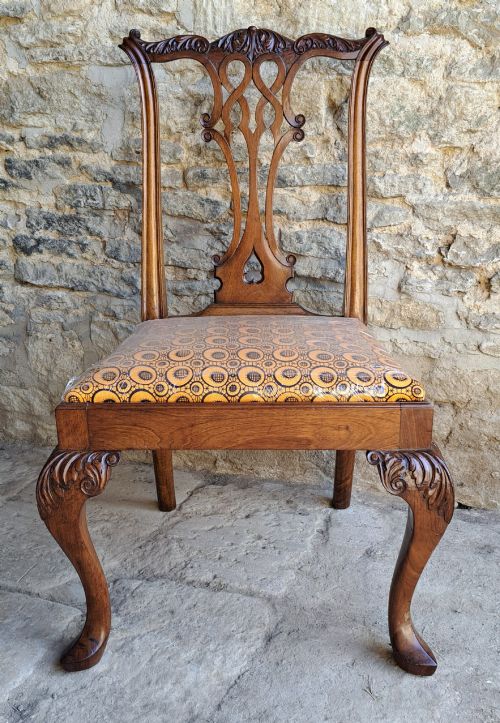
Children get their own dedicated workspace here too, represented by a single antique walnut childrens chair.
Harry and Lou Epstein·Whytock and Reid of Edinburgh·Hille·Shoolbred
The Vintage Walnut Desk Chair Glossary
- Cabriole leg
- A furniture leg that curves out and then in, mimicking animal limbs. It is frequently seen on walnut pieces from various revival periods.
- Fauteuil
- An open-armed upholstered armchair with exposed wood framing. This French term typically indicates a lighter, decorative seating form.
- Needlepoint
- A type of canvas work embroidery used for seat covers and upholstery. It provides a textured, decorative surface on antique chairs.
- Swivel mechanism
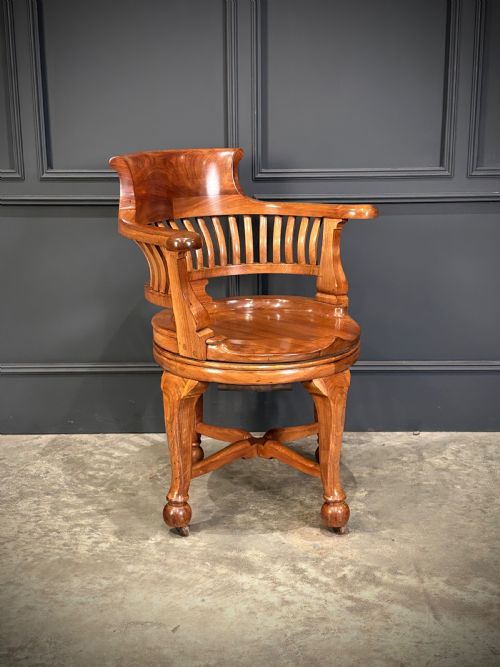
- The mechanical pivot assembly beneath an office seat allowing rotation. It is common on late nineteenth and early twentieth century captains chairs.
- Queen Anne style
- A design movement characterised by pad feet, vase-shaped splats and curved walnut lines. It experienced several revivals during the Edwardian era.
Vintage Walnut Desk Chair: Frequently Asked Questions
Are these chairs comfortable for daily work?
Many library and desk chairs were built with generous proportions and supportive armrests to accommodate long hours of reading and writing. Upholstered versions in leather or fabric provide additional cushioning for modern study use.
Selecting a swivel model or a wider armchair ensures functional movement and comfort at a contemporary desk.
How do I identify a Georgian style piece?
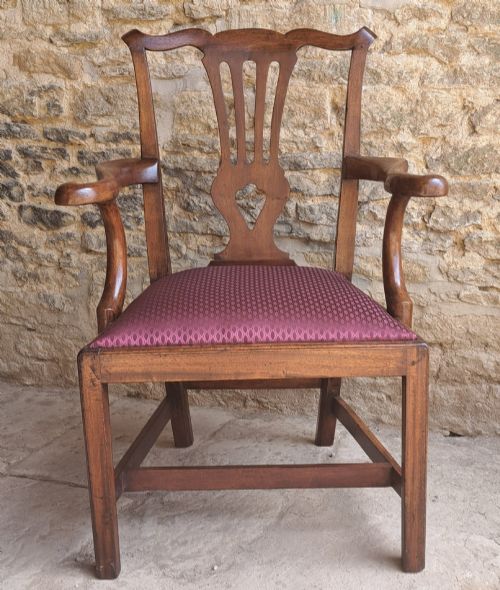
Georgian style walnut chairs often feature disciplined proportions, carved splat backs and cabriole or straight legs. They reflect the restrained elegance popular during the eighteenth century.
Revival pieces produced in the Victorian and Edwardian periods frequently emulate these exact classical silhouettes.
What is the difference between a side chair and an armchair?
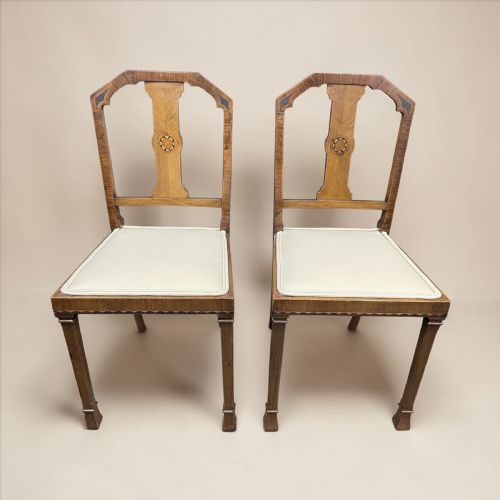
Side chairs are built without armrests, making them compact enough to tuck neatly beneath tables or pull up beside a desk when space is limited. Armchairs feature supportive elbow rests that offer a more enclosed and commanding seating position.
Both forms appear frequently within nineteenth and twentieth century office settings.
How do I care for walnut and leather?
Walnut benefits from occasional polishing with suitable wax to preserve the natural grain and prevent the timber from drying out. Leather upholstery requires gentle cleaning and conditioning to maintain its suppleness over time.
Keeping the chairs away from direct heat sources protects both the wood and the historic coverings.