


Art Deco Dining Seating
Art deco dining seating brings together robust twentieth century timber frames and distinct geometric forms for your interior.
Art Deco Dining Seating
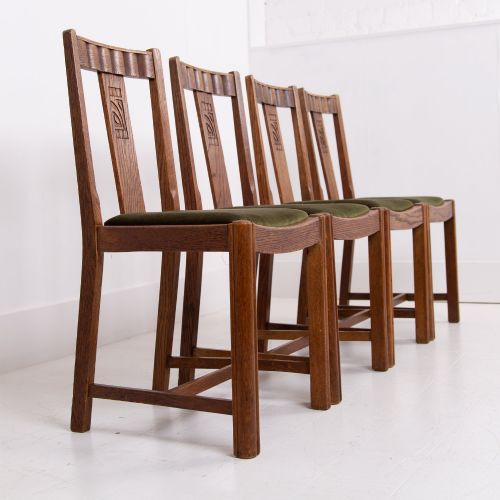
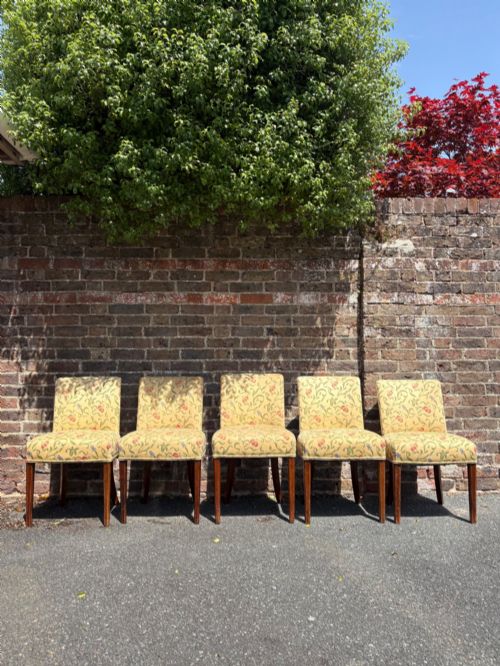
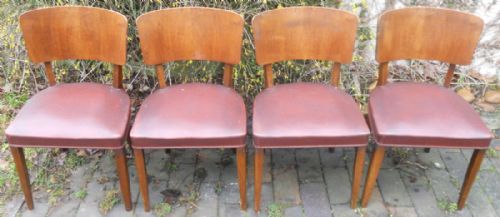
Art deco dining seating encompasses sturdy timber chairs and complete dining suites designed primarily during the 1920s and 1930s. These pieces often appear as matched sets of four, six, or eight chairs alongside occasional side chairs and larger dining arrangements.
You are most likely to encounter oak and walnut frames paired with upholstered seats in fabric, leather, or velvet. The selection also includes specific cloud back designs and bedroom chairs that reflect the dominant style of the period.
How they were made
Frames are constructed from solid timber and decorative veneers, utilising oak, walnut, burr walnut, and general timber. Cabinet makers shaped these woods into distinctive structural forms suited to daily domestic use.
Upholstery techniques applied to these frames incorporate fabric, leather, and velvet to provide padded seating surfaces. These materials are fixed directly to the wooden structures to support the upright dining chair designs.
The listings span the 1900, 1920, and 1930 periods, incorporating oak, walnut, burr walnut, fabric, leather, and velvet.
What varies in quality
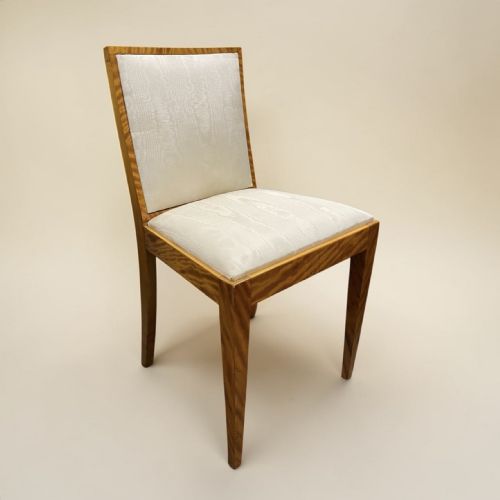
Quality differences emerge in the selection of wood veneers and the complexity of the timber framing. Plain oak frames differ significantly from highly figured burr walnut and black walnut constructions executed by prominent cabinet makers.
The scale of the seating set also alters the character of the pieces, ranging from individual side chairs to extensive dining suites seating up to eight people. Complete matched suites represent a more cohesive design execution than assembled groups of chairs.
Bath Cabinet Makers·Harry and Lou Epstein·Hille
The Art Deco Dining Seating Glossary
- Art Deco
- A design style from the early twentieth century characterised by streamlined shapes and modern materials. It heavily influenced furniture production during the 1920s and 1930s.
- Cloud Back
- A rounded, upholstered chair back configuration popular in twentieth century seating design. This shape offers a distinct silhouette reminiscent of a stylised cloud.
- Burr Walnut
- A wood veneer taken from the burl growth of a walnut tree, showing intricate swirling grain patterns. Cabinet makers utilised this material on prominent surfaces to create visual depth.
- Side Chair
- An upright chair without arms designed primarily for dining tables or occasional seating. These form the majority of standard seating sets found in the period.
- Walnut Veneer
- A thin layer of walnut timber applied over a secondary wood base to provide a decorative exterior finish. This technique allowed makers to display rich grain patterns economically.
Art Deco Dining Seating: Frequently Asked Questions
What defines art deco dining seating?
These pieces originate primarily from the 1920s and 1930s, featuring sturdy timber frames in oak or walnut alongside upholstered pads.
They encompass single side chairs, bedroom chairs, and complete dining suites designed to seat multiple guests around a table.
How do I choose the right set size?
Sets commonly appear in groups of four, six, or eight chairs to accommodate standard domestic dining tables.
Consider your available space and the seating capacity required when selecting between individual side chairs or full dining suites.
What woods were used in these chairs?
Construction relies heavily on oak, walnut, burr walnut, and black walnut veneers applied over solid timber frames.
Makers selected these materials for their durability and distinctive grain patterns that suited the modernist aesthetic.
How do I care for vintage upholstery?
Original or replacement coverings utilise materials such as fabric, leather, and velvet across the padded seat and back sections.
Gentle cleaning methods suited to the specific textile will help maintain the condition of the upholstered surfaces.