





Vintage Walnut Closet
A vintage walnut closet brings rich timber grain and substantial storage into a bedroom, combining practical hanging space with striking period presence.
Vintage Walnut Closet
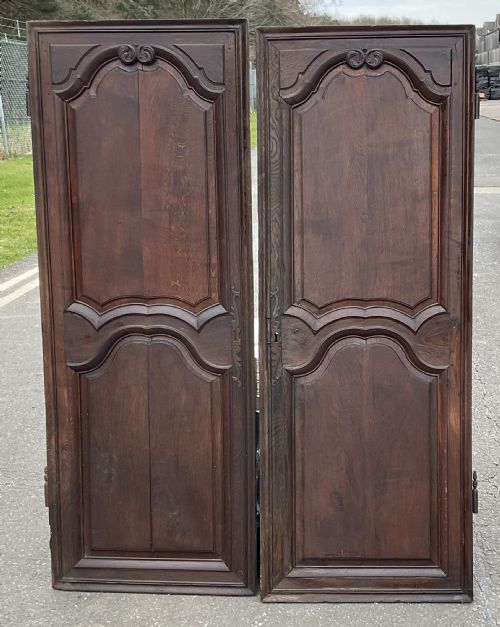
Beyond the Art Deco examples, the selection extends to Edwardian combinations as well as earlier Dutch Baroque and Queen Anne Revival pieces, including specialised items such as display cabinets and individual cabinet doors. This variety allows collectors to find both streamlined modernism and traditional marquetry within the same timber family.
Materials and construction methods
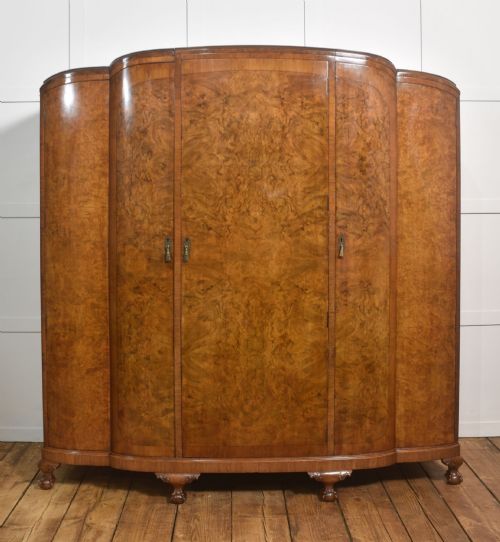
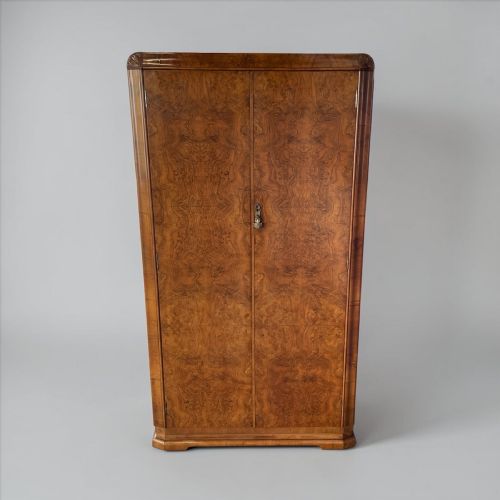
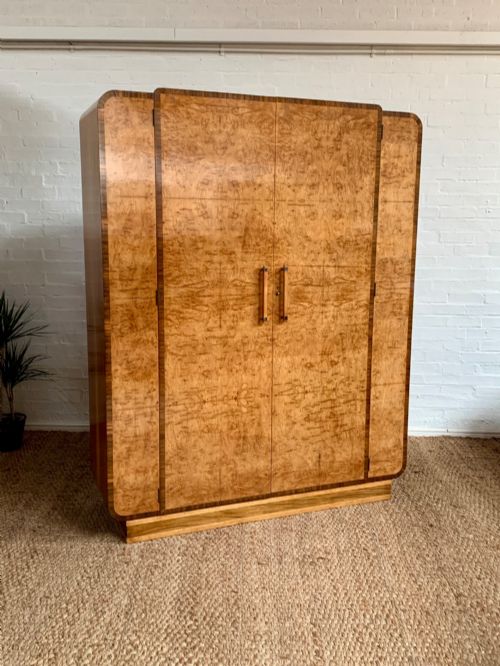
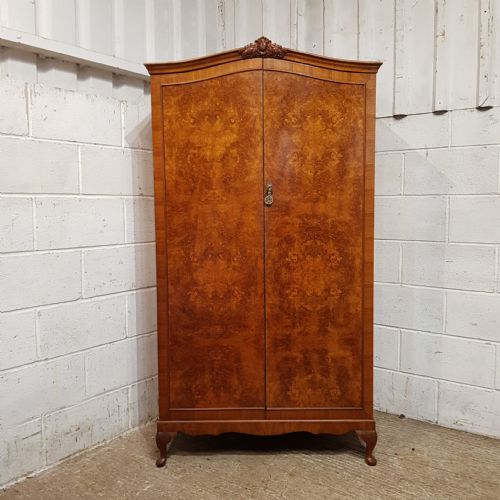
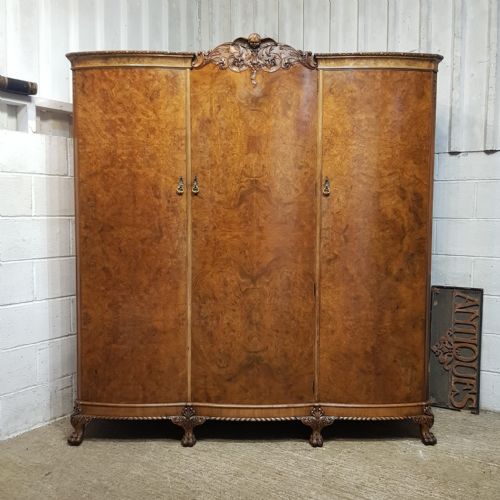
The construction relies heavily on walnut, burr walnut, and walnut veneer applied over secondary timbers, often paired with contrasting fruitwood or ash details to accentuate the grain patterns. Artisans selected burr sections for their swirling figures, creating decorative panels on the primary doors and facades.
Hardware plays a functional and visual role, with brass fixtures securing the doors and internal fittings. Cabinetmakers combined solid timber framing with stable veneered panels to prevent warping across large wardrobe surfaces while maintaining a luxurious exterior appearance.
Listings span periods from the 18th Century and 1800 through Edwardian up to the 1920s and 1930s, featuring walnut, burr walnut, brass, glass, and solid oak.
Assessing quality and execution
Quality in a vintage walnut closet is determined by the selection of the timber veneer and the precision of its matching across the doors and panels. Finer examples display symmetrical grain patterns, such as book-matched burr walnut, which require expert craftsmanship to execute successfully.
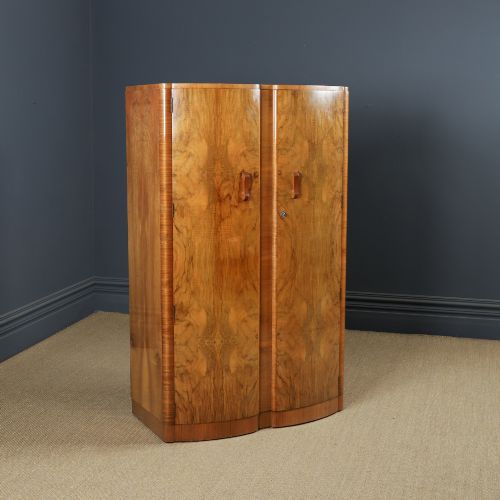
The structural integrity of the internal fittings and the complexity of the exterior shape also separate standard production from superior work. Serpentine and bow front designs demand advanced joinery techniques compared to flat-fronted carcasses, elevating the architectural merit of the piece.
Jean Faure·Harry and Lou Epstein
The Vintage Walnut Closet Glossary
- Burr walnut
- A prized veneer taken from the wart-like growths on walnut trees, yielding intricate, swirling grain patterns. It is frequently utilised on the primary doors of Art Deco wardrobes to create striking visual focal points.
- Art Deco
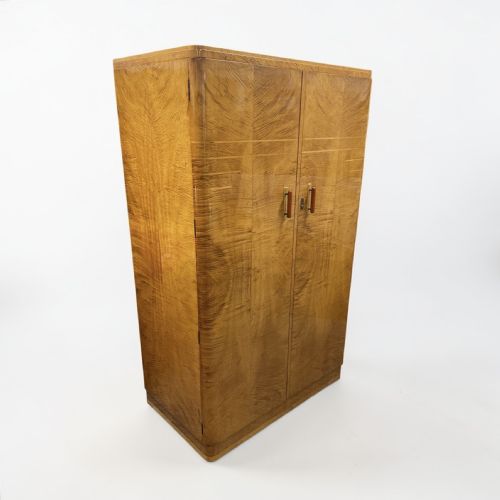
- A design style spanning the 1920s and 1930s characterised by sleek geometric shapes, streamlined forms, and modern luxury. Pieces from this era often feature clean vertical lines and dramatic wood veneers.
- Marquetry
- The art of applying pieces of veneer to a structure to form decorative patterns and pictures. In Dutch pieces, this technique often incorporates floral or pictorial motifs rendered in various contrasting woods.
- Serpentine front
- A furniture front featuring a curved design with a convex centre flanked by concave ends, or vice versa. This undulating contour requires high levels of carpentry skill.
- Bow front
- A convex curved front profile that projects outward from the corners of the cabinet. It softens the rigidity of large wardrobes and catches the light across polished walnut surfaces.
Vintage Walnut Closet: Frequently Asked Questions
What is a vintage walnut closet?
A vintage walnut closet is a large wardrobe or armoire constructed primarily from walnut or walnut veneer during the early to mid-twentieth century or earlier. These pieces serve as major bedroom furniture items providing hanging space and internal shelving.
The listings reflect styles ranging from geometric Art Deco designs to Edwardian combinations and Dutch marquetry pieces, all united by the use of walnut timber.
How do I care for walnut veneer?
Caring for walnut veneer involves keeping the furniture away from direct sunlight and maintaining stable humidity levels in the room to prevent the wood from drying out or the veneer from lifting. Regular dusting with a soft, dry cloth preserves the polished surface.
Avoid using harsh chemical cleaners or excessive moisture, applying a quality beeswax sparingly only when the timber appears dry to maintain its natural lustre.
What styles are available?
The available styles span Art Deco, Edwardian, Dutch Baroque, and Queen Anne Revival, reflecting different historical periods of craftsmanship. Art Deco examples feature clean lines and dramatic burr walnut figures, while earlier pieces showcase intricate marquetry.
Buyers can select from minimalist geometric wardrobes to serpentine and bow front designs, as well as combination pieces integrating ash and fruitwood elements.
How do I date a walnut wardrobe?
Dating a walnut wardrobe requires examining the overall style, construction methods, hardware, and types of veneer used. Pieces from the 1920s and 1930s typically exhibit Art Deco geometry and symmetrical burr walnut panels, whereas Edwardian examples often combine walnut with ash.
Earlier items from the eighteenth century or 1800 display distinct regional characteristics such as Dutch marquetry and hand-cut joinery that set them apart from twentieth-century production.