





Vintage Village Landscape Painting
A vintage village landscape painting captures the rural communities and quiet streets of past decades through the eyes of artists who worked on canvas and paper.
Vintage Village Landscape Painting
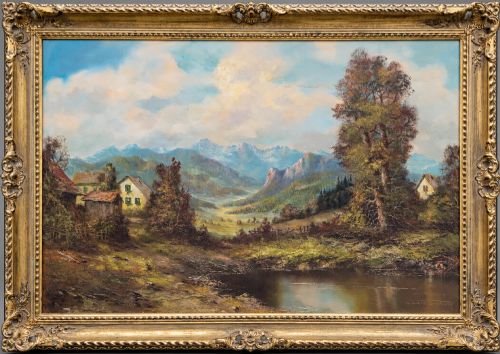
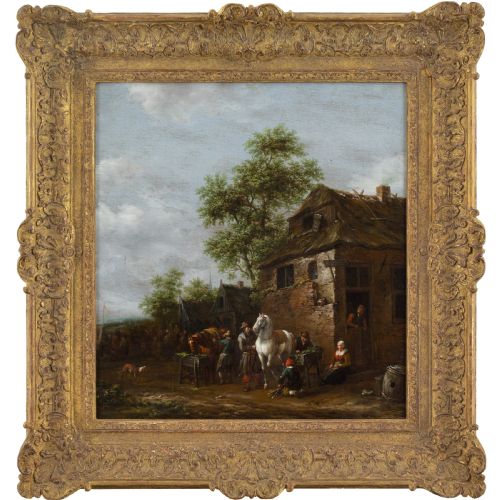
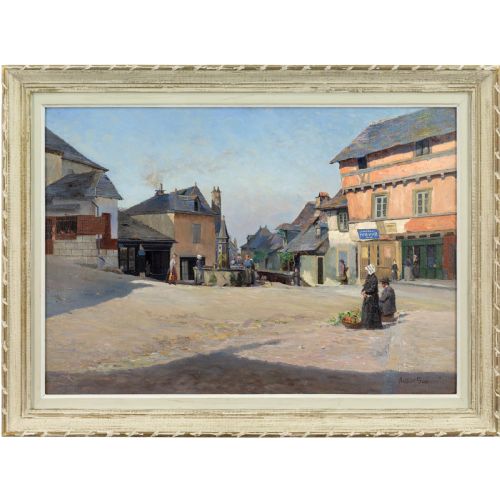
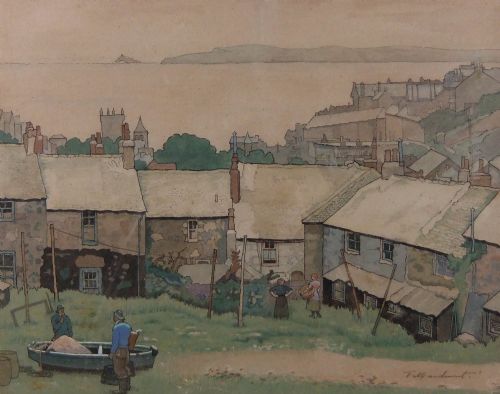
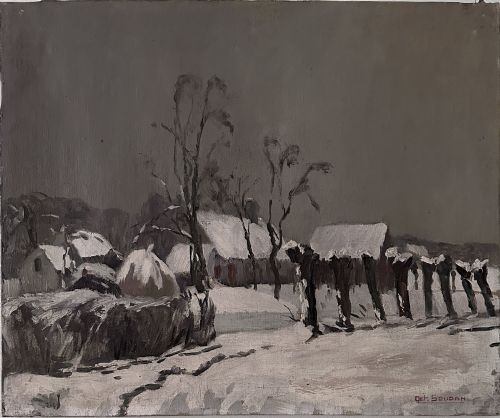
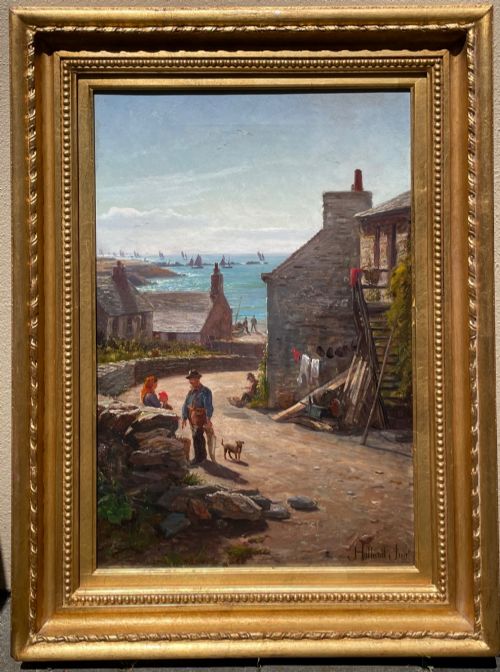
When you search for a vintage village landscape painting, you encounter works that record rural settlements, harbour communities, and country lanes from the nineteenth century up through the mid-twentieth century. The pieces on this page appear in various regional British and European traditions, ranging from quiet West Country harbours to snowy Dutch hamlets.
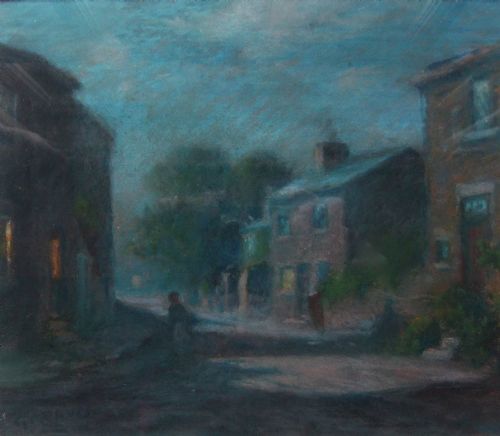
Most examples originate in the early decades of the twentieth century, bringing together oil paintings on canvas and panel alongside watercolours and pastels on paper. These works document specific localities, including Cornish fishing ports, Yorkshire dales, and continental town squares, captured during periods of stylistic transition from traditional realism to post-impressionism.
Materials and Construction
Painters of these village scenes relied primarily on oil paint applied to canvas, wood panels, or artist boards, building rich textures that captured winter snow or summer foliage. Watercolours and gouache on paper provide lighter, more immediate impressions of town streets and coastal inlets.
Support materials range from traditional stretched canvas and heavy watercolour paper to occasional wood and panel supports. Protective framing often involves timber mouldings paired with glass for works on paper, while oil paintings on canvas typically remain unglazed.
Several artists braved harsh winter conditions to record village snow scenes, proving that rural charm outweighs cold fingers.
Evaluating the Range
Distinctions in quality often rest on the artist's command of light, atmosphere, and spatial depth within the rural setting rather than the mere age of the piece. Stronger works convey the distinct character of a specific locale through confident brushwork or precise watercolour washes.
The handling of architectural elements and human figures relative to the landscape determines the success of a composition. Works by recognised regional painters or members of established art schools demonstrate a surer grasp of tone and proportion than anonymous decorative pieces.
Arthur Gué·Thomas Maidment·Paul Élie Gernez·John Holland·William Greaves·George Turland Goosey·Mario Pinetti·Arthur Tucker·Anne Dorrien Smith·Mercedes Legrand·M. C. Hider·Charles Vickers·Louie Stanley Maurice Prince·George Gregory·John Smith Atherton·Joseph W. Milliken·Frank Wood·Percy Brooke·David Woodlock·V. Zirakian·Denys Garle·Kershaw Schofield·Albert Pile·Maurice Long·C. Jones
The Vintage Village Landscape Painting Glossary
- Oil on Canvas
- Pigment mixed with drying oil applied to a woven fabric stretched across a wooden frame. This medium allowed artists to build rich surface textures and deep tonal ranges.
- Watercolour
- Paint made from water-soluble pigments suspended in a water-based solution, traditionally applied to paper supports. It provides transparent washes that capture light and atmospheric conditions quickly.
- Gouache
- An opaque water-based paint that includes a white pigment filler, producing a heavier, more solid finish than transparent watercolour. Artists often combined it with watercolour to highlight details in village scenes.
- Post-Impressionism
- An art movement extending beyond impressionism that prioritised expressive forms, symbolic colours, and structured brushwork over naturalistic depiction. Works in this style emphasise emotional resonance within the landscape.
- Pastel
- A medium formed of powdered pigment combined with a binder, shaped into sticks for direct drawing on paper. It creates velvety colour surfaces that require protective glass framing.
Vintage Village Landscape Painting: Frequently Asked Questions
What periods do these paintings cover?
The available selection spans from the nineteenth century through the mid-twentieth century, with a strong concentration of pieces originating in the early decades of the nineteen-hundreds. You will find Victorian works alongside Edwardian watercolours and mid-century modernist interpretations.
Different decades brought distinct stylistic approaches, moving from detailed topographical records to freer impressionist and post-impressionist handling of rural light and atmosphere.
How should I care for a watercolour village scene?
Works executed on paper require protection from direct sunlight to prevent the fading of delicate pigments and watercolours. Framing behind glass with acid-free mounts safeguards the paper surface from environmental moisture and atmospheric pollutants.
Keep these pieces in rooms with stable humidity and temperature levels to avoid warping the paper support or degrading the original backing materials.
What is the difference between oil on canvas and watercolour?
Oil paintings feature pigment suspended in drying oil on a canvas or panel, offering thick textures and deep, reworkable colours. Watercolours use water-soluble pigments on paper, producing lighter, translucent effects that rely on the white of the paper for luminosity.
Oils generally hang without glass protection, while works on paper require framing under glass to prevent surface damage.
How can I identify regional schools in these paintings?
Regional schools often concentrate on specific geographical areas, such as coastal fishing ports in Cornwall or rural valleys in Yorkshire. Artists working within these communities shared local subject matter and exhibited distinct handling of regional light.
Signatures, artist annotations on the reverse, and recurring village landmarks help connect individual works to established painting groups and localities.