


Vintage Venice Artwork
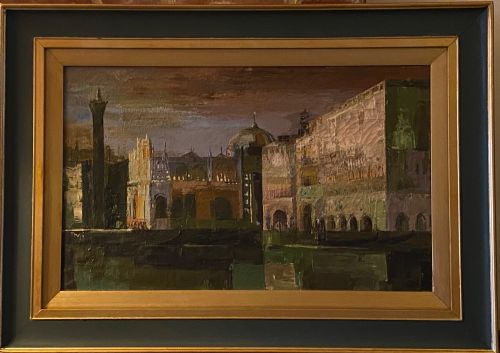
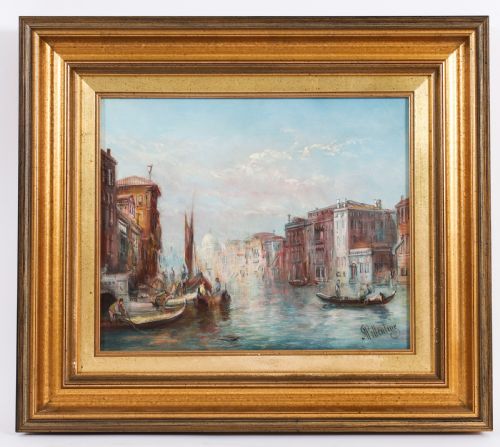
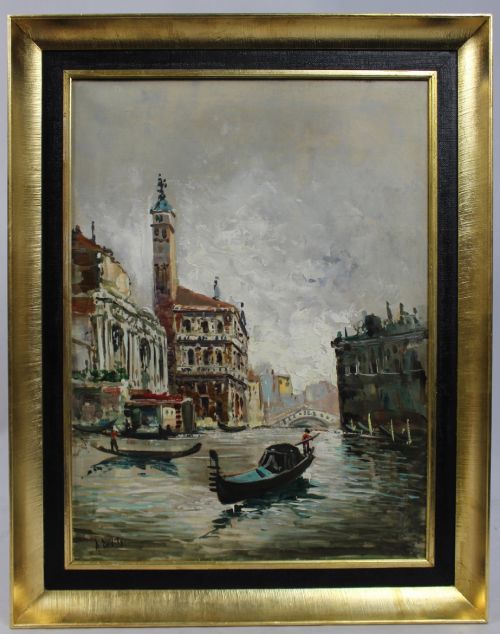
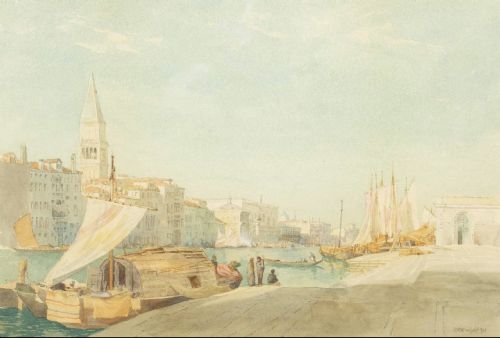
Vintage venice artwork captures the light and canals of the lagoon through oils and watercolours spanning the nineteenth century to the mid-century.
Vintage Venice Artwork
Vintage venice artwork encompasses paintings, fine art, and wall art depicting the canals, palazzos, and gondoliers of the lagoon. These pieces range from Victorian watercolours to mid-century impressionist canvases, recording the city's enduring appeal.
The most common examples on this page are oil paintings on canvas and detailed watercolours on paper. Artists capture iconic sites such as the Grand Canal, the Bridge of Sighs, and Santa Maria della Salute across various decades.
Works appear in formats from framed paintings to mixed media compositions, reflecting both British and continental perspectives on the Italian city. Each piece preserves a distinct period's atmospheric interpretation of Venetian light.
How they were made
Painters utilised oil paint on canvas or wood panels, building rich textures for architectural facades and water reflections. Watercolours on paper offer a lighter, translucent approach suited to capturing the shifting lagoon skies.
Frames often consist of gilded wood or simple wooden mouldings that complement the period of the artwork. Selected pieces incorporate pastel, gouache, and ink pen drawings to add fine detail to gondolas and masonry.
Countless gondoliers paddle eternally beneath frozen bridges across these paper and canvas canals.
What varies in quality
Quality rests upon the artist's handling of light and perspective, distinguishing accomplished representations of Venetian architecture from simpler decorative sketches. Signed works by documented painters generally command greater attention from collectors.
The preservation of the paper or canvas surface, along with the originality of the frame, dictates the condition tier. Finer works retain vibrant pigments in watercolours and stable paint layers on canvases without excessive retouching.
Alfred Pollentine·Antonio DeVity·Claude Jousset·Antoine Bouvard Senior·E. Perez Senet·Vittore Zanetti Zilla·Frank Wasley·David Law·William Knox·Emanuele Cappello·Charles Clement Calderon
The Vintage Venice Artwork Glossary
- Canvas
- A heavy woven fabric stretched across a wooden frame to serve as a sturdy support for oil paintings. It provides a textured ground that holds thick applications of pigment.
- Watercolour
- A paint consisting of pigment suspended in a water-soluble vehicle, typically applied to paper. It allows for transparent washes of colour that mimic the atmospheric haze of the lagoon.
- Impressionism
- An artistic style characterised by relatively small, thin yet visible brush strokes and an emphasis on accurate depiction of light. This approach suited painters seeking to capture fleeting effects on Venetian water.
- Gilded wood
- Wood ornamented with thin gold leaf or powder, frequently used for period frames. It adds a reflective border that enhances the warmth of the artwork within.
- Gouache
- An opaque water-based paint that includes a white pigment binder to create solid, matte areas of colour. Artists combined it with watercolours to achieve denser highlights.
Vintage Venice Artwork: Frequently Asked Questions
How do I date a vintage venice painting?
Dating relies on the artist's active period, stylistic movements such as impressionism, and framing materials. Signatures and stretcher construction offer further clues to the decade of creation.
Paintings from the nineteenth century often exhibit darker, more academic palettes, while mid-century works embrace brighter, looser interpretations of the canals.
What is the difference between oil and watercolour Venice pieces?
Oil paintings utilise heavy pigments on canvas or wood, offering rich textures and deep tones suitable for substantial wall art. Watercolours employ translucent washes on paper, capturing delicate atmospheric light.
Watercolours generally require protective glass framing, whereas oil paintings on canvas remain open to the room environment.
Where were these Venetian scenes created?
Many works were painted on location in Venice by visiting European artists who captured the Grand Canal, palazzos, and gondoliers. Others were produced in studio settings from earlier sketches and photographs.
British painters frequently travelled to Italy during the Victorian and Edwardian eras, returning home with detailed watercolours of the lagoon.
How should I frame and hang vintage art?
Vintage artwork benefits from period-appropriate frames, such as gilded wood or simple moulded timber, that complement the original aesthetic. Proper hanging requires avoiding direct sunlight to protect pigments from fading.
Watercolours on paper demand acid-free mounts and UV-filtering glass to ensure long-term preservation against humidity and light exposure.