



Vintage Velvet Lounge
A vintage velvet lounge seating choice brings tactile depth and historic character into a room through rich piled fabric and traditional timber frames.

Vintage Velvet Lounge
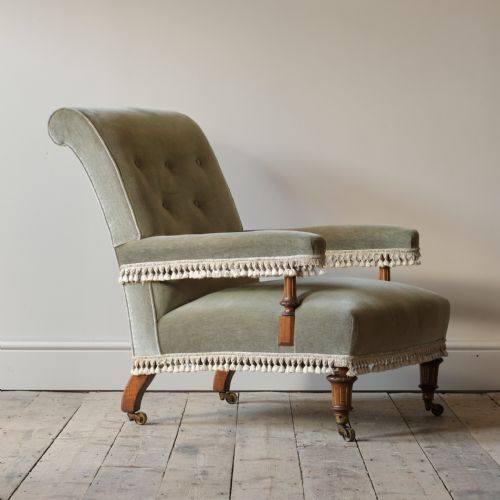
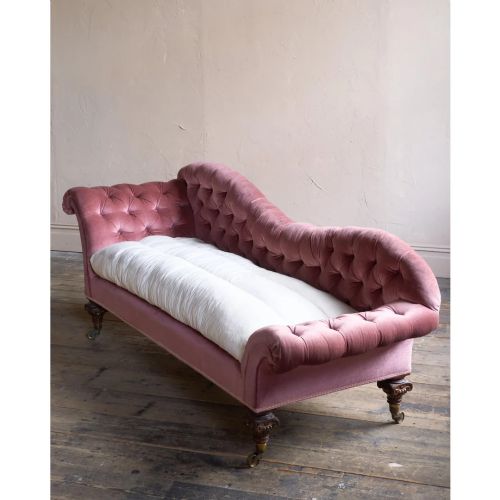
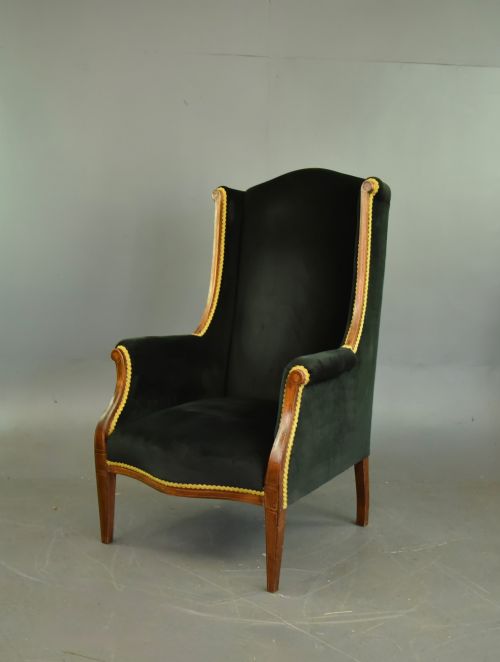
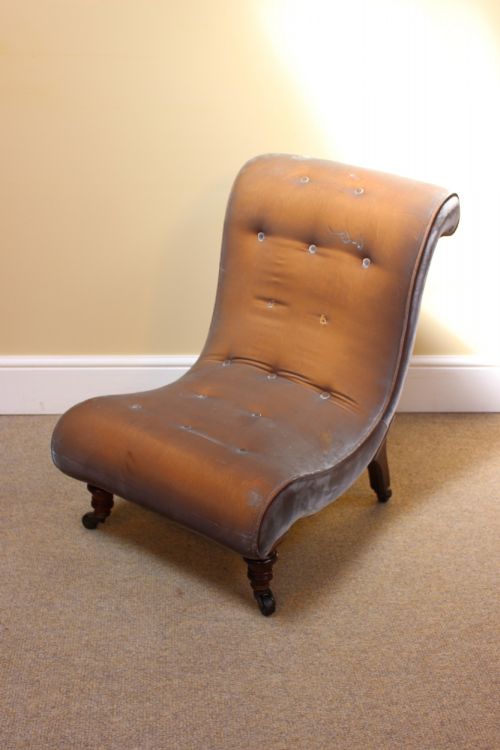
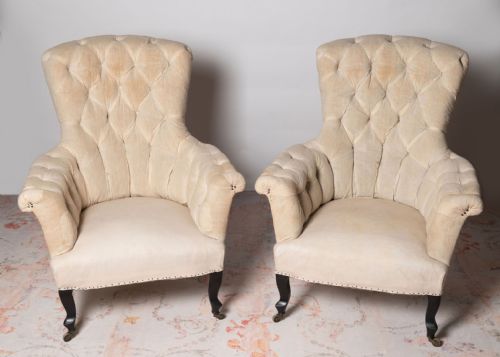
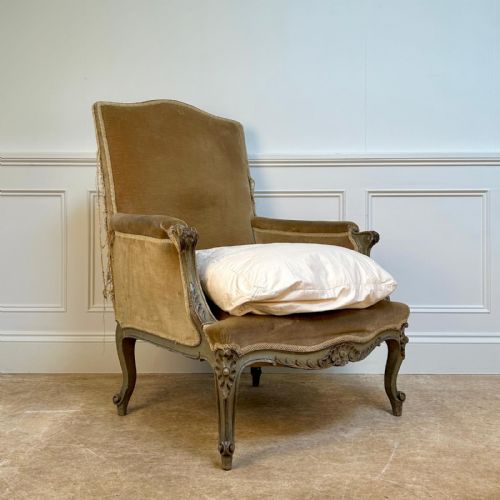
A vintage velvet lounge selection encompasses upholstered armchairs, chaise longues, daybeds, and sofa suites spanning from the nineteenth century into the twentieth century. These forms draw on diverse historical aesthetics, ranging from Victorian button backs and Regency library seats to Edwardian wing chairs and French Art Deco bergères.
Buyers encountering this search phrase find various seating configurations draped or upholstered in velvet, often paired with exposed wooden frames in mahogany, walnut, rosewood, or birch. The inventory frequently includes specific regional interpretations such as English mahogany frames and French painted or gilded woodwork.
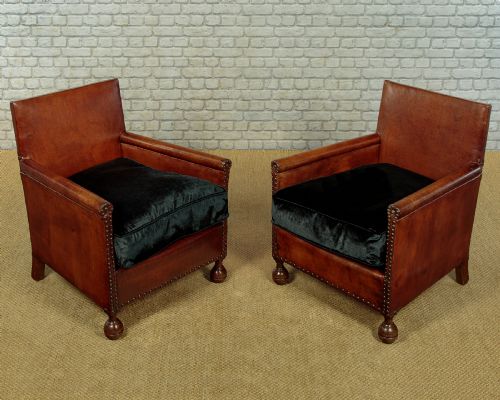
Armchairs and daybeds dominate the offerings, providing singular statement spots or paired seating arrangements for living spaces and bedrooms. Certain examples incorporate cane panels or brass details alongside the plush velvet pile to create varied textural contrasts.
Materials and construction methods
Makers constructed the structural supports of these pieces using hardwoods such as mahogany, walnut, and birch, often shaping the timber into curved arms, cabriole legs, or ionic column supports. Joinery techniques varied by period, supporting heavy upholstery and daily use.
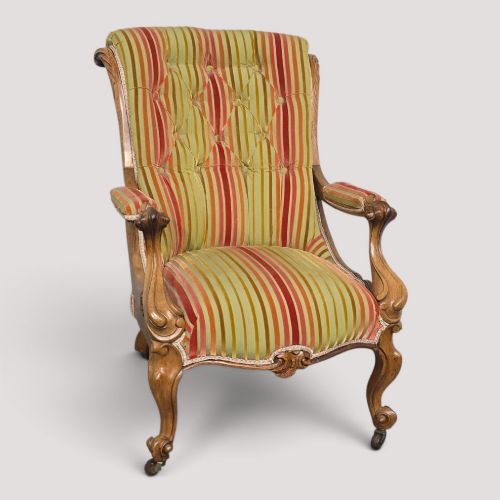
Upholstery involved dense padding beneath layers of velvet, sometimes finished with traditional buttoning techniques to secure the fabric and create deep tufting. Frames occasionally integrated cane work alongside the wooden structure to balance solid timber with lighter open sections.
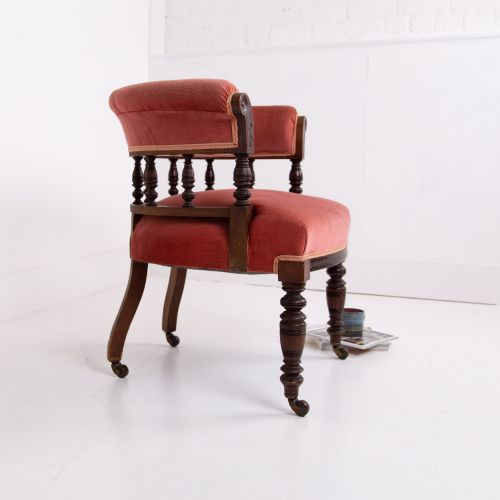
Several pieces feature unexpected combinations of green and pink velvet alongside carved bobbin structures.
Determinants of build and finish quality
Quality rests significantly on the integrity of the underlying hardwood frame and the precision of the joinery used to anchor legs and armrests. Heavier timbers like mahogany and walnut generally indicate robust structural longevity compared to softer woods.
The standard of the upholstery work distinguishes superior examples, notably in the execution of buttoning, the tension of the velvet pile, and the preservation of original decorative elements such as brass details or carved wooden motifs.
Gillows·HOWARD AND SONS·C. Hindley & Sons·William Birch
The Vintage Velvet Lounge Glossary
- Bergère
- An enclosed upholstered armchair with wooden framing, often featuring cane sides or upholstered panels.
- Chaise Longue
- An elongated upholstered chair designed for reclining, frequently combining elements of a sofa and a single seat.
- Wingback
- An armchair featuring projecting side pieces from the back to shield the sitter from drafts, common in traditional designs.
- Cane
- Woven rattan or plant material utilised for seat bases or chair back panels to provide lightweight structural support.
- Button Back
- An upholstery style where buttons are pulled deep into the padding to form a geometric tufted pattern.
Vintage Velvet Lounge: Frequently Asked Questions
What defines a vintage velvet lounge piece?
These items comprise historic seating forms such as armchairs, daybeds, and chaise longues upholstered in velvet fabric. They span multiple nineteenth and twentieth-century design movements.
The category highlights pieces with exposed timber frames and tactile piled textile surfaces rather than a single uniform manufacturing era.
How do I identify the period of a chair?
Dating relies on stylistic clues within the woodwork and upholstery, such as Regency mahogany framing or Art Deco streamlined geometry. Specific structural traits align with nineteenth-century or Edwardian manufacturing conventions.
Maker attribution stamps and distinctive regional carving styles also help confirm the exact historical window.
How were these velvet seats originally used?
Earlier examples served as formal library chairs, bedroom nursing seats, or drawing room daybeds for reading and reclining. They functioned as both decorative furnishings and comfortable places for rest.
Pairs of armchairs typically occupied formal parlour settings, while singular chaise longues suited private dressing rooms.
How do I care for velvet upholstery?
Velvet requires gentle brushing to maintain the direction and sheen of the pile without crushing the delicate fibres. Keeping these pieces away from direct sunlight preserves the depth of the textile colour.
Professional cleaning methods ensure the structural padding and historic fabric remain intact over years of domestic use.