

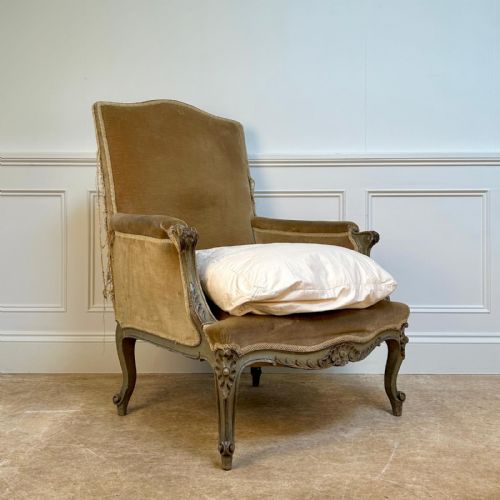


Vintage Velvet Bergere
These vintage velvet bergere armchairs bring deep texture, enclosed seating and French period elegance into any room.
Vintage Velvet Bergere
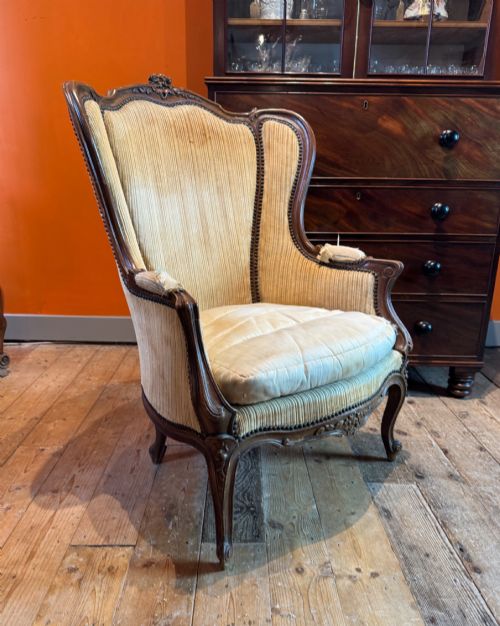
A vintage velvet bergere is an enclosed upholstered armchair built upon a traditional French frame design. The form descends from eighteenth-century models, reappearing across the nineteenth and twentieth centuries in various revivalist iterations.
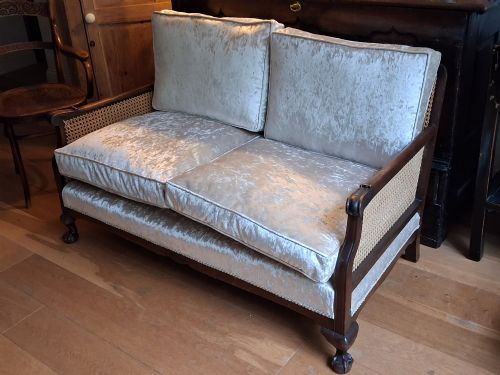
Most examples found here date from the nineteenth century or the nineteen-twenties. Buyers frequently encounter French Louis XV and Louis XVI revival styles alongside British Edwardian library chairs.
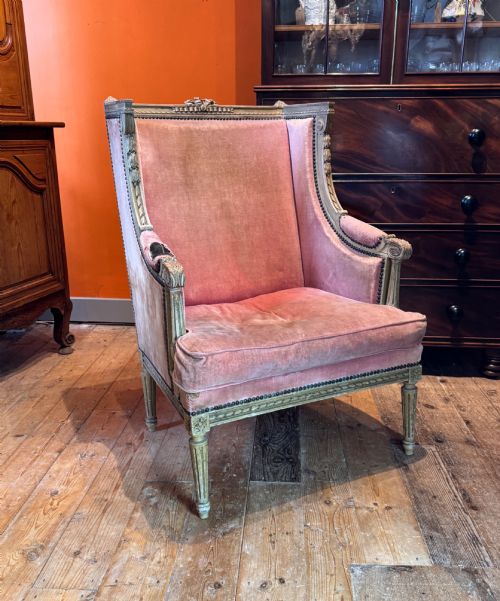
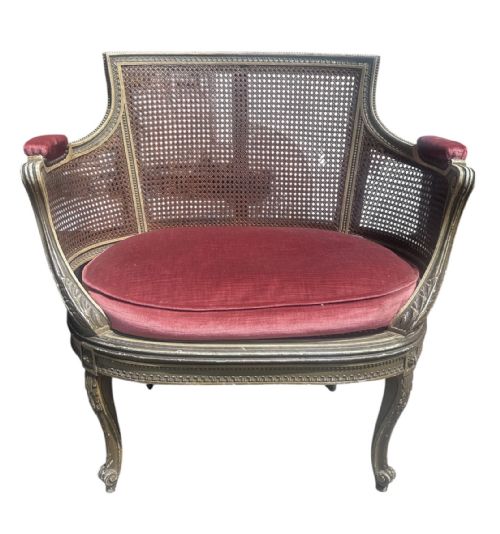
The defining characteristic remains the deep, upholstered seat paired with enclosing wooden or cane-paneled arms. These pieces offer comfortable fireside or library seating wrapped in tactile velvet upholstery.
How they were made
Frames rely upon traditional hardwoods including walnut, mahogany, beech, oak and satinwood. Some incorporate original painted or lacquered surface treatments applied to the timber.
Cane panels frequently form the structural sides and backs of the seat. Upholsterers then layer velvet fabrics over supportive stuffings, occasionally incorporating feather down cushions for comfort.
Vintage Velvet Bergere Retail Price Guide 2026
Typical asking prices for vintage velvet bergere among the pieces listed under this phrase on Sellingantiques today, from the lower quarter to the upper quarter. They describe what is for sale here now, not the wider market.
Listings feature frames built from walnut, mahogany, beech, oak and satinwood.
What varies in quality
The crispness of the woodwork defines the upper tier of these armchairs. Carved walnut and mahogany frames show sharper relief and deeper execution than simpler turned or painted beech alternatives.
The integration of the upholstery elevates certain pieces above standard production. Matching velvet tones to period frames, alongside retained original paint finishes, distinguishes finer examples from later alterations.
The Vintage Velvet Bergere Glossary
- Bergere
- An enclosed upholstered armchair featuring solid or cane sides originating in France. This form provides a deep seat designed for relaxed sitting.
- Fauteuil
- An open-armed upholstered armchair originating in France. Unlike the bergere, the sides remain open beneath the padded armrests.
- Louis XV Style
- A curved, asymmetrical aesthetic characterised by cabriole legs and floral carvings. This design language emerged during the mid-eighteenth century and saw extensive nineteenth-century revivals.
- Louis XVI Style
- A neoclassical design style defined by straight tapered legs, fluting and geometric symmetry. It contrasts sharply with the curved lines of the preceding Louis XV period.
Vintage Velvet Bergere: Frequently Asked Questions
What is a bergere chair?
A bergere is a traditional enclosed armchair featuring upholstered padded sides. The design originated in France to offer a more sheltered seat than open armchairs.
These chairs typically combine exposed wooden frames with cane panels or full upholstery. They provide deep, comfortable seating suited for libraries and drawing rooms.
How do I identify Louis XV style?
Louis XV style pieces are defined by curving lines and asymmetrical motifs. You will spot cabriole legs, scrollwork and carved floral details.
This aesthetic experienced major revivals throughout the nineteenth century. Makers applied these decorative flourishes to walnut, mahogany and painted frames.
Where were these chairs used?
These armchairs served primarily in formal reception rooms, salons and private libraries. Their enclosed frames offered protection from draughts near fireplaces.
Today they function effectively as statement fireside seats or reading chairs. Their tactile velvet surfaces introduce softness into contemporary living spaces.
Are these chairs French?
Many examples originate from France, often reflecting classic Louis XV or Louis XVI aesthetic traditions. Some pieces even retain original paint finishes from French chateaux.
However, British makers also produced similar library models during the Edwardian era. These typically utilised mahogany, satinwood or walnut frames.