
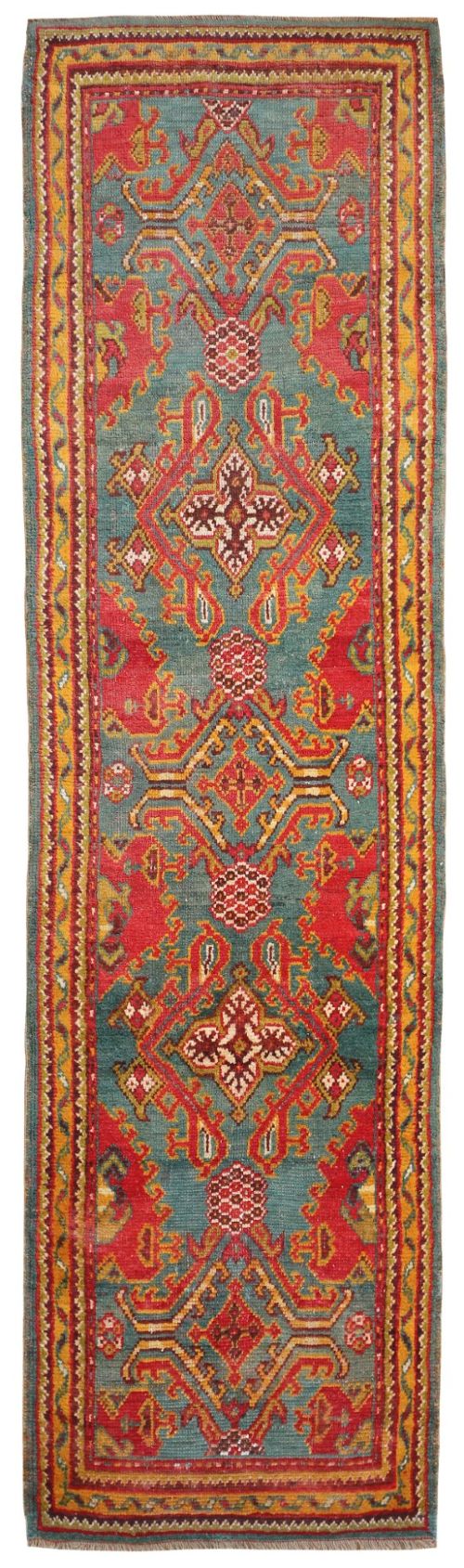


Vintage Ushak Area Rug
A vintage ushak area rug brings muted tones and large-scale floral motifs to a room, offering a softer alternative to sharper Persian designs.
Vintage Ushak Area Rug
When you search for a vintage ushak area rug, you encounter hand-knotted floor coverings hailing primarily from the late nineteenth century through to the early twentieth century. These pieces originate from Anatolian and Ottoman traditions, encompassing large carpets, runners, kilims, and smaller area rugs.
The most common examples on this page are generous carpets and rugs bearing Ottoman or Anatolian styling, frequently attributed to periods around eighteen eighty, eighteen ninety, nineteen hundred, and nineteen twenty. Such pieces range from grand room-sized floor coverings down to long runner rugs.
Buyers look to these carpets for their distinctive faded palettes and large medallion or all-over floral layouts. They fit comfortably into both traditional and modern interiors due to their weathered, subdued appearance.
How they were made
These floor coverings are constructed using wool and cotton foundations, often incorporating fine angora wool to yield a softer pile. Weavers utilised traditional hand-knotting techniques across Anatolian workshops.
Natural dye absorption across wool and cotton fibres creates the characteristic faded appearance seen in surviving examples. The interplay between the pile materials and the structural foundation defines the longevity of each carpet.
Nineteenth-century weavers sometimes smuggled stray goat hairs into the wool, giving stubborn rugs a permanent personality.
What varies in quality
The distinction between tiers rests upon knot density, the subtlety of the colour fade, and the integrity of the wool. Finer examples display precise drawing within the medallions and balanced proportions across the field.
Angora wool variations and the handling of the cotton foundation influence the handle and drape of the textile. Superior pieces retain structural strength while exhibiting the mellowed tones prized by collectors.
The Vintage Ushak Area Rug Glossary
- Ushak
- A traditional style of rug originating from the town of Ushak in western Anatolia, known for large-scale floral motifs and soft, luminous palettes.
- Kilim
- A flatwoven textile lacking a knotted pile, produced across Anatolian and Ottoman regions for utilitarian and decorative floor or wall use.
- Angora wool
- A soft fibre derived from specific goats or sheep utilised in select nineteenth-century carpets to achieve a luxurious pile texture.
- Medallion
- A central ornamental design motif placed in the field of a carpet, frequently found in Ottoman and Anatolian weaving traditions.
- Runner
- A long, narrow carpet format designed specifically for hallways, corridors, or staircases.
Vintage Ushak Area Rug: Frequently Asked Questions
How do I clean a vintage ushak area rug?
Gentle surface vacuuming without a beater bar removes loose dirt safely. Professional specialist cleaning remains essential for deep maintenance.
Water saturation and harsh chemical detergents damage the delicate wool fibres and alter the historic dyes. Consult a specialist familiar with antique Anatolian textiles before undertaking wet treatments.
Can I place these rugs in high traffic areas?
These carpets withstand normal foot traffic when placed over a quality underlay. The durable wool and cotton construction suits living spaces and dining rooms.
Placing them in heavy commercial zones accelerates pile wear. Rotating the rug periodically ensures even distribution of foot traffic across the surface.
What is the difference between an ushak and an oushak?
Ushak and oushak represent alternative English spellings for the same Anatolian weaving tradition. Both terms describe rugs originating from the same region in Turkey.
Market listings use the spellings interchangeably to denote nineteenth and early twentieth-century pieces. The style, materials, and origin remain identical regardless of the chosen spelling.
How do I identify a Victorian era ushak rug?
Victorian era dating on these listings points to nineteenth-century production matching British export periods. The visual characteristics align with late eighteen-eighty or eighteen-ninety manufacturing.
Examining the natural dyes and wool consistency helps confirm the period. Such pieces reflect the heavy influence of Ottoman design on nineteenth-century European interiors.