


Vintage Upholstered Howard Sofa
These vintage upholstered howard sofa examples bring unmatched English country house comfort and deep-seated ease to a room.
Vintage Upholstered Howard Sofa
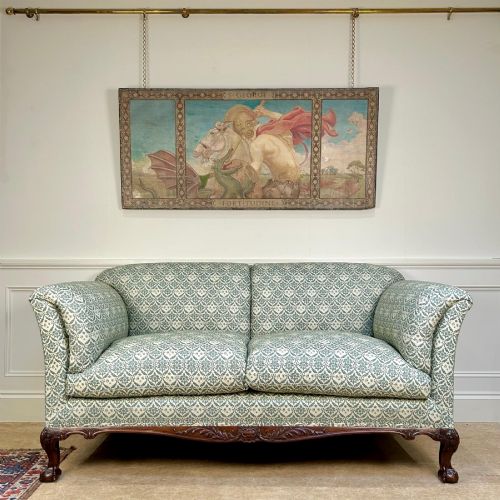
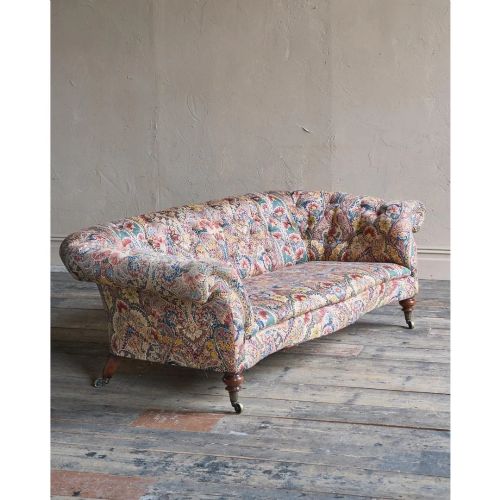
When you search for a vintage upholstered howard sofa, you encounter deep-seated seating shaped by nineteenth century and twentieth century English craftsmanship. These pieces range from substantial Chesterfield sofas and generous daybeds to smaller Edwardian walnut frames and double wingback designs.
You are most likely to meet nineteenth century examples alongside Edwardian and 1930s variations on this page. The forms span standard sofas, daybeds, and chaise longues influenced by Victorian and Aesthetic Movement aesthetics.
The aesthetic is rooted in English country house style, often featuring original ticking fabric, distinctive drop arms, or claw and ball feet. Each piece offers a specific proportion and seat depth intended for relaxed domestic spaces.
Construction and materials
The internal framing relies on solid timber foundations constructed from walnut, beech, and general wood components. These sturdy frames support the generous proportions characteristic of the maker's output.
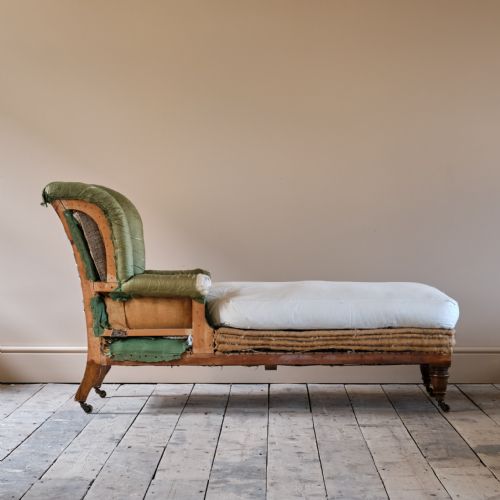
Traditional upholstery methods utilise supportive internal layers including hessian, calico, and cotton. Exposed elements incorporate brass castors and turned wooden supports, such as walnut legs or claw and ball feet.
Certain pieces arrive upholstered in sturdy workaday ticking fabric, originally intended to be hidden beneath grander drapes, now celebrated for its understated charm.
Assessing quality and authenticity
Quality rests in the integrity of the original timber frame and the retention of traditional stuffing materials beneath the top covers. Pieces retaining their initial calico lining, original ticking fabric, or branded castors hold greater historical intactness.
Proportion and execution distinguish finer examples, particularly where carved details like claw and ball feet or specialised frames like the Leeds model are concerned. The precision of the joinery and the resilience of the deep springing dictate the durability of the seating.
Howard and Sons
The Vintage Upholstered Howard Sofa Glossary
- Ticking
- A tightly woven, heavy cotton or linen fabric traditionally used to contain feather and down fillings in upholstery. It frequently appears as the primary visible covering on unrestored Howard pieces.
- Chesterfield
- A large upholstered sofa characterised by deep buttoning and rolled arms of equal height to the back. In this context, it describes specific deep-seated models produced by the firm.
- Drop arm
- A mechanical sofa arm that can be lowered to convert the seating into a daybed or chaise longue. This mechanism offers adjustable positioning for lounging.
- Hessian
- A coarse woven fabric made from jute fibres, utilised as a foundational scrim layer in traditional upholstery. It provides internal support beneath the calico and outer covers.
- Aesthetic Movement
- A late nineteenth century design style emphasising visual beauty over narrative subject matter. Pieces from this movement incorporate distinctive decorative motifs and stylistic flourishes.
Vintage Upholstered Howard Sofa: Frequently Asked Questions
What defines a genuine Howard sofa?
A genuine piece bears the hallmarks of the nineteenth century firm, including numbered brass castors, stamped wooden frame components, and specific deep-sprung internal construction.
These structural markers distinguish authentic workshop output from later Howard style interpretations produced by other makers.
How do I care for original ticking upholstery?
Original ticking fabric requires gentle vacuuming with a low suction attachment and protection from direct sunlight to prevent fibre degradation.
Avoid chemical spot cleaning unless handled by a textile conservator familiar with vintage woven cottons.
What is the difference between a daybed and a sofa?
Daybeds are designed primarily for reclining and sleeping, often featuring single or adjustable ends rather than a uniform enclosing backrest.
Standard sofas provide formal upright seating with structured backs and dual arms intended for conversation.
Are these sofas suitable for daily sitting?
The robust beech and walnut frames combined with traditional coil springing make these seats exceptionally durable for everyday domestic use.
Their deep proportions are specifically engineered for relaxed lounging rather than upright formal posture.