


Nineteenth Century Upholstered Sofa
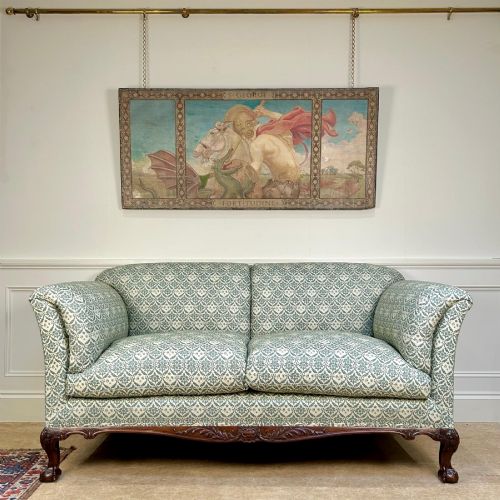
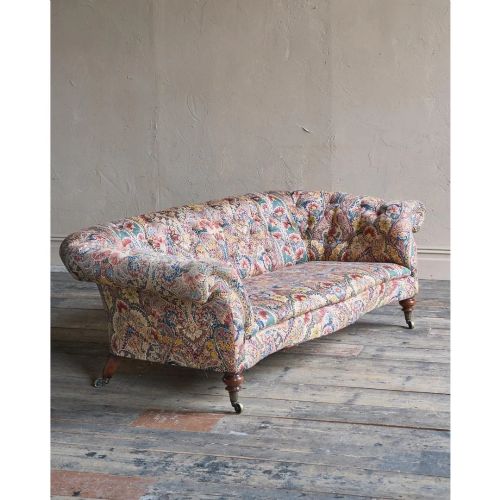
A nineteenth century upholstered sofa brings generous proportions and period character into a modern interior.
Nineteenth Century Upholstered Sofa
When searching for a nineteenth century upholstered sofa, buyers encounter a diverse range of seating forms including chesterfields, daybeds, and chaise longues. These pieces emerge from periods such as the Regency, Victorian, and William IV eras, capturing distinct historical design movements.
Makers and workshops of the period, such as Howard and Sons and Holland and Sons, contribute heavily to the distinct upholstery styles found in this category. Pieces range from un-upholstered frames awaiting fabric to large reception salon chaises dressed in green velvet.
Materials and Construction
Makers constructed the structural frames of these seats using dense hardwoods including mahogany, walnut, rosewood, and timber. Brass fittings, ormolu mounts, and gilt wood frequently provided decorative contrast to the timber bodies.
Upholstery and finishing involved fabrics such as velvet, calico, and Chinoiserie textiles, sometimes supported by internal stuffing and webbing. Details like carved wooden elements, claw and ball feet, and marquetry inlay completed the visible framework.
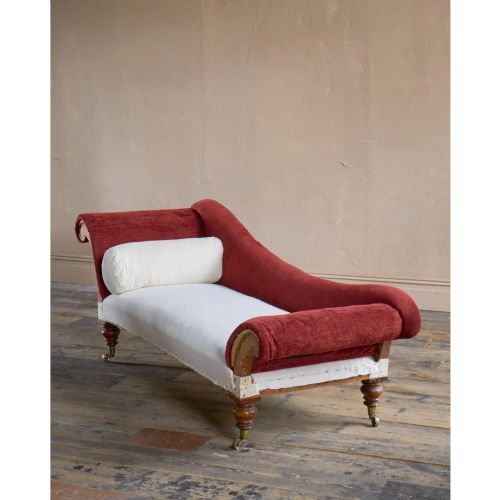
Some nineteenth century chaises arrive ready for a complete makeover, waiting patiently in plain calico for their next glamorous chapter.
Evaluating Quality
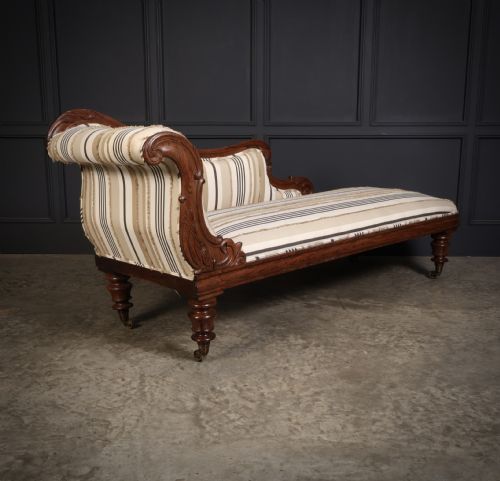
Superior examples display crisp, deeply detailed carving on the exposed wood elements, whether in walnut, rosewood, or mahogany. The integrity of the frame construction and the fidelity of stylistic revival details, such as French Empire or Neoclassical mounts, separate finer pieces from simpler utilitarian seating.
The caliber of the original or associated maker elevates a piece significantly, particularly works bearing attribution to established cabinet makers. Furthermore, the retention of original decorative elements like ormolu mounts and intact timber frames marks the upper tier of the range.
Howard and Sons·Holland and Sons
The Nineteenth Century Upholstered Sofa Glossary
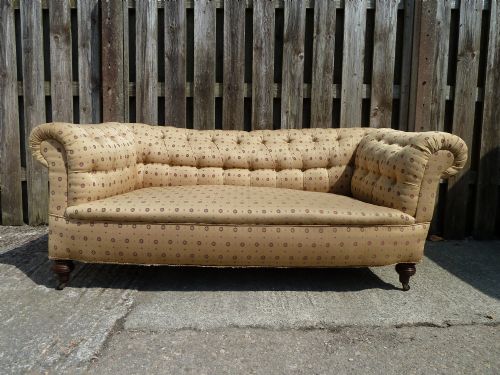
- Chesterfield
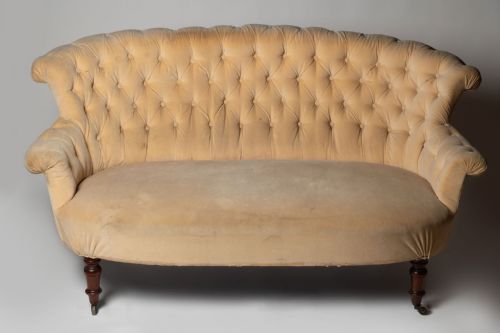
- A deep-buttoned upholstered sofa featuring rolled arms of the same height as the back. This form became prominent during the Victorian period.
- Chaise Longue
- An upholstered long chair designed for reclining, combining a chair with an extended footstool. Examples in the evidence span Regency rosewood models and Victorian green velvet reception chaises.
- Ormolu
- Gilt-bronze mounts applied to furniture, frequently seen on French Empire and Neoclassical revival pieces from the nineteenth century.
- Daybed
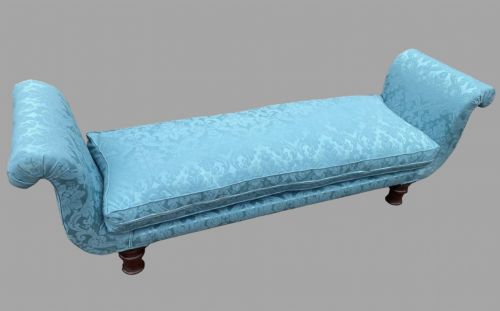
- A couch or bed intended for daytime resting, appearing in Regency simulated rosewood and general antique reclining formats.
- Marquetry
- Decorative inlay work using various woods to create pictorial patterns on furniture surfaces, noted on French Empire seating suites.
Nineteenth Century Upholstered Sofa: Frequently Asked Questions
How do I identify a Regency sofa?
Regency sofas typically display classical lines, scroll ends, and timbers like mahogany or simulated rosewood. Their forms often lean towards bold architectural shapes or daybed formats.
Looking closely at the framing and foot style helps distinguish Regency work from later Victorian interpretations.
What is a French salon suite?
A salon suite consists of matching seating furniture, such as settees and armchairs, designed for formal reception rooms. These groupings often feature French Empire styling, marquetry inlay, or gilt wood frames.
They represent cohesive interior decorative schemes from the nineteenth century.
Can I use an antique daybed daily?
Antique daybeds and reclining loungers serve functional seating roles in contemporary settings just as they did historically. Their sturdy timber frames support regular use when placed carefully.
Checking the internal webbing and upholstery condition ensures they remain comfortable for everyday lounging.
What distinguishes a Chesterfield from a standard settee?
Chesterfields are defined by arms that match the height of the backrest, paired with deep upholstery buttoning. Standard settees and sofas offer varied back and arm configurations without this uniform height.
This specific silhouette makes Chesterfields instantly recognisable among nineteenth century seating.