



Vintage Twine Holder
These vintage twine holder pieces keep cord tidy on a desk or counter, offering practical utility packaged in charming historic forms.
Vintage Twine Holder
When you search for a vintage twine holder, you encounter desk accessories and string boxes designed to dispense cord cleanly through a small aperture. The examples listed here span the nineteenth century, the Victorian and Edwardian eras, up to the 1920s.
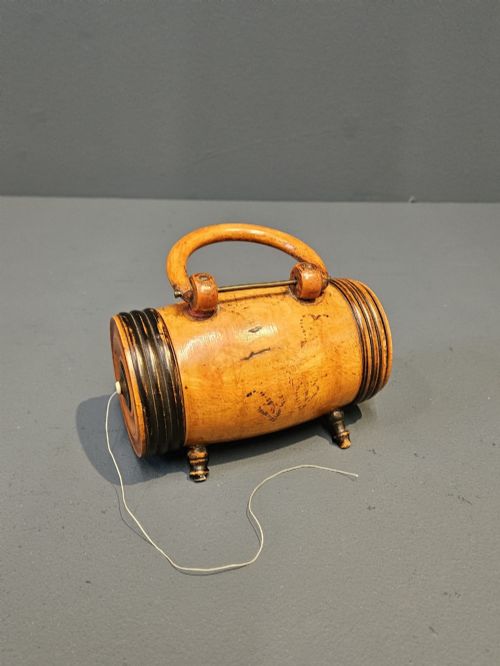
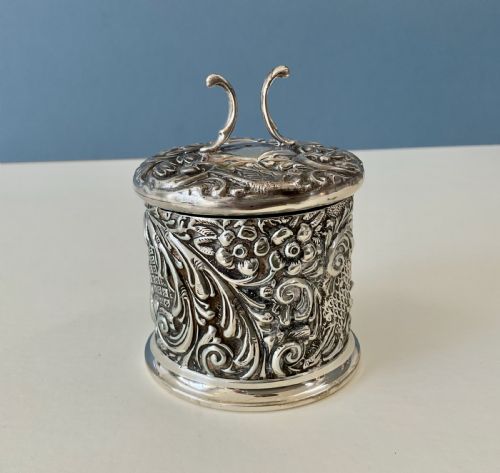
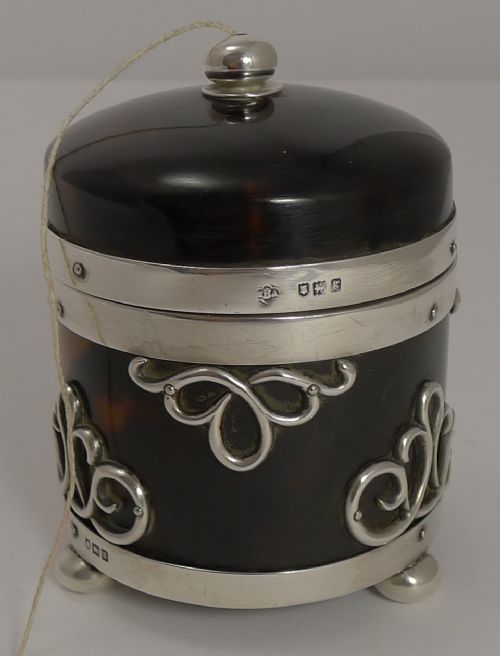
You are most likely to meet turned wood items on this page, including sycamore, fruitwood, and lignum vitae barrels, alongside more ornamental versions featuring sterling silver and glass or tortoise shell.
Forms range from spherical boxes on ball feet and beehive shapes to double-ended barrels and Mauchline ware, reflecting the varied domestic and office needs of past decades.
How they were made
Makers utilised native and exotic timbers, turning hardwoods on a lathe to create smooth spherical bodies and cylindrical barrels. Woods such as sycamore, maple, and fruitwood show the characteristic grain patterns shaped by Victorian woodturners.
Metals and other media enter the construction through sterling silver mounts, rims, and cutters. Glass jars and tortoise shell panels add contrasting textures to the turned wooden bases and silver lids.
Vintage Twine Holder Retail Price Guide 2026
Typical asking prices for vintage twine holder among the pieces listed under this phrase on Sellingantiques today, from the lower quarter to the upper quarter. They describe what is for sale here now, not the wider market.
Materials represented across these desk accessories include sterling silver, tortoise shell, glass, and various turned hardwoods.
What varies in quality
The distinction between standard and superior pieces rests on the crispness of the turning and the intricacy of the form, such as the ribbing on a beehive box or the proportion of a spherical body. Finer examples display precise execution in specialised shapes like double-ended barrels.
The inclusion of precious materials and hallmarked sterling silver elevates the status of an object from simple treen utility to a refined desk accessory. The integration of functional cutters and intact ball feet further distinguishes better preserved specimens.
The Vintage Twine Holder Glossary
- Treen
- Small handmade wooden domestic objects. These pieces often exhibit skilled lathe work and polished grain surfaces.
- Mauchline ware
- Nineteenth-century wooden souvenirs and small items. They frequently feature photographic transfers or specific tartan patterns.
- Lignum vitae
- A very dense and heavy hardwood. Woodturners valued it for durability and rich, dark grain variation.
- Sterling silver
- An alloy of silver containing ninety-two point five percent pure silver. It appears on lids, mounts, and rims of luxury boxes.
Vintage Twine Holder: Frequently Asked Questions
What is a vintage twine holder?
A vintage twine holder is a small domestic container designed to dispense string smoothly without tangling. These pieces range from simple turned wooden spheres to silver-mounted glass jars.
Historically placed on desks, dressing tables, or shop counters, they kept cord neatly contained until needed for parcels or correspondence.
How do I date a string box?
Dating relies on the materials, hallmarks, and prevailing decorative styles of the piece. Nineteenth-century examples often show traditional woodturning in sycamore or fruitwood.
Items featuring sterling silver frequently carry assay office marks and date letters that pinpoint the exact year of manufacture.
Were these used in homes or shops?
String holders served both domestic households and commercial premises. Homes required cord for wrapping gifts and parcels, while offices and shops used them constantly for paperwork and merchandise.
More ornate versions in silver and tortoise shell belonged on private writing desks rather than behind shop counters.
How do I care for wooden holders?
Wooden and treen holders require stable humidity away from direct heat sources to prevent the wood from splitting. Occasional light dusting maintains the finish.
Avoid excessive moisture, particularly on pieces with silver mounts, glass inserts, or delicate turned edges.