


Vintage Triple Mirror Vanity
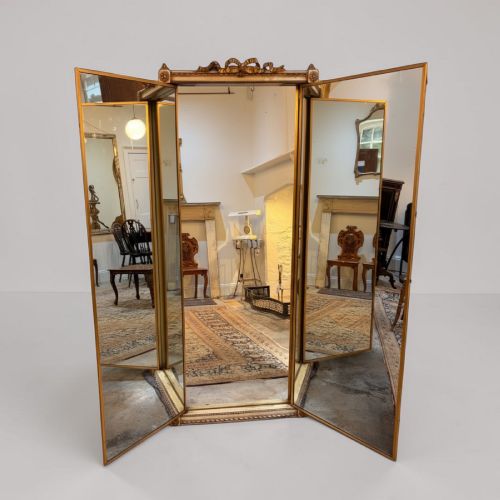
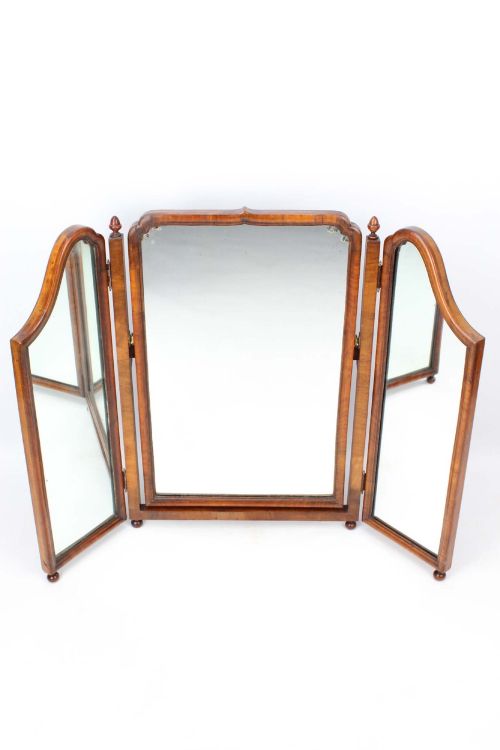
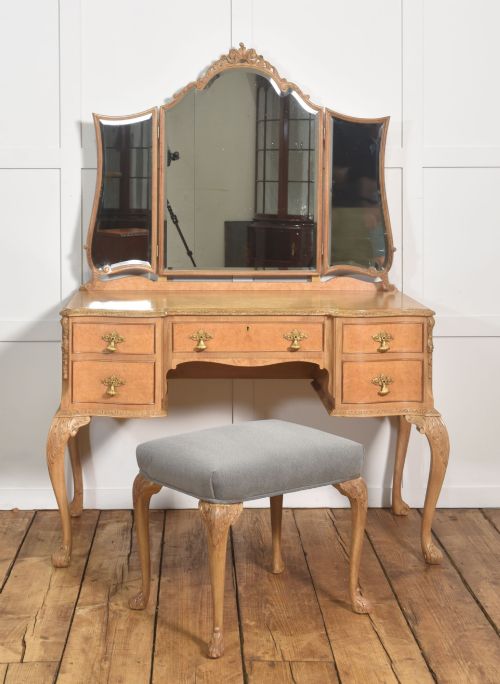
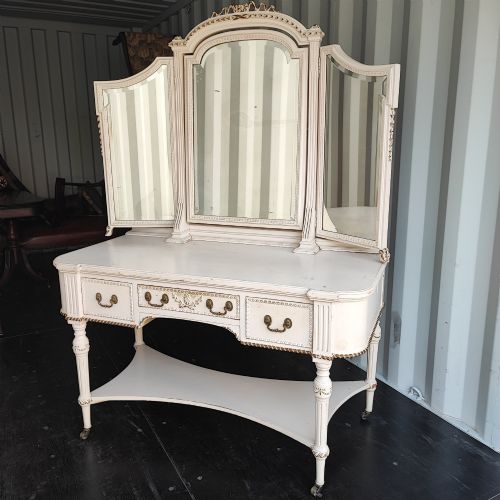
These vintage triple mirror vanity pieces combine three-panel glass with timber frames to anchor a dressing space with reflected light.
Vintage Triple Mirror Vanity
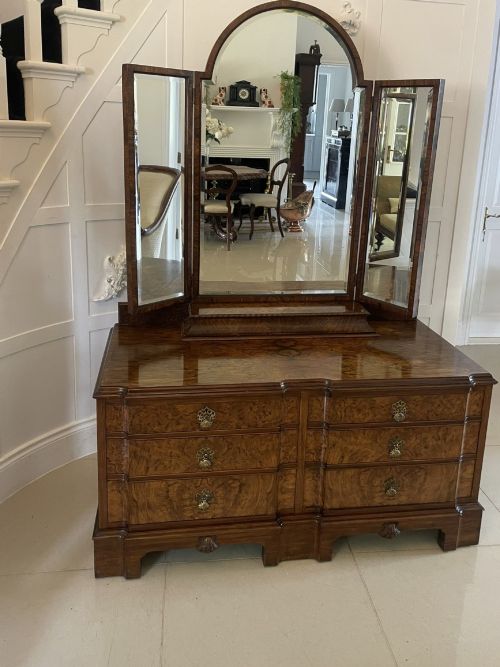
Revival styles dominate the earlier periods, drawing on Queen Anne, Louis XV, Louis XVI, and Jacobean motifs, while later decades favour clean Art Deco and mid-century lines. Makers such as Maples and Maurice Adams appear among the larger dressing tables, alongside specialised manufacturers like Brot and Peerage.
How they were made
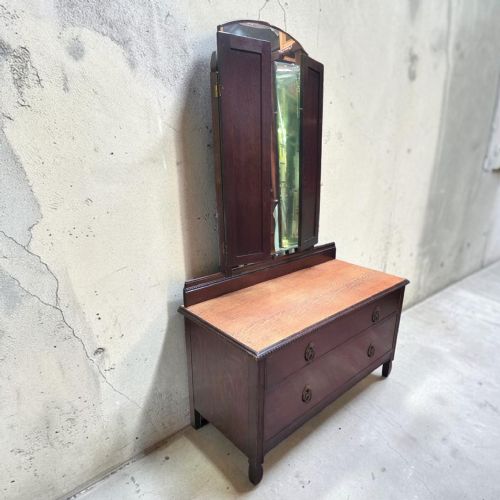
Construction relies heavily on solid timber and rich veneers, with burr walnut and oak forming the primary structural and decorative surfaces. Cabinetmakers utilised traditional joinery for the dressing tables, mounting adjustable brass hinges to allow the flanking mirror panels to swing smoothly.
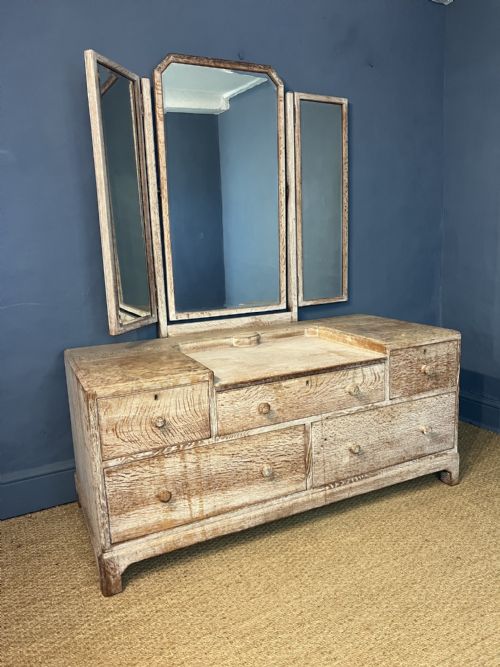
Glass plates are bevelled at the edges on finer period examples, set into rebated wooden frames or held within brass borders. Surface finishes range from polished French polish and limed treatments on oak to original painted schemes and patinated brass.
What varies in quality
The distinction between standard production and top-tier workshop output lies in the selection of timber veneers and the crispness of any carved or applied ornament. Burr walnut tables with matched grain patterns and branded maker stamps sit at the upper end of craftsmanship.
Mirror glass condition and the integrity of the original hinges dictate the longevity and authenticity of each piece. Heavy oak and walnut dressing tables with matching stools represent a more substantial investment than lightweight wall-mounted alternatives.
Maples of London and Paris·Maurice Adams·Brot
The Vintage Triple Mirror Vanity Glossary
- Triptych
- A three-panel mirror arrangement where two hinged outer wings fold inwards around a fixed central glass. This design allows the user to view profiles from multiple angles.
- Burr Walnut
- A highly figured timber veneer harvested from the knot growths of walnut trees. It provides intricate, swirling grain patterns prized in high-end cabinetmaking.
- Limed Oak
- Timber treated with a white pigment or lime finish to create a pale, grain-highlighted surface. This technique gained popularity during the nineteen thirties in modern design workshops.
- Bevelled Edge
- Glass edges angled and polished to a thinner margin, catching the light and framing the reflection. Older plates often feature a distinct hand-ground bevel.
- Peerage
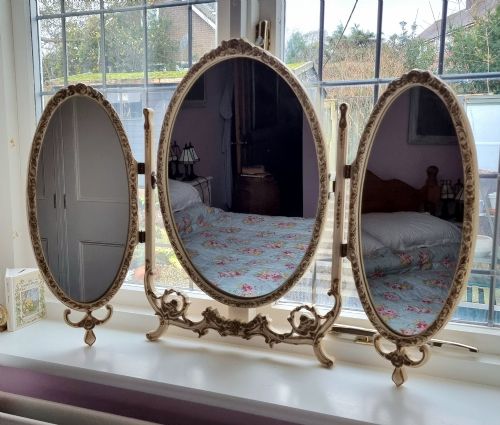
- A British manufacturer known for cast brass homeware and decorative metalwork during the mid-twentieth century. Their pieces frequently utilise heavy brass castings.
Vintage Triple Mirror Vanity: Frequently Asked Questions
What is a triple mirror vanity?
A triple mirror vanity is a dressing table or standalone mirror assembly featuring three glass panels hinged together. The side panels adjust to different angles for grooming.
These pieces range from large oak and walnut dressing chests with integrated drawers to portable brass triptychs designed for walls or tabletops.
How do I date a vintage vanity mirror?
Dating relies on stylistic clues, materials, and maker marks found on the timber or the metal frame. Pieces from the Edwardian era and the nineteen twenties often display revival carving or rich burr walnut.
Later examples from the nineteen thirties introduce limed oak and streamlined Art Deco geometry, while mid-century pieces favour polished brass and simpler linear forms.
Are the mirrors original to the dressing tables?
Many surviving dressing tables retain their original mirror plates, which can be identified by slight foxing or age spots in the silver backing. Replacement glass is sometimes fitted if the original suffered damage over time.
Checking the fit within the wooden frame and the style of the mounting brackets helps determine if the mirror assembly belongs to the base.
How should I care for burr walnut veneer?
Burr walnut requires gentle dusting with a soft, dry cloth and protection from direct sunlight and excessive heat. Avoid silicone polishes that can build up a film on the polished surface.
Applying a traditional beeswax polish occasionally helps nourish the timber and maintain its natural lustre without harming the delicate grain.