



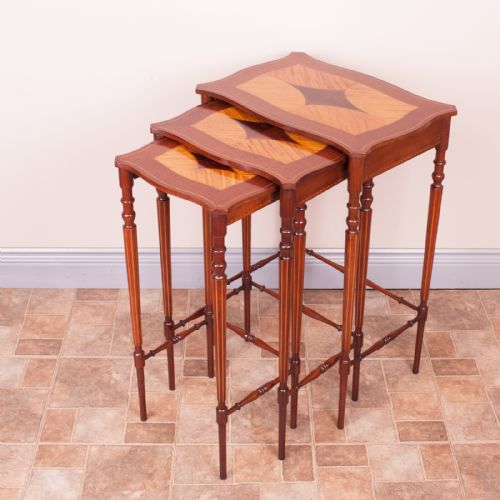


Vintage Trio of Tables
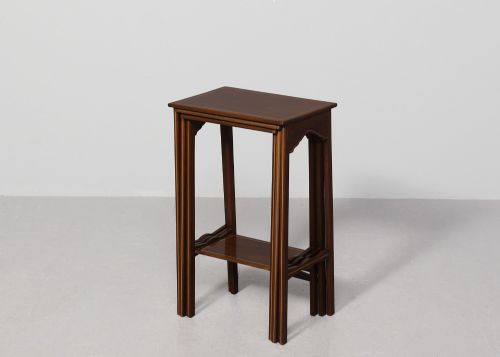
These vintage trio of tables items are nested sets offering practical surface space that slip away neatly when floor room matters.
Vintage Trio of Tables
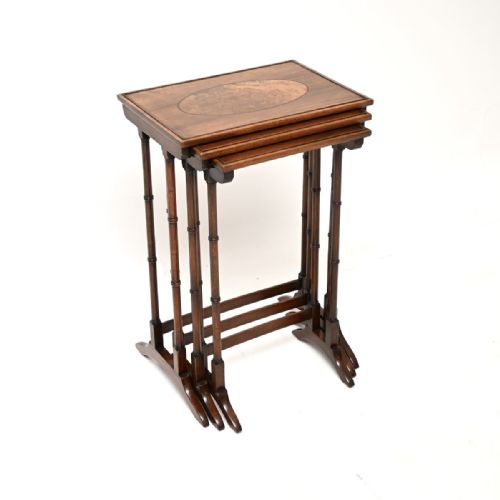
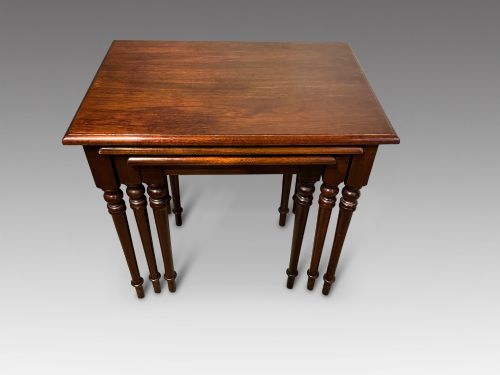
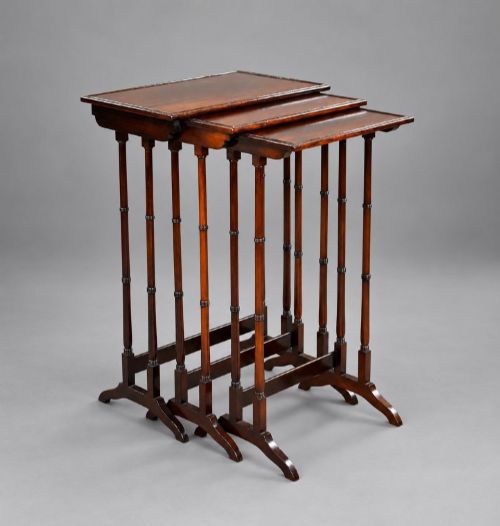
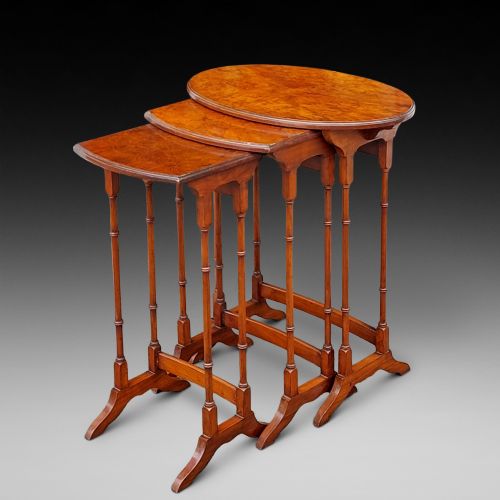
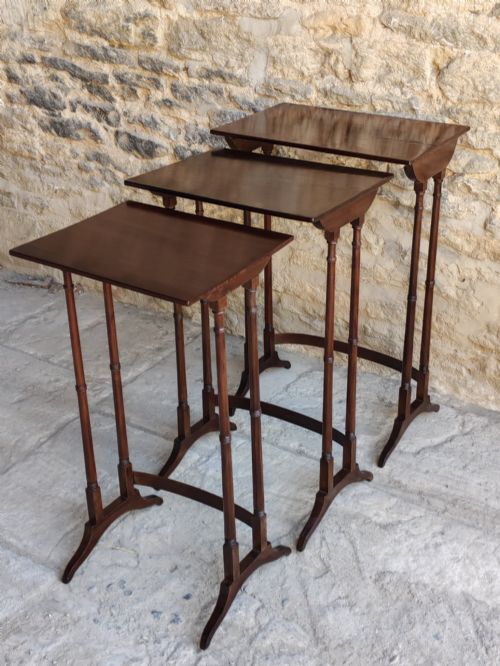
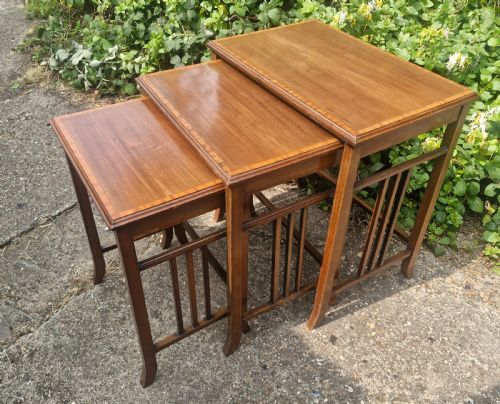
A vintage trio of tables typically takes the form of a nest of three tables, designed so the smaller surfaces slide neatly beneath the largest one when not in use. You will most frequently encounter Edwardian and Georgian examples configured as mahogany nesting tables, though variations in oak and burr walnut appear across the selection.
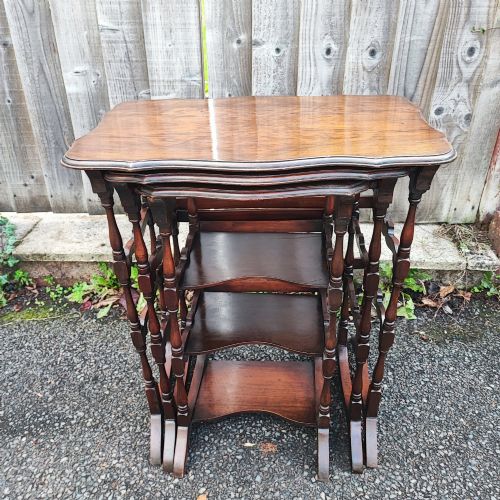
The primary function of these pieces involves providing movable occasional surfaces for tea, drinks or books without permanently cluttering a reception room. While the standard form remains a graduated set of three rectangular or oval surfaces, occasional variations include shaped tops, inlaid details or embossed leather inserts.
Most entries belong to the Edwardian period or the early twentieth century, alongside a few nineteenth-century pieces and later Art Deco interpretations. Buyers seeking a vintage trio of tables will find that mahogany predominates, supplemented by walnut, satinwood and oak constructions.
Materials and construction methods
Makers utilised solid timbers and veneers, predominantly employing mahogany and walnut, with select pieces featuring decorative satinwood inlay or burr walnut figuring. These woods were chosen for durability and grain pattern, allowing surfaces to withstand regular handling while presenting a polished appearance.
Structural joinery relied on traditional techniques suited to lightweight occasional furniture, ensuring each smaller frame cleared the legs of the one above it. Certain iterations incorporate turned elements such as oak barley twist supports or specialised inserts like embossed leather and glass.
Vintage Trio of Tables Retail Price Guide 2026
Typical asking prices for vintage trio of tables among the pieces listed under this phrase on Sellingantiques today, from the lower quarter to the upper quarter. They describe what is for sale here now, not the wider market.
Listings feature periods spanning from the nineteenth century through the Edwardian era up to 1940, executed in mahogany, oak, walnut, and burr walnut.
Distinguishing quality in nests of tables
Quality separates ordinary utility pieces from finer examples through the precision of the nesting mechanism and the crispness of any inlay or carved detail. Better examples maintain structural rigidity across all three tiers without looseness in the joints when the tables are separated or stored together.
The choice of timber grain and the neatness of cabinetmaking mark the upper tier of the range, where visible surfaces display well-matched veneers and balanced proportions. Poorer examples show heavier, less refined framing or clumsy tolerances that cause the tiers to bind during stacking.
The Vintage Trio of Tables Glossary
- Nest of tables
- A set of graduated tables designed to slide one beneath another to save floor space. They serve as adaptable occasional surfaces in living spaces.
- Mahogany
- A durable, reddish-brown tropical hardwood favoured for cabinetmaking. It accepts fine finishes and holds intricate details well.
- Burr walnut
- Timber taken from a walnut tree outgrowth, featuring swirling, complex grain patterns. It is typically used as a decorative veneer on high-status surfaces.
- Inlay
- A technique where pieces of contrasting wood or other materials are inserted into depressions in the base wood to form a pattern. Sheraton Revival and Edwardian pieces frequently utilise this decoration.
- Barley twist
- A spiral turning technique resembling a twisted rope, applied to table legs or upright supports. It is commonly found on oak furniture from the early twentieth century.
Vintage Trio of Tables: Frequently Asked Questions
What is a vintage trio of tables used for?
These sets provide extra surface space for drinks or books that can be deployed instantly when guests arrive. They tuck away compactly when not needed, making them useful in rooms of modest proportions.
Historically, they sat beside seating arrangements to hold tea services or writing materials. Their portability remains their chief asset in modern domestic settings.
How do I date an Edwardian nest of tables?
Edwardian examples often feature Sheraton Revival mahogany inlay, lighter proportions, and polished finishes typical of the early 1900s. Comparing the secondary timbers and the style of the leg turning helps place them within the period.
Construction methods also offer clues, as mass production increased after the turn of the century while retaining hand-finished details like inlaid banding.
Are oak nesting tables sturdy?
Oak versions, including those with barley twist legs, generally offer robust construction due to the inherent strength of the timber. They handle everyday movement well while providing a heavier visual presence than mahogany.
Their sturdiness depends on the tightness of the joints and whether the stacking clearance remains true over decades of use.
Can I use these tables separately around the room?
The individual tables in a set function independently as small side tables or bedside surfaces. Their graduated sizes allow them to be distributed wherever a small resting place for an item is required.
When scattered, they maintain a matched appearance throughout a room while fulfilling multiple practical roles simultaneously.