
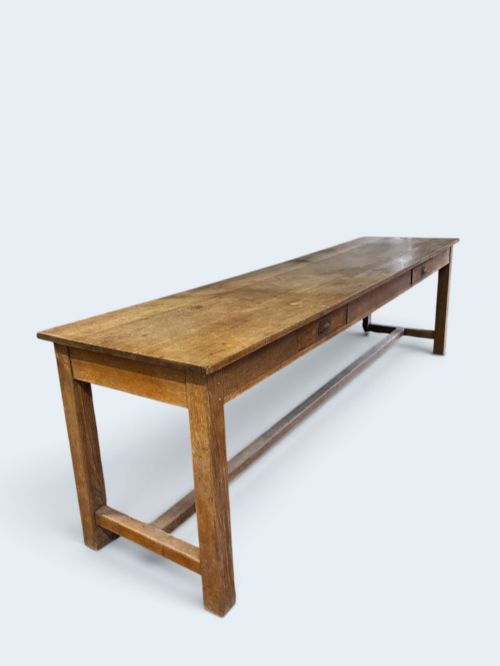
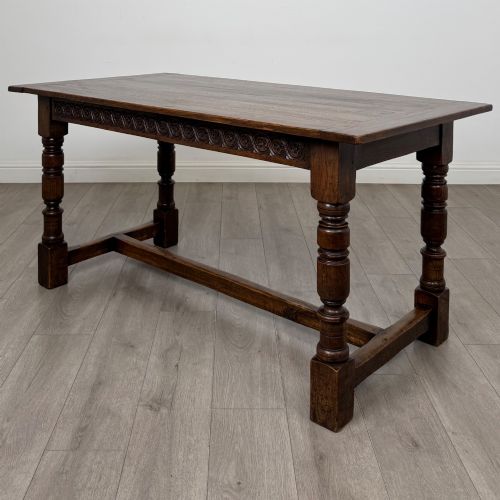
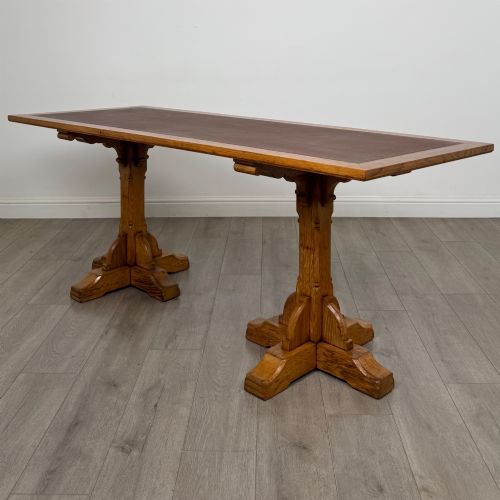
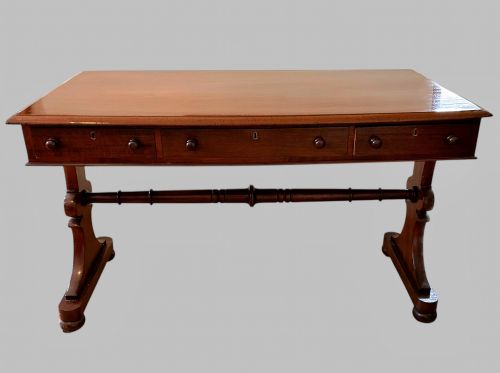
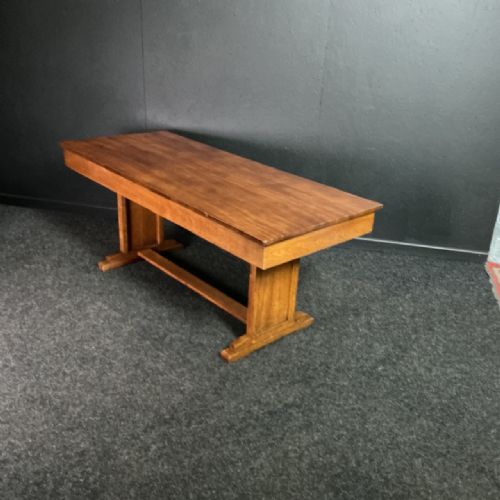
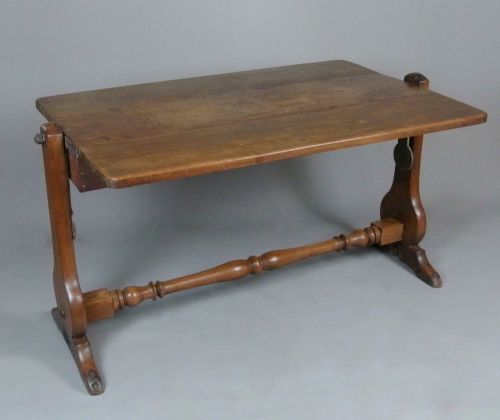
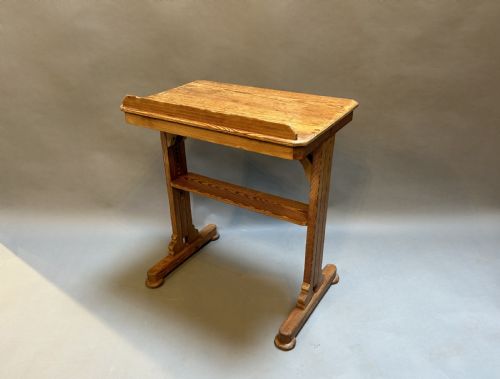
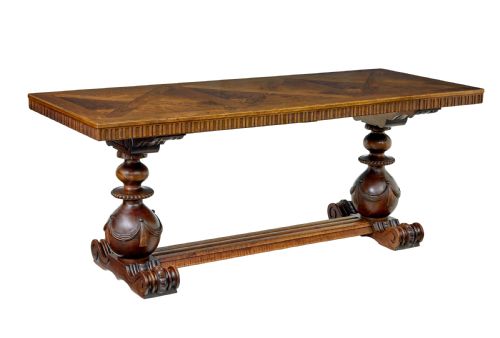

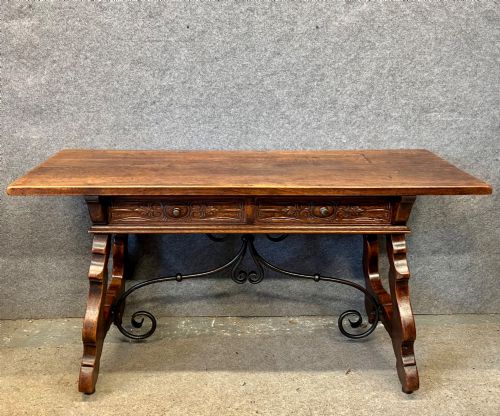


Vintage Trestle Desk
These vintage trestle desks combine practical workspace with sturdy timber and iron supports, offering a functional centrepiece for a study.
Vintage Trestle Desk
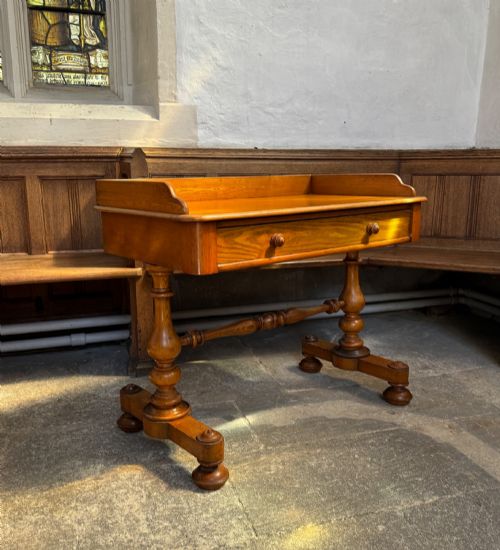
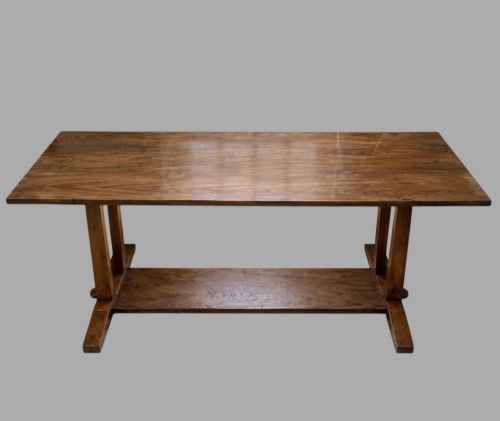
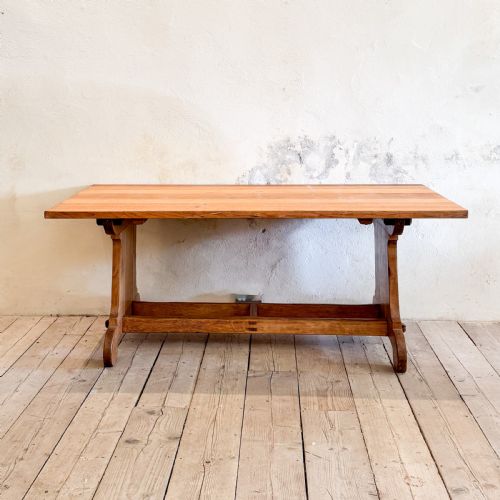
A vintage trestle desk brings together robust timber tops and supportive end frames, providing an open workspace without the obstruction of traditional corner legs. When searching for a vintage trestle desk, buyers encounter forms that draw from industrial, rustic, and arts and crafts traditions spanning the nineteenth and early twentieth centuries.
The pieces available originate from periods such as the Victorian era, the Edwardian years, and the 1920s and 1930s. Alongside dedicated writing tables and library tables, listings frequently include pine and oak work tables and folding metalwork variations adapted for functional use.
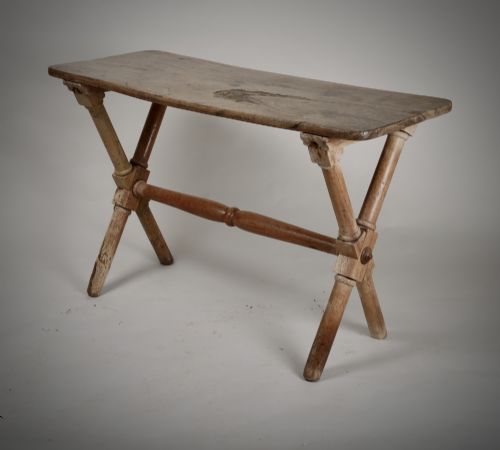
Many examples rely on simple plank construction supported by trestle ends or metal bases, reflecting utilitarian origins in schools, workshops, and public interiors. Buyers find variations in scale, ranging from compact writing surfaces to large industrial steel and timber combinations.
Materials and construction methods
Construction relies heavily on solid hardwoods like oak, mahogany, and walnut, alongside resilient softwoods including pine. Timber tops are frequently paired with structural supports made from cast iron, brass, or painted industrial steel.
Joinery methods range from pegged joints and dovetailed drawers on period library tables to bolted metal brackets on early twentieth-century industrial bases. Surfaces display finishes such as natural wax, Falu paint, or bleached treatments that preserve the grain of the wood.
Evaluating quality and proportion
Quality rests upon the integrity of the materials, distinguishing solid quartered oak and heavy pitch pine from lighter utility timbers. The connection between the top and the trestle base dictates stability, where thoughtful engineering prevents lateral movement.
Proportion and surface preservation separate standard utilitarian items from finer examples. Tables retaining their original painted finishes, patinated brass fittings, or distinct maker attribution display a higher level of historical interest.
Heals·Pairs MFG Co
The Vintage Trestle Desk Glossary
- Trestle table
- A table structure consisting of two or more supports connected by a horizontal beam. This design maximises legroom beneath the top surface.
- Pitch pine
- A resinous softwood noted for its density and prominent grain pattern. It appears frequently in nineteenth-century utilitarian and institutional furniture.
- Quartered oak
- Timber cut radially from the growth rings to produce a distinctive medullary ray flake pattern. This cut offers superior dimensional stability.
- Industrial steel
- Metal components utilised in early twentieth-century work tables to provide rigid support. These bases often retain their original painted surfaces.
- Writing table
- A freestanding desk designed primarily for correspondence and paperwork. Examples often incorporate one or more drawers beneath the top.
Vintage Trestle Desk: Frequently Asked Questions
How do I date a vintage trestle desk?
Dating relies on examining the timber species, construction techniques, and hardware associated with specific periods like the Victorian era or the 1920s. Hand-cut dovetails and pegged joints usually indicate nineteenth-century origins, whereas bolted metal brackets point towards the early twentieth century.
Style indicators also help establish age, with arts and crafts influences appearing around nineteen hundred and industrial steel frameworks becoming common by the nineteen twenties and thirties. Comparing the construction methods to known historical examples narrows down the timeframe.
Are these desks suitable for daily computer work?
Many solid oak and pine work tables offer sturdy surfaces and generous knee clearance beneath the trestle ends. Their solid timber construction easily supports modern monitors and peripherals.
Buyers should check the depth and height dimensions to ensure comfortable seating and adequate legroom. Adding a protective leather blotter preserves antique wooden surfaces from daily wear.
How should I maintain a vintage wooden top?
Maintaining the wood involves applying quality beeswax periodically to nourish the grain and protect against moisture. Avoid placing timber desks in direct sunlight or near heat sources to prevent splitting.
Cleaning should be done with a soft, dry cloth rather than harsh chemical sprays. Allowing a natural patina to develop over time enhances the character of the piece.
What is the difference between a library table and a writing desk?
Library tables are typically larger, freestanding pieces designed to be viewed from all sides with generous surface areas. Writing desks often feature built-in drawers beneath the top for stationary and paper storage.
While both serve functional workspace roles, library tables frequently lack drawers in favour of an open underframe. Desks are tailored specifically for seated writing tasks.