




Vintage Treen Collectibles
These vintage treen collectibles are small wooden utilitarian items shaped by hand and lathe for domestic, professional, and personal use.
Vintage Treen Collectibles
Vintage treen collectibles encompass a diverse array of small wooden objects made for everyday domestic and personal tasks. When you search for vintage treen collectibles, you encounter items shaped for utility, from kitchenware and snuff boxes to personal accessories and children's toys.
The pieces on this page span several centuries, reaching back to the seventeenth century and moving forward through the Georgian, Victorian, and Edwardian periods. Common domestic survivals include mortars and pestles, nutmeg graters, butter prints, and fruitwood nutcrackers carved into imaginative animal forms.
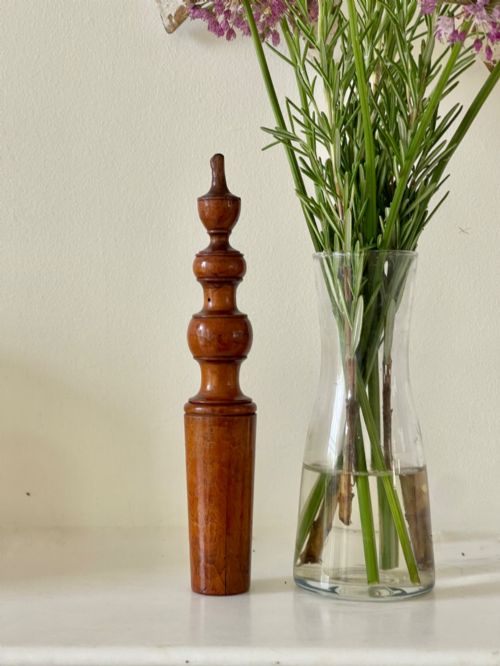
Professional and specialist implements also appear among these wooden wares, including carpenters' mallets, medical stethoscopes, and teachers' clickers. Each object reflects the daily life, trades, and pastimes of past eras through the medium of turned and carved timber.
How they were made
Craftsmen utilised dense, close-grained hardwoods such as boxwood, lignum vitae, fruitwood, and walnut to ensure durability in objects subjected to friction, pressure, or impact. These tight timbers allowed for sharp, clean detailing whether the maker employed a lathe or carved the form entirely by hand.
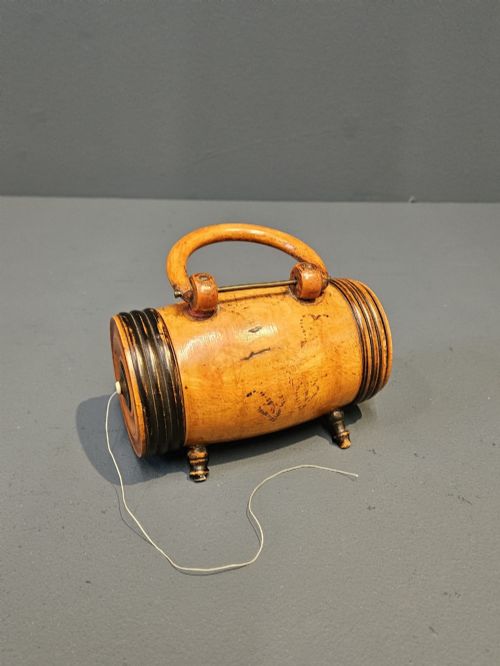
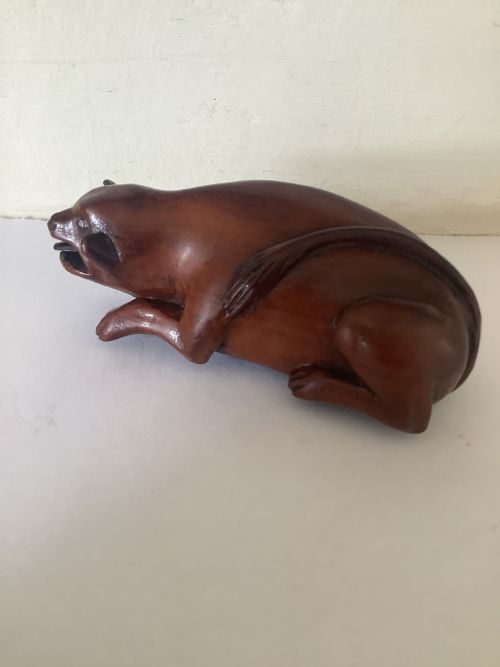
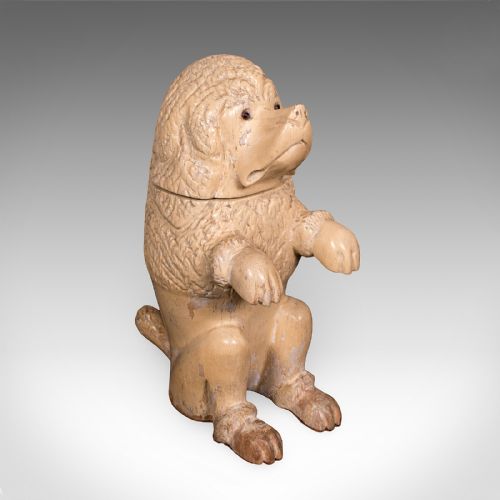
Turning on a lathe produced symmetrical cylindrical forms like barrels, string holders, and mortars, while hand carving brought character to figural pieces such as squirrels, poodles, and the man in the moon. Simple gouges and knives shaped naive domestic utensils like butter prints and knitting sheaths from local timbers.
Listings feature 17th century turned lignum-vitae alongside 20th century turned wood spinning tops.
What varies in quality
Quality in these wooden objects rests upon the crispness of the turning and the sensitivity of the carving. Superior examples display clean lines, well-defined decorative details, and a natural surface patina developed through decades of handling and use.
The choice of timber significantly influences the desirability of a piece, with dense exotic woods like lignum vitae or finely figured boxwood commanding particular appreciation. Condition also plays a role, as crisp mouldings and intact original elements separate ordinary utilitarian survivors from masterworks of vernacular art.
The Vintage Treen Collectibles Glossary
- Treen
- Small handmade wooden objects for domestic or personal use. The term derives from the old English word for tree.
- Lignum vitae
- A dense, heavy tropical hardwood often used for turned items requiring strength such as mortars and mallets. Its natural oils give the wood a dark, self-lubricating surface.
- Snuff box
- A small container designed to hold powdered tobacco for inhalation. These were frequently carved into whimsical or figural shapes.
- Knitting sheath
- A carved wooden holder tucked into a belt to support a knitting needle during traditional handwork. They are often associated with regional folk art traditions.
- Butter print
- A carved wooden stamp used to impress decorative motifs like acorns or wheat onto pats of butter. They preserve crisp vernacular carving patterns.
Vintage Treen Collectibles: Frequently Asked Questions
What is treen?
Treen refers to small, functional wooden objects made before mass production replaced handcrafting. These items served everyday purposes in the kitchen, workshop, and parlour.
Craftsmen turned them on lathes or carved them from local timbers, creating durable goods that acquired a rich patina through generations of use.
How were antique nutmeg graters used?
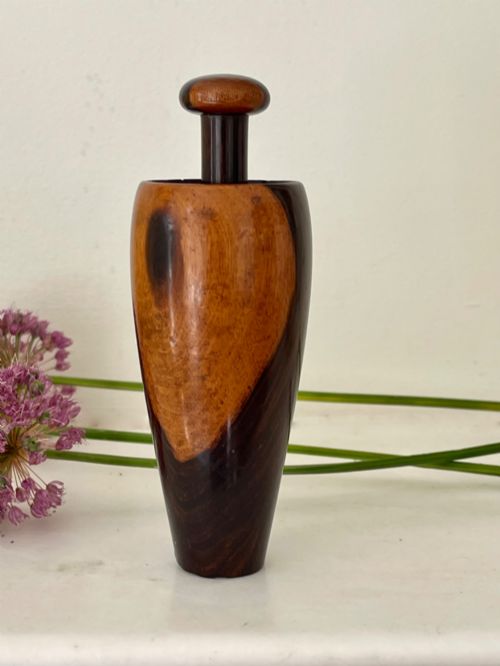
People carried small wooden nutmeg graters to grate fresh spice into food and drinks at tables away from home. They often incorporated an internal compartment to store the whole nutmeg.
These pocket-sized graters frequently took imaginative shapes, such as miniature wine bottles or acorns, combining utility with playful design.
How do I date wooden treen?
Dating relies on tool marks, timber choice, style, and the natural wear patterns visible on the surface. Georgian and earlier pieces often display distinct lathe chatter or hand-carved irregularities.
Victorian and Edwardian examples may show more standardised production methods while retaining the warm, dark lustre of aged hardwood.
How do I care for wooden collectibles?
Keep wooden objects away from direct sunlight and sudden temperature changes to prevent the timber from splitting or warping. Maintain a stable indoor environment.
Dust the surface gently with a dry cloth and avoid applying modern polishes, which can build up and dull the natural patina accumulated over centuries.