







Vintage Tobacco Jar
A vintage tobacco jar holds the heritage of centuries past, offering smokers and collectors a handsome vessel for storing leaf.
Vintage Tobacco Jar
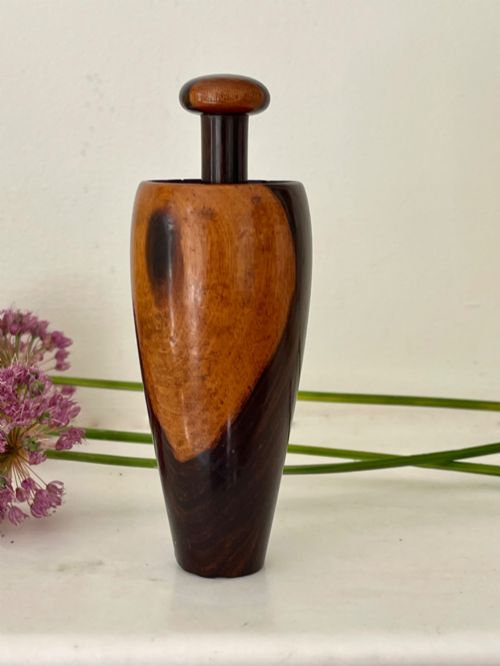
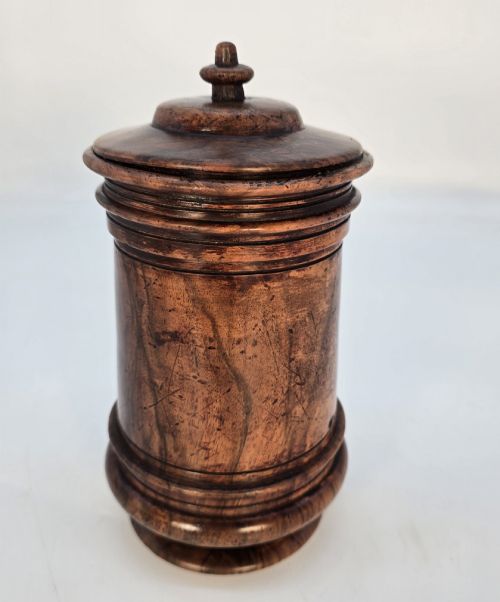
When you search for a vintage tobacco jar, you are looking at containers designed to keep smoking leaf moist and aromatic. The selection includes turned wood barrels, ceramic figures, and lidded pots spanning several centuries of smoking culture.
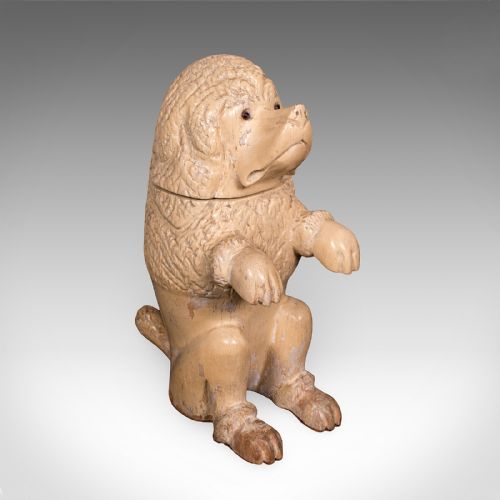
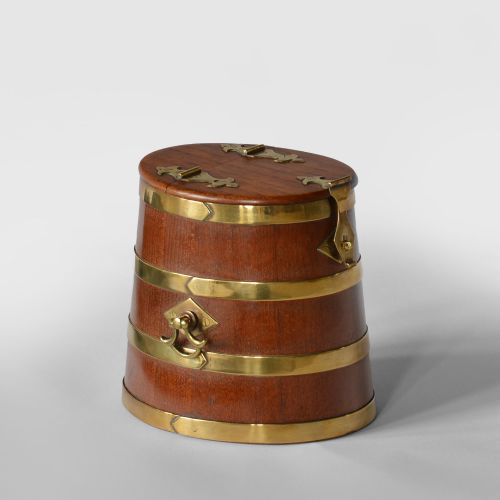
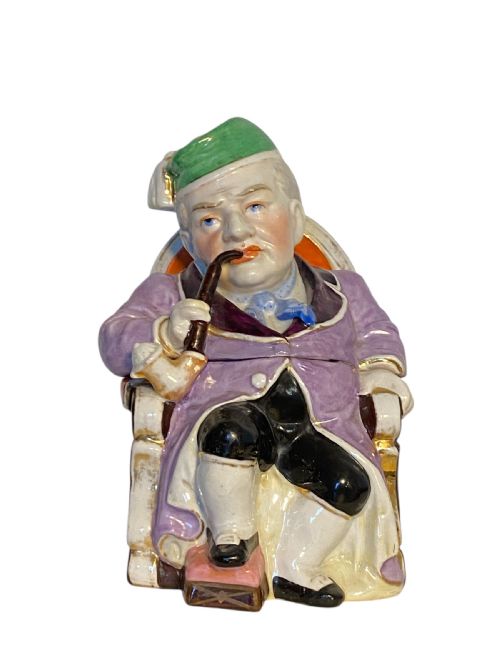
You will most commonly encounter wooden treen vessels and ceramic jars from the nineteenth and early twentieth centuries. These range from carved Black Forest animal figures to plain mahogany barrels and glazed earthenware pots.
How they were made
Woodworkers utilised traditional turning and cooperage techniques to shape oak, mahogany, walnut, and linden wood into staved barrels and lidded boxes. Master carvers created detailed figural sculptures, such as bears and dogs, utilising hand chisels on dense timber.
Potters and ceramicists shaped earthenware, porcelain, and delftware using traditional throwing and moulding methods before applying glazes and hand-painted decoration. Metalworkers added sterling silver mounts, brass bindings, and plated fittings to secure and adorn the storage vessels.
Vintage Tobacco Jar Retail Price Guide 2026
Typical asking prices for vintage tobacco jar among the pieces listed under this phrase on Sellingantiques today, from the lower quarter to the upper quarter. They describe what is for sale here now, not the wider market.
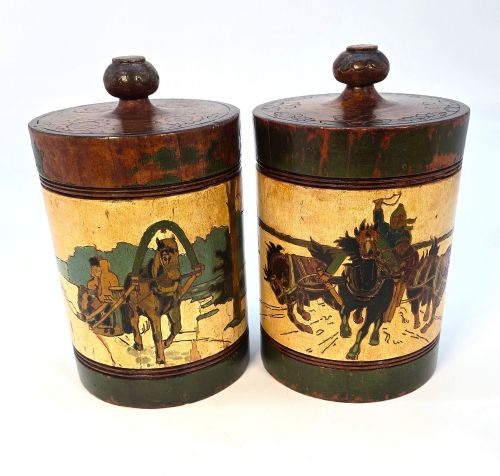
The inventory encompasses diverse regional styles, including Black Forest carvings, Dutch delftware, and Russian folk art containers.
What varies in quality
The precision of the woodwork and the depth of the carving separate standard turned containers from exceptional sculptural pieces. Master carvers achieved remarkable anatomical detail in figural jars, whereas lesser examples show simpler execution.
The material richness and the integrity of internal seals dictate the standing of a piece. Jars retaining original fitted inner lids, unblemished ceramic glazes, and substantial silver mounts represent the finer tier of manufacture.
The Vintage Tobacco Jar Glossary
- Treen
- Small handmade wooden domestic objects produced from the sixteenth century onwards. These items display the natural grain of timbers like walnut and mahogany.
- Humidor
- A moisture-controlled box or jar designed to keep cigars and tobacco fresh. These enclosures often feature tight-fitting lids and wooden linings.
- Coopered
- Made by a cooper using staves and metal or wooden hoops. This technique created watertight barrels and storage vessels.
- Delft
- Tin-glazed earthenware originating from Dutch and English potteries. This ceramic exhibits a distinctive white surface often decorated in blue.
Vintage Tobacco Jar: Frequently Asked Questions
What is a vintage tobacco jar?
A vintage tobacco jar is a lidded container historically used to store smoking leaf while maintaining proper moisture levels. These vessels protected the tobacco from drying out in homes and shops.
They appear in various materials including carved wood, porcelain, earthenware, and metal, often featuring decorative designs suited for display on tables or desks.
How do I use one today?
You can utilise these lidded vessels to store small household items, dry goods, or desk accessories. Many collectors display them as decorative objects on shelves or sideboards.
Care should be taken with older wooden and ceramic interiors if storing perishable items, as original linings may be porous or delicate.
How do I date a tobacco jar?
Dating relies on examining the materials, manufacturing marks, and stylistic characteristics of the piece. Nineteenth-century examples often display distinct turnery or Victorian pottery glazes.
Consulting hallmarks on silver mounts or maker stamps on ceramic bases provides precise chronological markers for identification.
What materials were used?
Maker workshops utilised a wide range of materials depending on the period and region of manufacture. Wood varieties include oak, mahogany, walnut, fruitwood, and linden wood.
Ceramic examples range from porcelain and Staffordshire pottery to Dutch delftware, complemented by brass, sterling silver, and glass elements.