

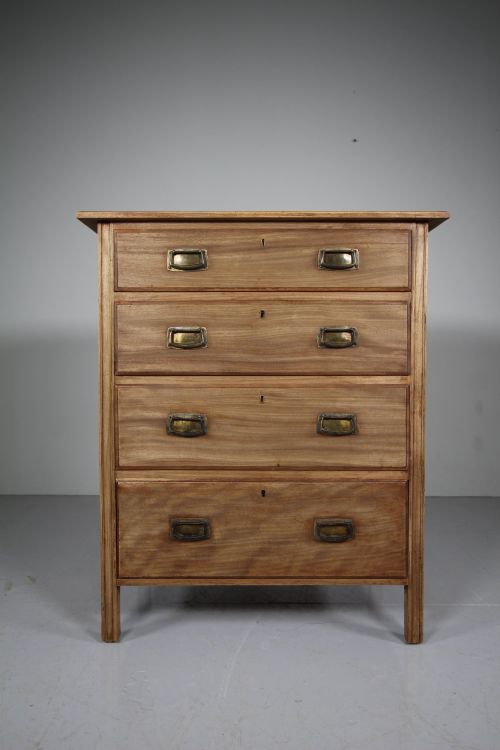
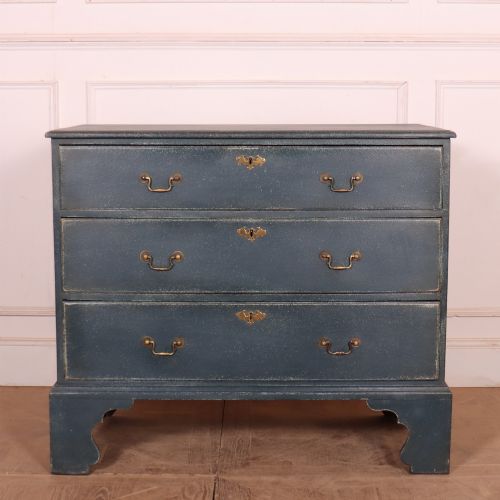
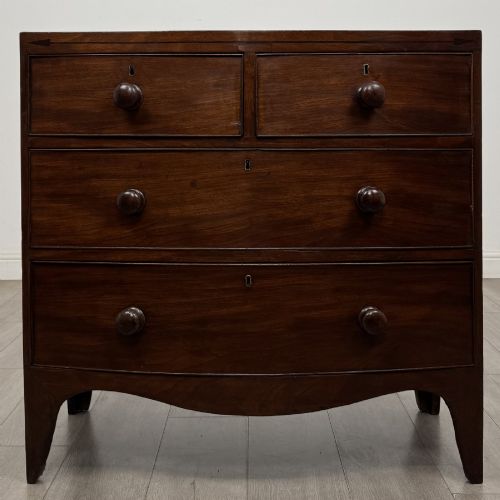
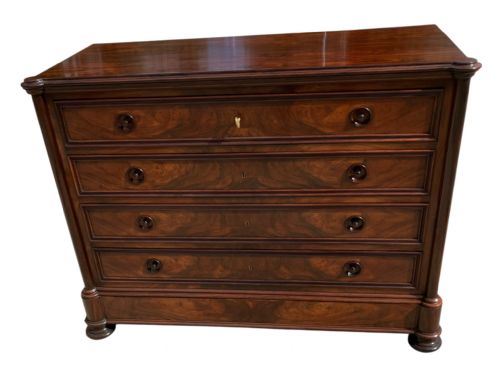
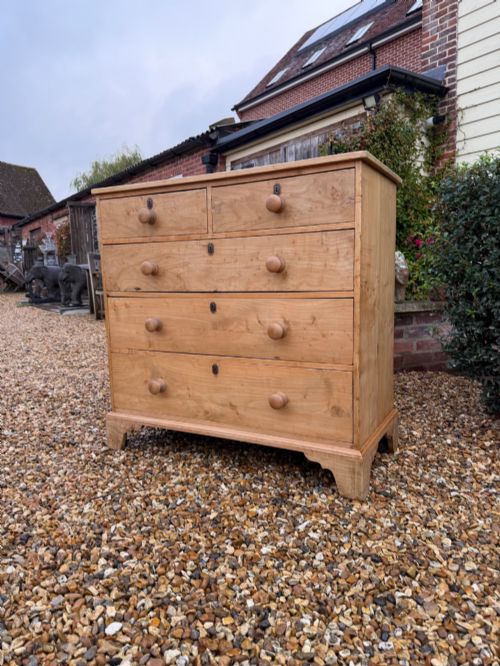
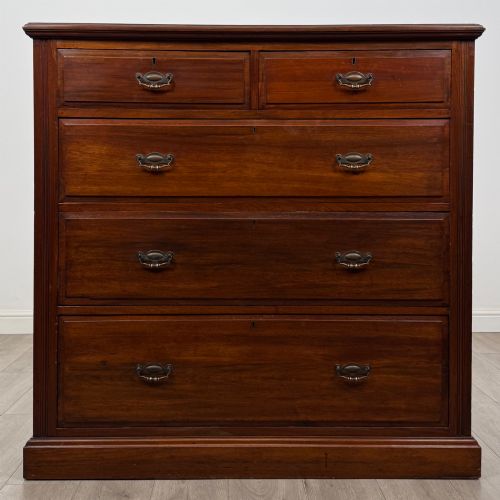
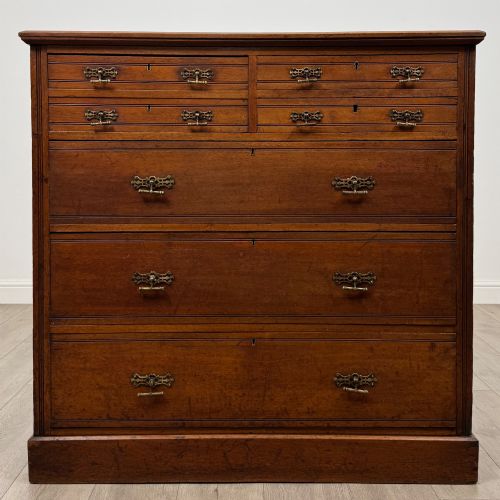
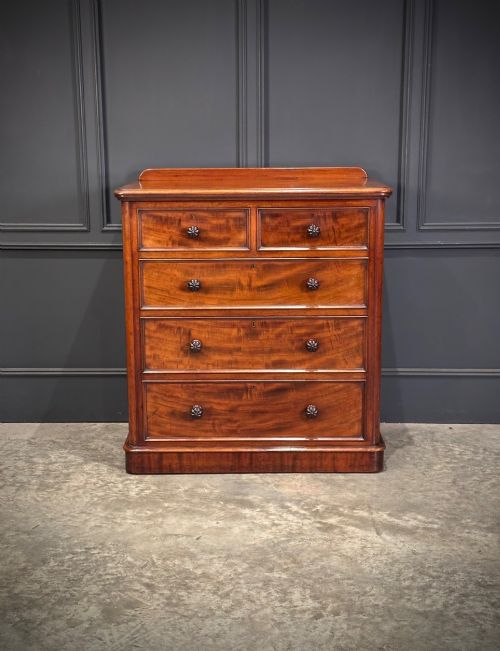
Vintage Timber Drawer Chest
A vintage timber drawer chest brings dependable storage and period character into a room, spanning modest pine country pieces to finely figured walnut designs.
Vintage Timber Drawer Chest
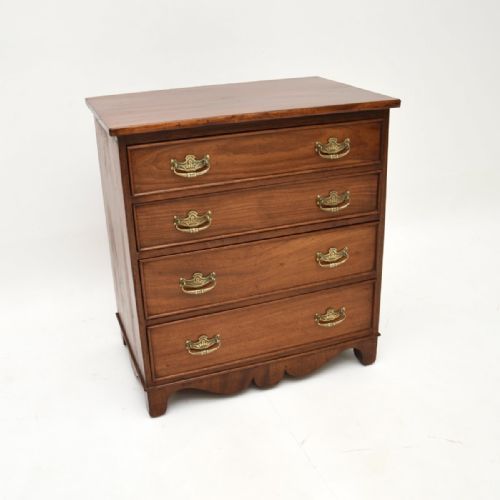
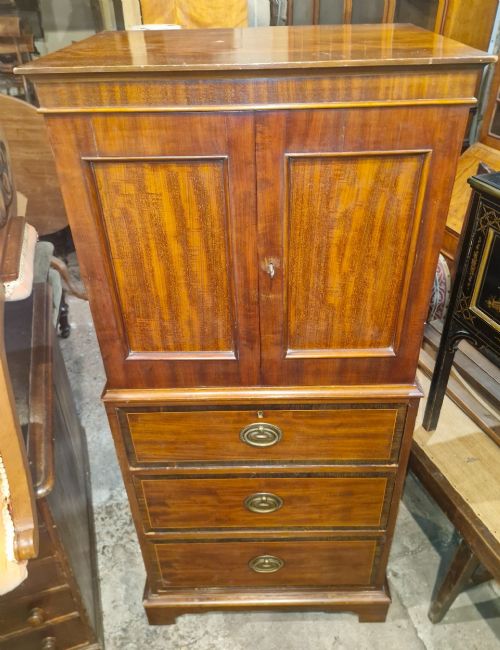
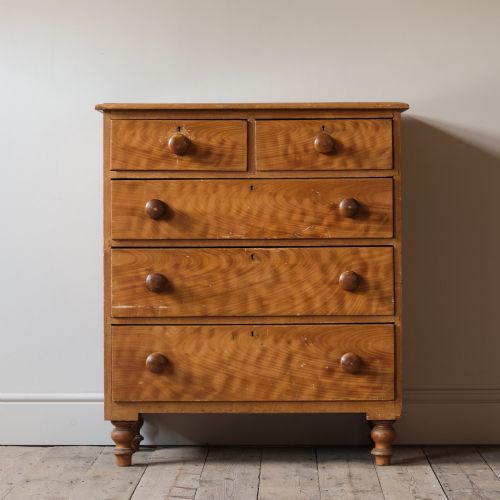
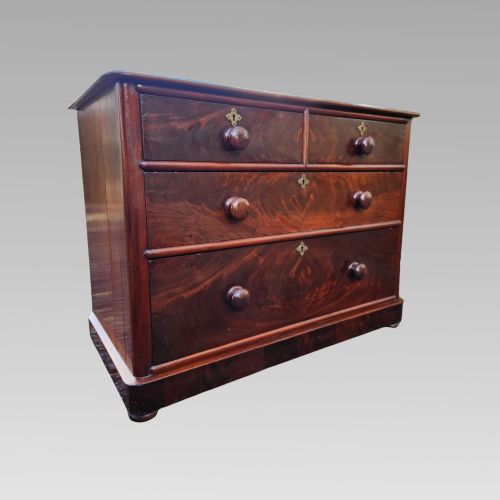
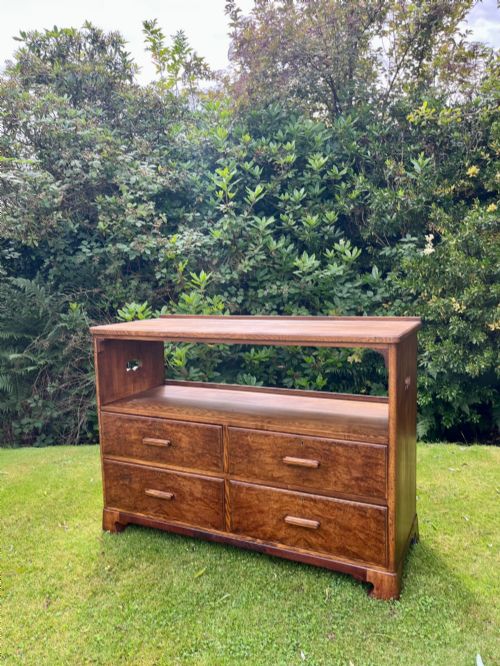
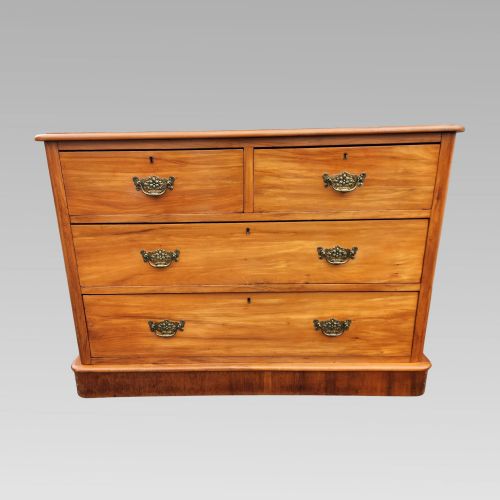
A vintage timber drawer chest functions primarily for domestic storage, taking the form of tallboys, bedside cabinets, commodes, and multi-drawer banks. These pieces range from simple utilitarian pine constructions to grand Georgian and Victorian forms in rich mahogany and walnut.
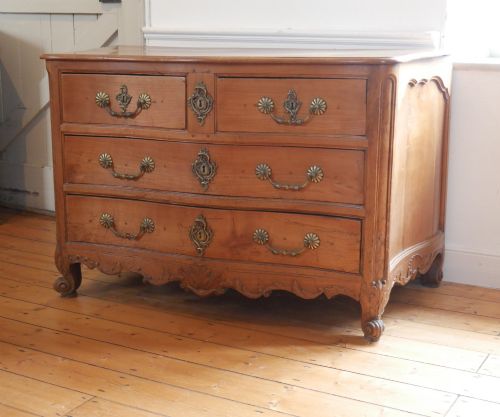
Buyers browsing this selection encounter numerous examples from the nineteenth and early twentieth centuries alongside select eighteenth-century and art deco specimens. The collection encompasses English bowfronts, French commodes, and specialised apothecary or haberdashery cabinets.
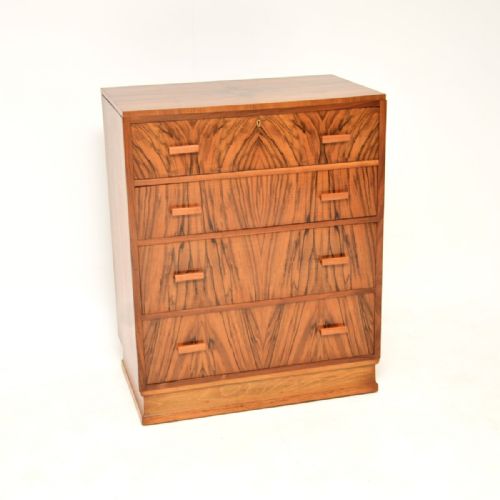
Solid timber construction underpins the majority of these pieces, though some examples feature applied paint finishes, decorative scumble, or exotic veneers like rosewood and satinwood. Each object reflects the prevailing aesthetic of its period, from strict Georgian proportions to the simpler lines of arts and crafts design.
How they were made
Cabinet makers utilised dense hardwoods such as mahogany, walnut, and oak alongside softer timbers like pine and fruitwood, often selecting figured grains for drawer fronts. Surfaces were typically finished with wax, polish, or oil to highlight the natural character of the wood.
Alternative finishes include painted surfaces, original scumble effects, and decorative faux bamboo carvings, which demonstrate the stylistic versatility of the period workshops. Metal elements such as brass handles, hinges, and lock escutcheons were integrated to secure and operate the drawers.
Vintage Timber Drawer Chest Retail Price Guide 2026
Typical asking prices for vintage timber drawer chest among the pieces listed under this phrase on Sellingantiques today, from the lower quarter to the upper quarter. They describe what is for sale here now, not the wider market.
Some chests hide secret locking flaps down the side, meaning your midnight snacks are officially secure from curious housemates.
What varies in quality
The refinement of the timber selection dictates the visual standing of a piece, with highly figured mahogany, burr walnut, and satinwood representing the upper tier. Matching wood grains across drawer facades and retaining original hardware distinguish superior examples from standard utility items.
Structural integrity depends on traditional joinery methods and the stability of the timber over decades of use. Pieces that retain their original paint finishes, patination, and maker documentation command greater interest than heavily restored alternatives.
Early Heals·Jas Shoolbred·Whytock and Reid
The Vintage Timber Drawer Chest Glossary
- Commode
- A low French chest of drawers or cabinet designed for domestic use. These pieces often feature decorative painted finishes or serpentine fronts.
- Wellington chest
- A tall, narrow chest of drawers secured by a locking side flap that hinges down over the drawer edges. This specific form typically includes several graduated drawers.
- Bowfront
- A furniture front that curves outward in a convex arc. This style became particularly popular in English cabinet making during the Georgian and nineteenth-century periods.
- Scumble paint
- A decorative surface treatment applied with translucent glazes to imitate more expensive wood grains or create mottled patterns. Country house furniture frequently displays this technique.
- Haberdashery cabinet
- A large multi-drawer storage unit originally utilised in shops for organising textiles and small goods. These utilitarian pieces now serve as distinctive domestic drawer chests.
Vintage Timber Drawer Chest: Frequently Asked Questions
How do I date a timber chest of drawers?
Dating relies on examining construction methods, timber choices, and overall design characteristics. Georgian pieces typically show dovetailing and proportion distinct from later Victorian or Edwardian items.
Hardware styles, drawer linings, and secondary woods also provide reliable clues for establishing the era in which a chest was made.
What is the difference between a commode and a chest of drawers?
A commode is traditionally a low French-style cabinet featuring drawers, often distinguished by decorative serpentine fronts and refined veneers. A standard chest of drawers is generally taller and more utilitarian in its British iterations.
Both serve similar storage functions within a room, though commodes lean towards decorative reception spaces.
How were apothecary and haberdashery cabinets used?
Apothecary cabinets were designed to store medicinal ingredients, herbs, and small specimens within numerous small drawers. Haberdashery cabinets served shop interiors by organising ribbons, buttons, and fabrics.
Today, these multi-drawer units find new purpose in homes for organising small collections, stationery, or craft materials.
How should I care for a waxed or polished timber surface?
Maintain timber surfaces by dusting regularly with a soft cloth and applying a quality beeswax periodically to nourish the wood. Avoid placing furniture in direct sunlight or near heat sources to prevent cracking.
Gentle maintenance preserves the historical patination accumulated on these vintage pieces over generations.