
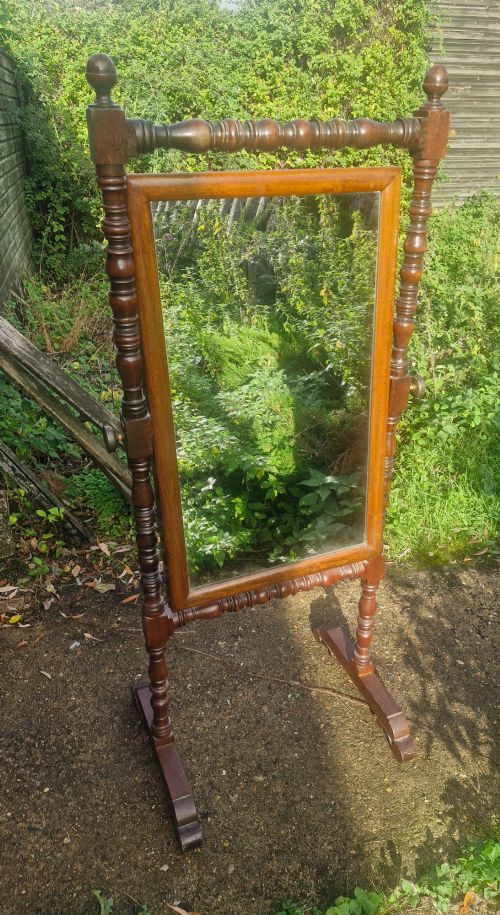
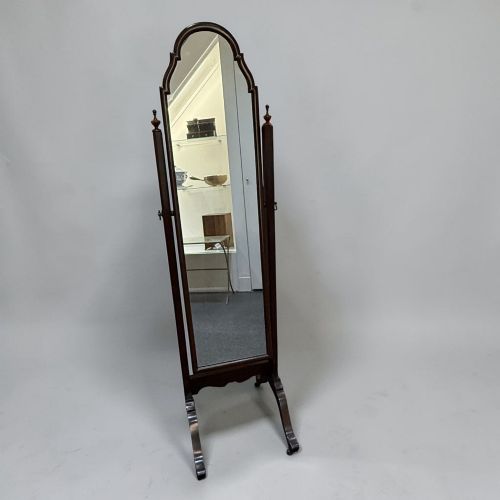
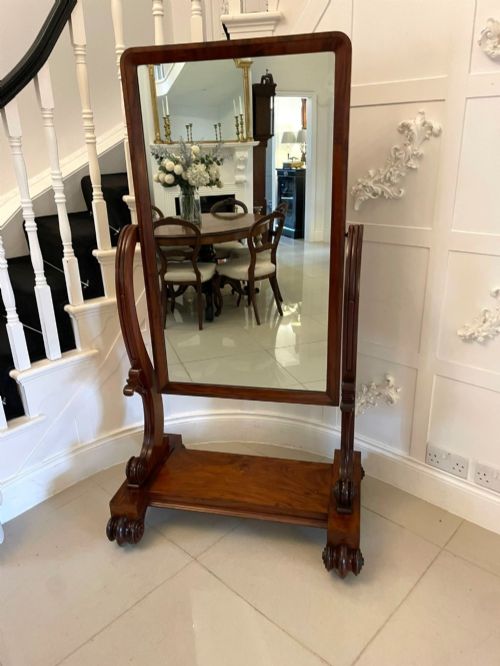
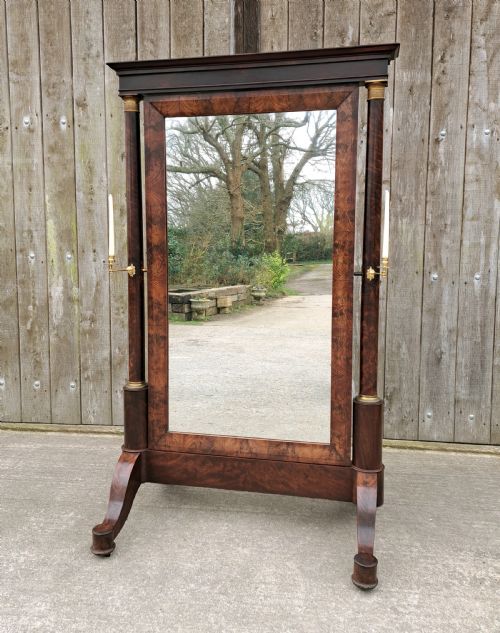
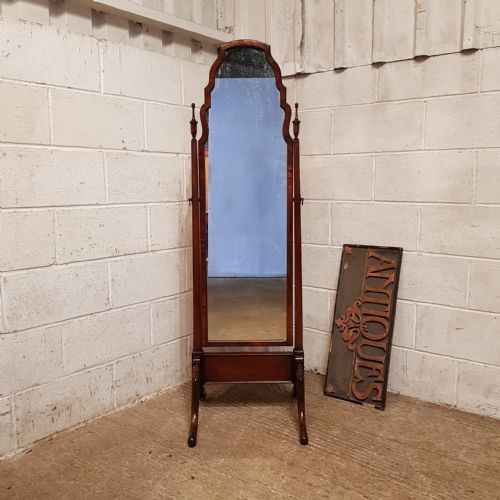


Vintage Tilting Dressing Mirror
These vintage tilting dressing mirror selections bring adjustable reflection to period dressing tables and bedrooms across several eras.
Vintage Tilting Dressing Mirror
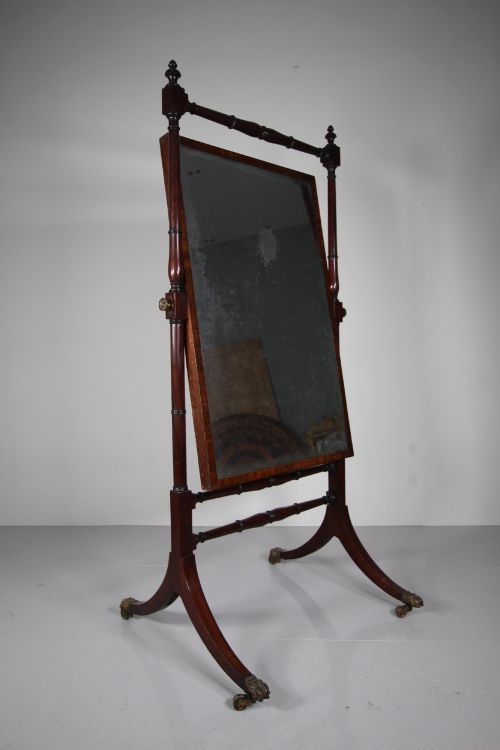
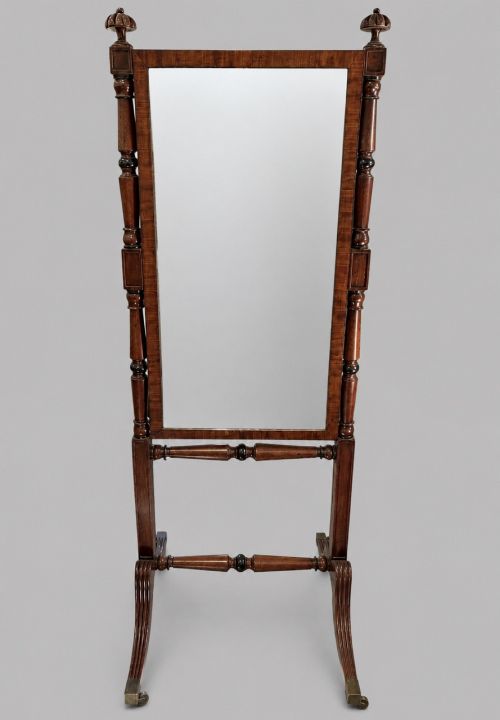
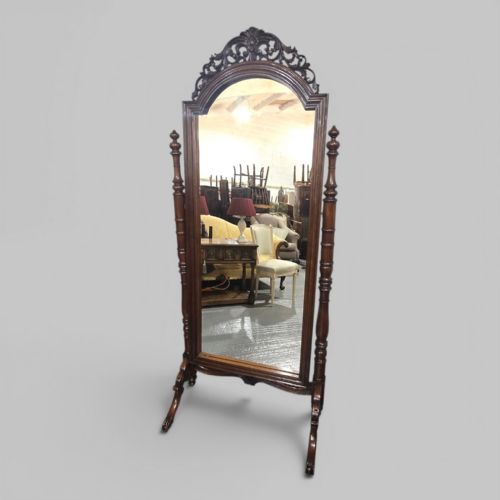
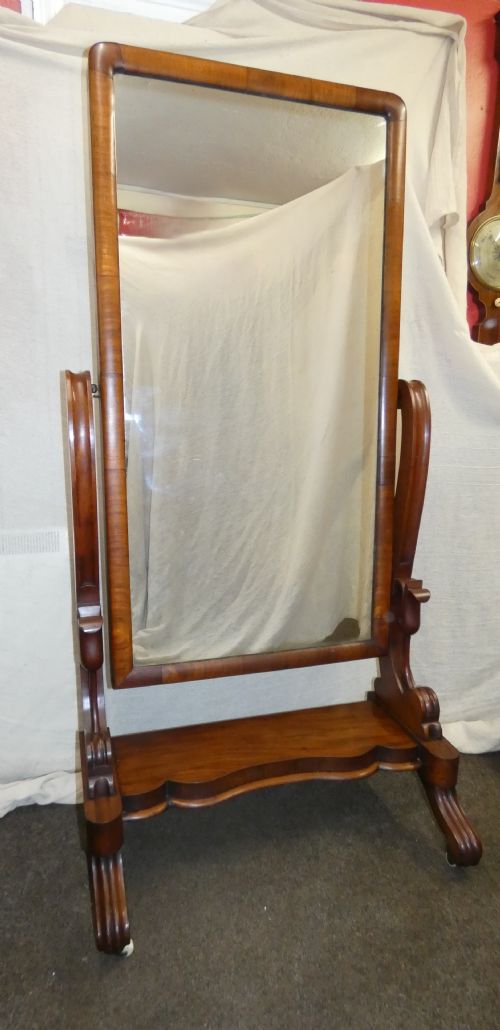
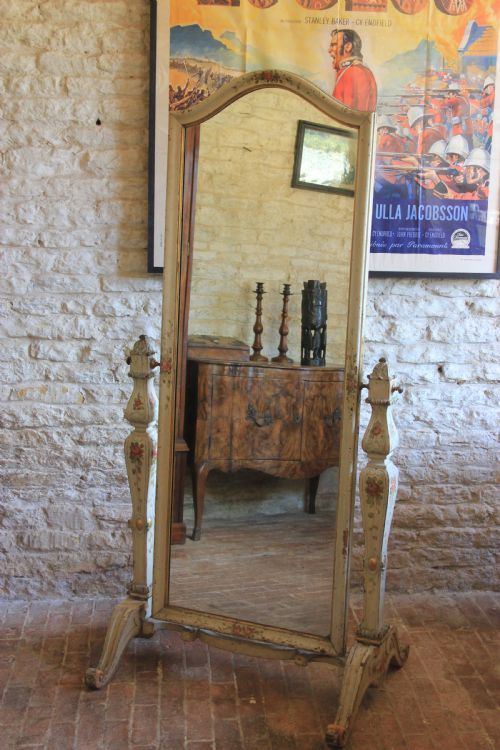
A vintage tilting dressing mirror is an adjustable looking glass designed to pivot within a supportive frame, allowing the user to alter the angle of reflection. When buyers search for a vintage tilting dressing mirror, they encounter various formats ranging from large floor-standing cheval mirrors to smaller table-top vanity versions.
The pieces on this page span several centuries and stylistic movements, including Edwardian, Regency, Victorian, and Art Deco designs. Common variations include large mahogany cheval mirrors alongside compact brass, walnut, and chrome dressing table pieces.
How they were made
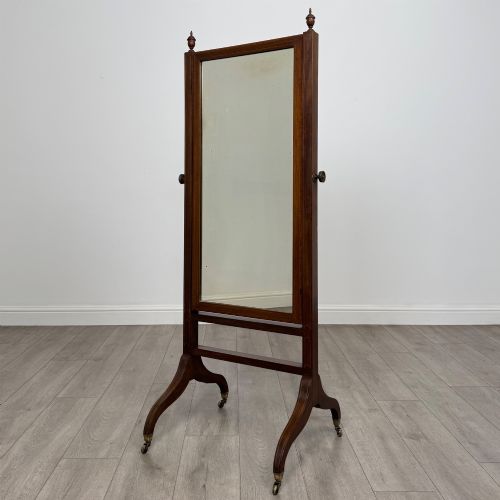
Timbers such as mahogany, walnut, burr walnut, and oak form the primary structural frames, frequently shaped through traditional cabinet-making techniques. Artisans also utilised brass for castors, sabots, and pivoting brackets, alongside gilt and painted timber finishes.
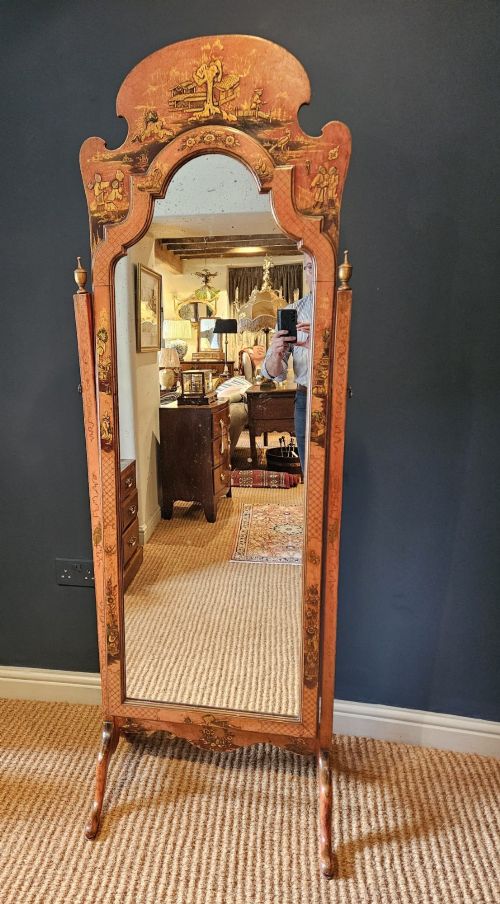
Surfaces often feature decorative inlays or specialised treatments like Chinoiserie and lacquered wood. Mirror glass is set securely within pivoting mechanisms that allow smooth adjustment of the plate.
Listings feature woods spanning mahogany, walnut, burr walnut, and oak across Edwardian, Regency, and Victorian periods.
What varies in quality
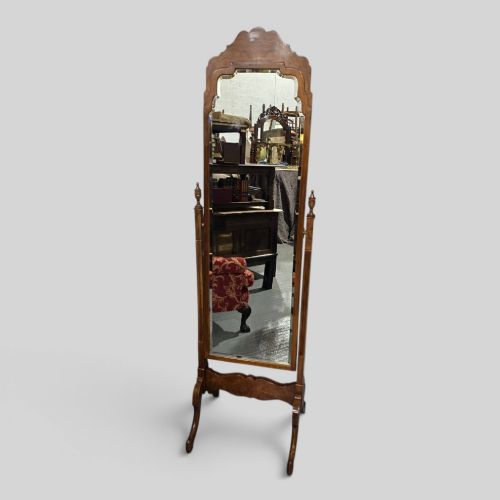
Quality in a vintage tilting dressing mirror rests upon the weight and selection of timber, such as figured mahogany or burr walnut veneers. Superior examples display refined proportions and precise joinery in the frame and pivoting supports.
The execution of decorative elements like brass sabots, castors, and inlaid details distinguishes standard production items from bespoke pieces. Heavier framing and robust pivoting hardware provide greater stability during daily adjustment.
Waring and Gillow·Whytock and Reid
The Vintage Tilting Dressing Mirror Glossary
- Cheval mirror
- A full-length pivoting mirror supported by a freestanding frame with four legs. This large form allows a complete view of attire.
- Sabot
- A metal shoe or cap fitted to the foot of a furniture leg. Brass versions frequently appear on Regency and nineteenth-century frames.
- Chinoiserie
- European decorative art reflecting Chinese artistic styles. This technique appears on lacquered wooden mirror frames from the early twentieth century.
- Burr walnut
- Timber taken from a tree growth featuring intricate, swirling grain patterns. Cabinet-makers veneer high-status mirrors with this figured wood.
Vintage Tilting Dressing Mirror: Frequently Asked Questions
What is a cheval mirror?
A cheval mirror is a tall, floor-standing looking glass mounted within a frame that pivots on vertical axes. This design lets the user tilt the glass to various angles for full-length viewing.
Such pieces traditionally stood in bedrooms and dressing rooms alongside matching wardrobes and chests of drawers.
How do I date a tilting mirror?
Dating relies on timber choices, leg styles, and hardware details like brass castors or pivoting pins. Earlier nineteenth-century examples often feature sabots and sabre legs, while 1920s and 1930s items display Art Deco lines or Chinoiserie lacquer.
Construction methods and backboards also provide clear indicators of period manufacture.
Where should I place a dressing mirror?
These mirrors suit bedrooms, dressing areas, and hallways where adjustable reflection proves useful. Tabletop versions sit comfortably upon heavy chests of drawers or dressing tables.
Freestanding cheval mirrors occupy corner spaces or blank walls while adding architectural depth to a room.
How do the pivoting mechanisms work?
The glass frame hangs between two vertical upright posts using lateral screw pins or trunnions. Tightening or loosening these side fixings holds the mirror plate at the desired viewing angle.
Metal brackets and washers maintain tension to prevent the heavy glass from slipping.