


Vintage Teak Side Tables
Vintage teak side tables bring intricate colonial craftsmanship and rich timber grain into a room, offering practical surfaces with distinct historical character.
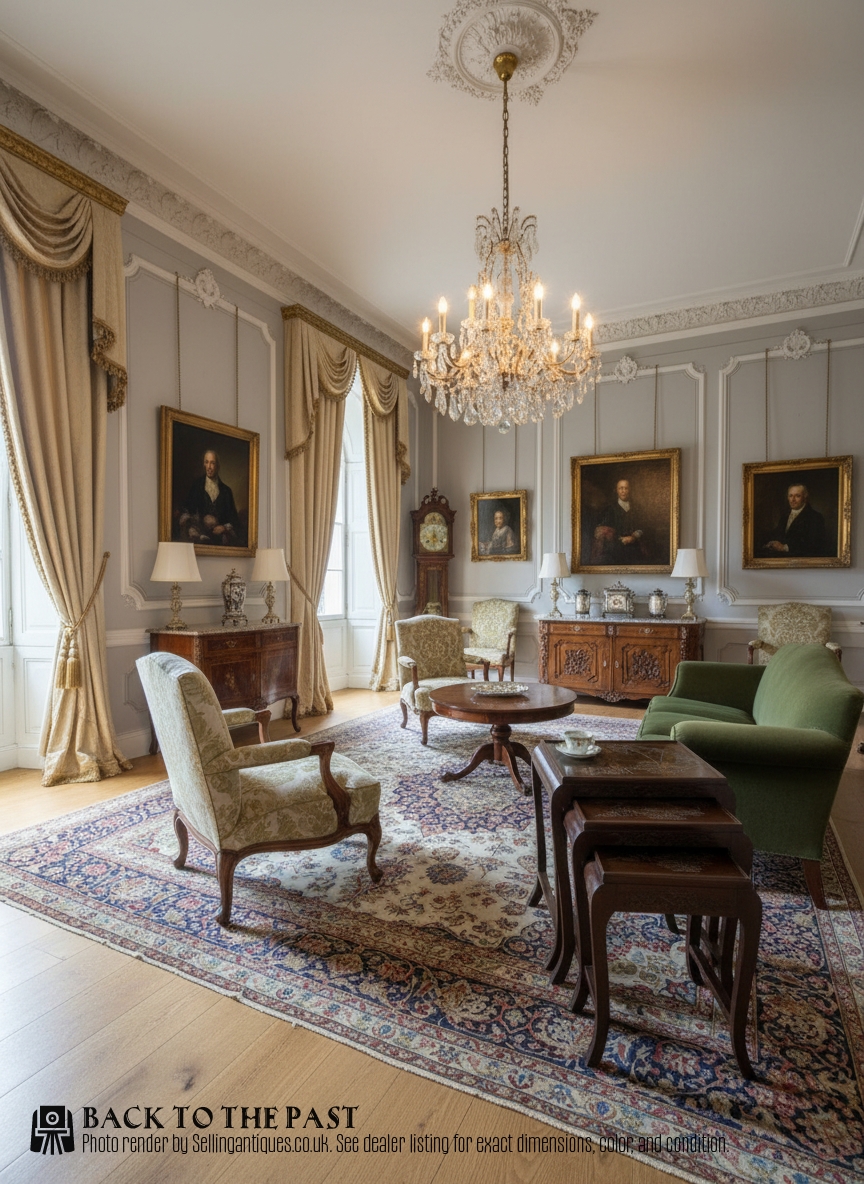
Vintage Teak Side Tables
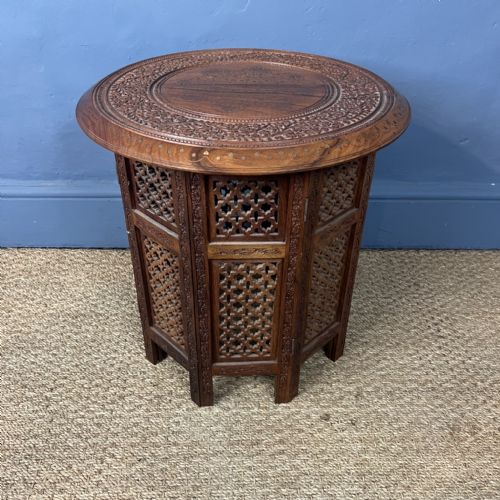
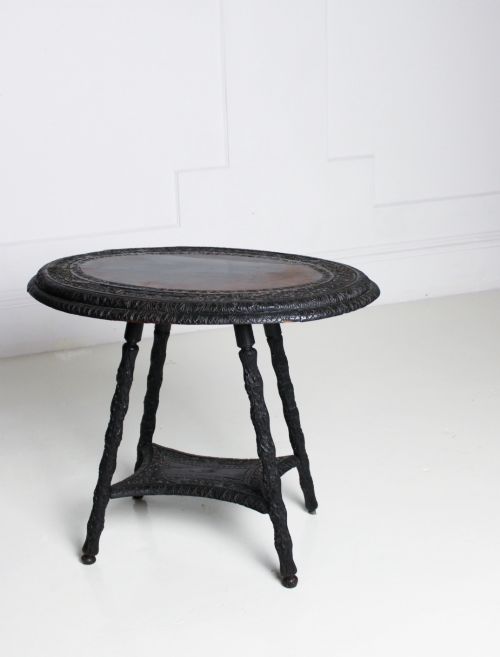
Vintage teak side tables encompass a diverse group of occasional, coffee, and nesting pieces originating predominantly from Anglo-Indian and Burmese workshops during the nineteenth and early twentieth centuries. When searching for vintage teak side tables, buyers frequently encounter heavily carved surfaces, folding forms, and low occasional tables designed for versatile placement.
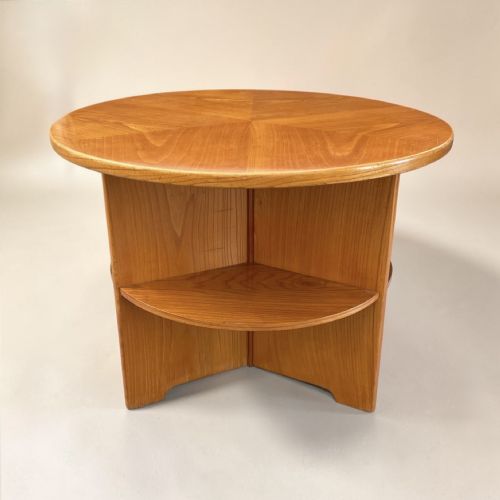
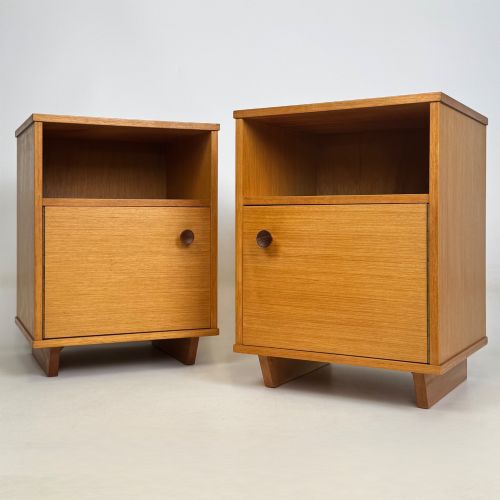
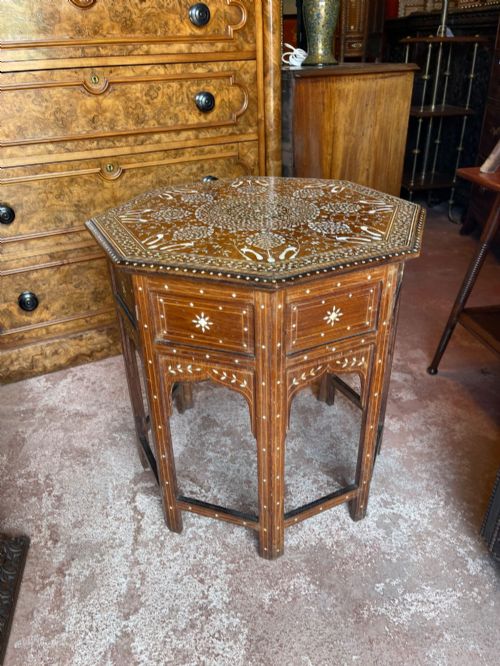
The selection ranges from small octagonal Hoshiarpur pieces to larger folding campaign items and nest of tables. Alongside traditional carved ornamentation, simpler mid-century modern and Art Deco designs appear, demonstrating the enduring utility of teak timber across multiple decades.
How they were made
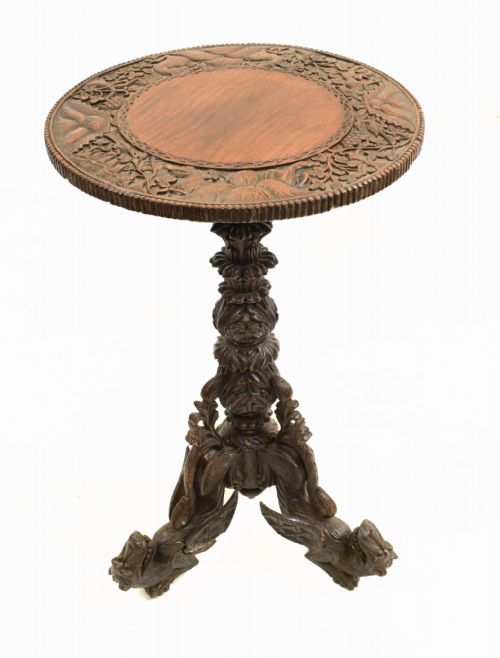
Craftsmen utilised durable teak and rosewood as the primary structural timbers, often selecting dense hardwoods capable of supporting intricate hand-carved relief work. Artisans carved deep floral and animal motifs directly into the solid wood grain, frequently employing folding or collapsable mechanisms for portability.
Surface ornamentation involved precise inlay work using brass wire, bone, and glass to create geometric patterns across table tops. These contrasting materials were embedded flush into the timber, highlighting centres and borders with metallic and pale bone accents.
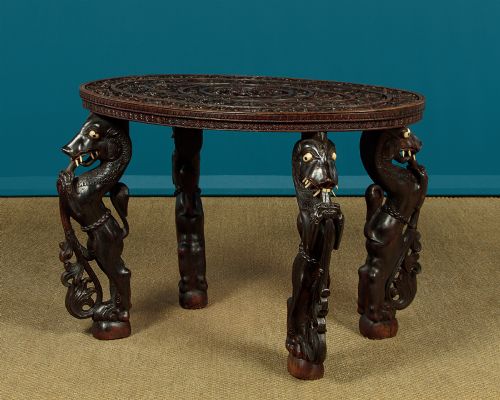
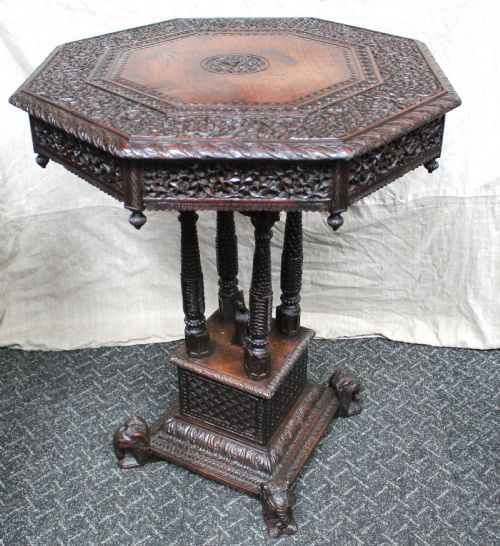
Several tables feature carved elephants acting as structural legs, proving that occasional furniture can carry heavy wildlife themes with grace.
What varies in quality
Quality rests upon the depth and clarity of the hand-carved detail, where crisp, sharply defined foliage and animal figures separate superior workshop output from simpler production. The tightness of the joinery on folding and nesting variants also dictates structural integrity over decades of use.
The precision of the brass and bone inlay work defines the upper tiers of craftsmanship, requiring exact fitting into the teak base without gaps. Furthermore, the selection of timber grain and the preservation of original patination significantly influence the visual presence of each piece.
The Vintage Teak Side Tables Glossary
- Hoshiarpur
- A town in Punjab renowned for producing intricately carved wooden furniture inlaid with brass and bone. Pieces from this region often feature dense geometric and floral patterns covering every available surface.
- Campaign table
- A portable folding table designed for easy transport by military officers or travellers. These pieces typically feature hinged legs or removable tops that pack flat.
- Nest of tables
- A set of graduated tables designed to fit neatly beneath one another when not in use. They provide flexible surface space in compact living areas.
- Occasional table
- A small, light table intended for sporadic use rather than a permanent functional role in a room. They frequently serve as lamp stands or display surfaces.
- Tray top table
- A table featuring a removable or fixed upper surface with a raised rim, often supported by a folding wooden base. The tray itself frequently displays elaborate metal inlay.
Vintage Teak Side Tables: Frequently Asked Questions
How do I care for teak tables?
Maintain the timber by dusting regularly with a dry cloth and occasionally applying natural beeswax to nourish the grain. Avoid placing solid wood surfaces near direct heat sources or moisture.
Protect the intricate carved recesses and brass inlay from liquid spills by using coasters and wiping surfaces immediately with a soft cloth.
Were these tables made for export?
Many Anglo-Indian and Burmese pieces were produced specifically for the British colonial market and international exhibitions during the nineteenth and early twentieth centuries. Artisans combined traditional local woodworking techniques with forms suited to Western domestic interiors.
These items often incorporated folding designs or modular nesting sets to facilitate long-distance transport back to European homes.
How are Hoshiarpur tables identified?
Hoshiarpur tables are readily recognised by their all-over carved decoration and contrasting brass or bone inlay set into teak or shisham wood. The motifs typically include densely packed foliage, vines, and occasionally animal figures such as elephants.
They frequently feature octagonal or tripod folding bases that demonstrate exceptional intricacy in the pierced wooden fretwork.
Can folding tables support heavy items?
Folding and campaign tables were engineered with hinged or interlocking frames designed for stability while remaining portable. While suitable for lamps, books, and decorative objects, heavy loads should be avoided on antique folding mechanisms.
Ensure the locking pins or cross-stretchers are fully engaged before placing items on the surface to maintain structural balance.