


Vintage Tea Samovar Tap
These vintage tea samovar tap vessels are impressive heated urns built to dispense hot water, combining practical service with striking presence.
Vintage Tea Samovar Tap
A vintage tea samovar tap search brings up substantial heated vessels designed for tea service, originating primarily from the Georgian, Regency, and Victorian periods. These pieces represent historical hospitality, standing as focal points on dining or side tables.
How they were made
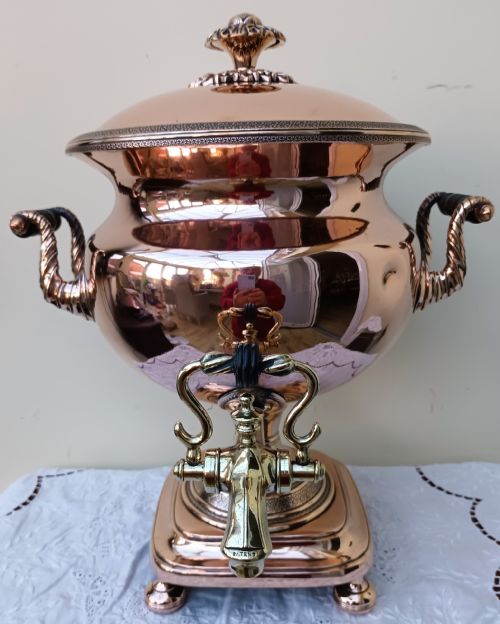
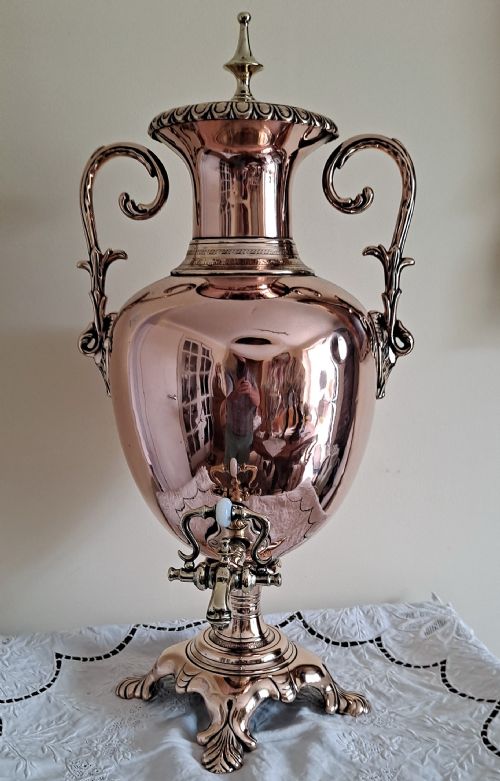
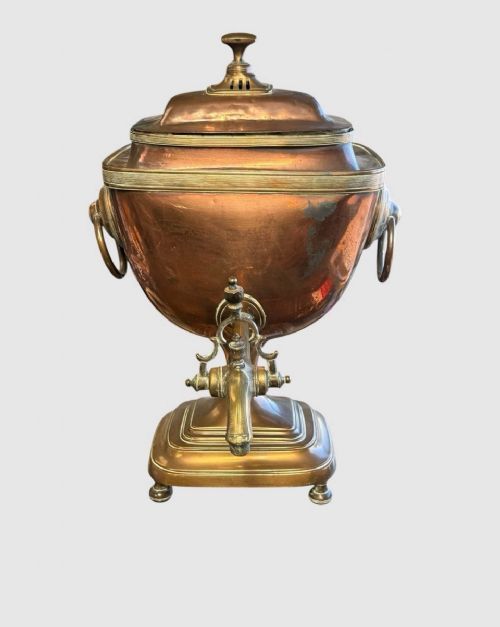
Makers shaped these vessels predominantly from sheet copper and brass, sometimes applying silver plate or nickel silver finishes to the metal surface. These metallic bodies were frequently accented with ebonised wood handles or ceramic components to manage heat during use.
Construction involved skilled metalworking techniques to form the urn bodies, secure the taps, and mount decorative handles and pedestals. Bronze details and Georgian neoclassical styling appear across the listed examples, demonstrating period ornamentation.
Many of these metal vessels retain their original wooden handles dyed black to mimic expensive ebony, keeping fingers safe from boiling water.
What varies in quality
Quality differences lie in the refinement of the metalwork, the weight of the copper, and the sophistication of the styling, ranging from standard utilitarian vessels to pieces with intricate Georgian neoclassical ornament. The integration of contrasting materials, such as bronze mounts and ebonised wood handles, elevates the visual depth of the construction.
The proportion and balance of the urn shape, alongside the execution of the tap mechanism and base support, distinguish finer examples. Pieces bearing documented maker attribution, such as Walker & Hall, demonstrate distinct workshop standards within the selection.
Walker & Hall
The Vintage Tea Samovar Tap Glossary
- Tea Urn
- A large, footed metal container designed for holding and serving hot water during formal tea service. These pieces mirror the neoclassical forms popular during the Georgian and Regency eras.
- Ebonised Wood
- Timber treated to resemble dense, black ebony wood. This material is frequently utilised for insulating handles on metal vessels.
- Silver Plate
- A thin layer of silver applied to a base metal core, such as nickel silver or copper. This technique offered the appearance of solid silver at a different scale of production.
- Georgian Neoclassical
- A design style drawing inspiration from classical antiquity, characterised by symmetrical urn shapes and restrained ornamentation. It dominates much of the eighteenth and early nineteenth-century metalwork here.
Vintage Tea Samovar Tap: Frequently Asked Questions
What is a tea samovar tap?
A tea samovar tap is the spigot or faucet attached near the base of a heated metal urn, used to dispense hot water directly into cups.
These functional components were engineered to operate smoothly while complementing the overall architectural style of the vessel.
How were samovars used historically?
Samovars served as the central water heating apparatus during formal tea gatherings in large households. Hot water was kept readily available throughout the service without requiring constant trips to the kitchen.
They occupied prominent positions on sideboard tables, often remaining lit or heated during extended meals.
How do I live with a vintage samovar?
These large metal vessels work well as sculptural decorative objects placed on sideboards, side tables, or mantels. Their warm copper and brass tones introduce rich texture to a room.
Due to their historical nature, modern placement focuses on display rather than active heating use.
How do I tell Regency from Victorian samovars?
Regency samovars often display cleaner neoclassical lines, balanced urn proportions, and bronze or brass detailing reflecting ancient architectural influences. They date from the late eighteenth to the early nineteenth century.
Victorian pieces tend to incorporate heavier ornamentation, alternative finishes like silver plate, and sometimes more robust, varied forms.