





Vintage Tea Kettle
These vintage tea kettle examples span George III copper to Edwardian silver plate, offering both practical charm and period presence.
Vintage Tea Kettle
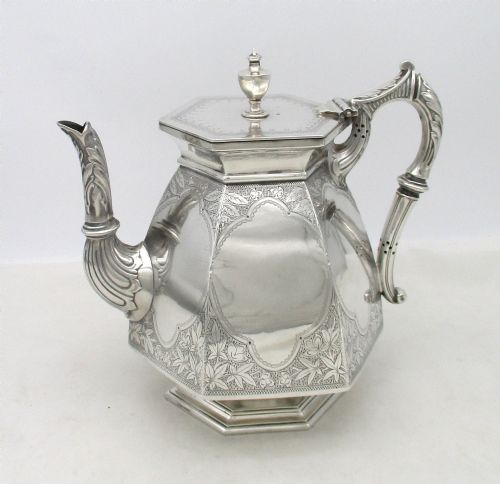
A vintage tea kettle represents heated water vessels originating from periods spanning the Georgian, Victorian, and Edwardian eras. Buyers search this phrase to find functional heating vessels and decorative samovars made from traditional metals. The selection on this page centres primarily on copper kettles and silver plated spirit kettles on stands.
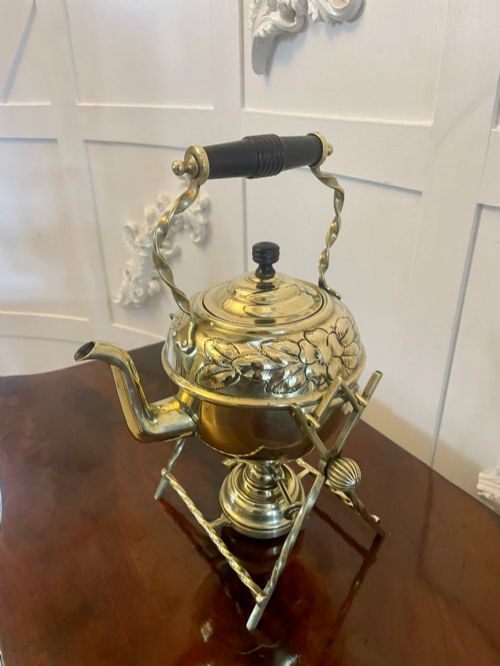
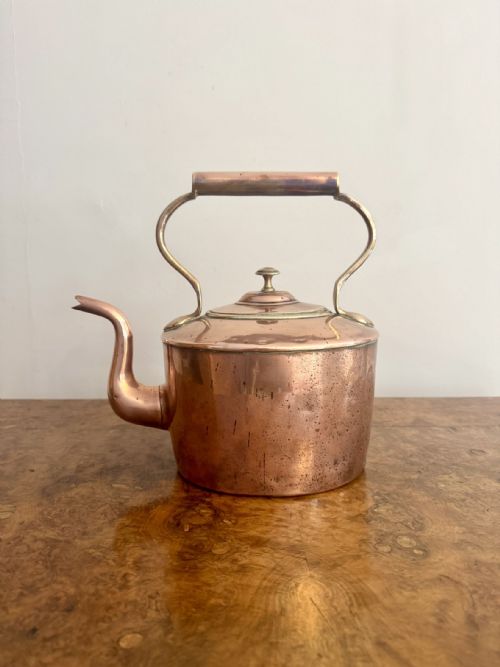
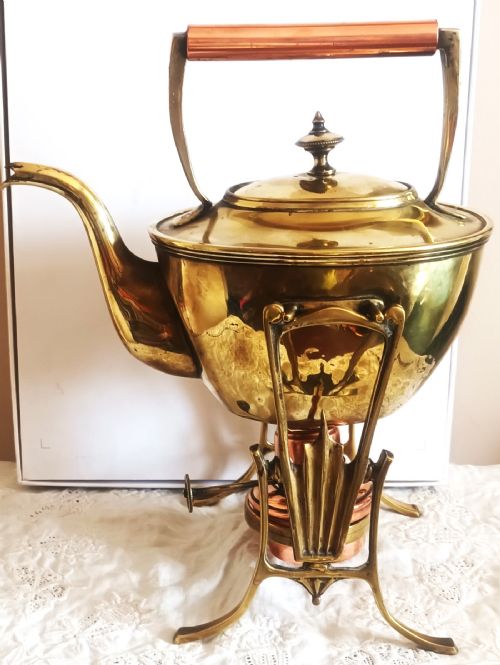
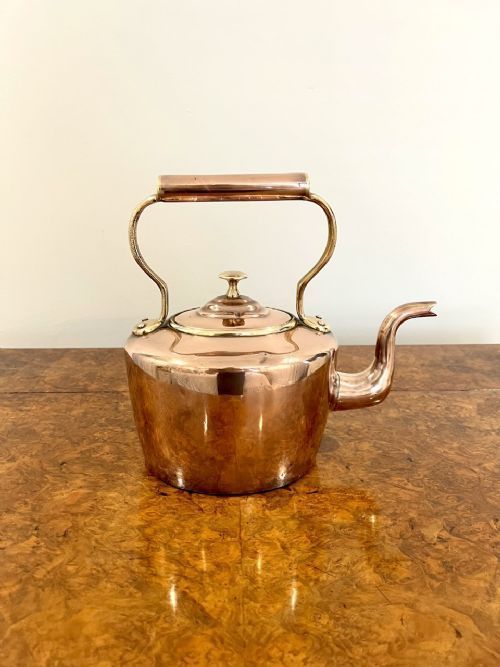
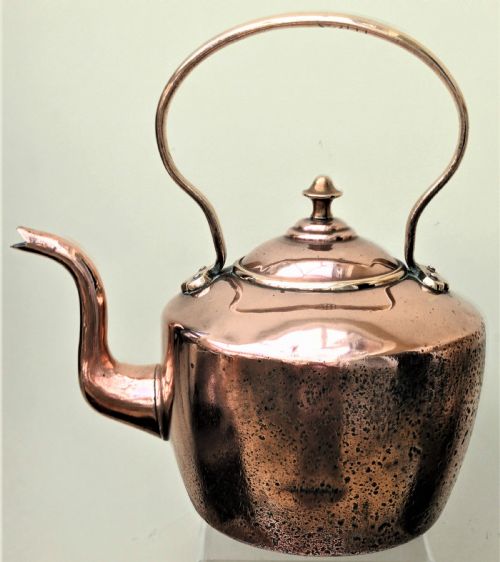
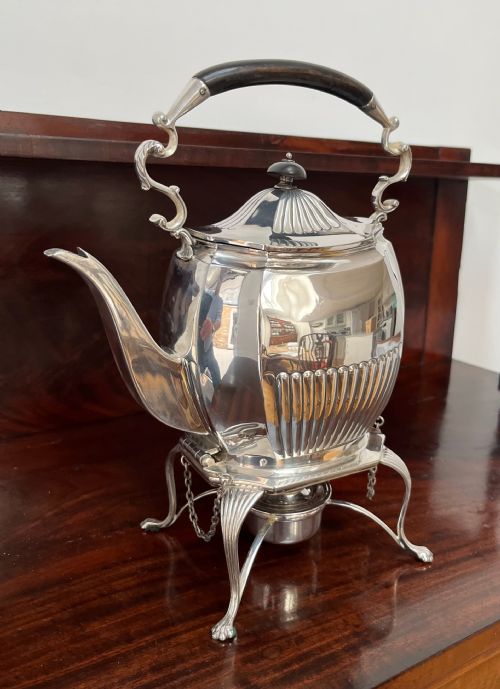
The objects take several distinct forms, including simple hearth kettles, spirit kettles mounted on stands with burners, and large samovars with taps. George III copper models and Victorian brass or copper pieces dominate the available items. Many feature wooden handles or ebonised wood details for insulation during use.
How they were made
Makers utilised heavy gauge copper and brass sheets, often shaping them by hand with dovetailed seams or hand-beaten bodies. Handles incorporated insulating materials such as wood, ebony, and ebonised wood to protect the user from heat. Stands and burners frequently employed silver plate over base metals or cast bronze components.
Finishes range from polished bright metal to patinated surfaces that reflect decades of domestic use. Spirit kettles included fitted burners fuelled by alcohol, requiring precision assembly of stands, chains, and taps. Details like cloisonné enamel appear on select imported vessels.
Vintage Tea Kettle Retail Price Guide 2026
Typical asking prices for vintage tea kettle among the pieces listed under this phrase on Sellingantiques today, from the lower quarter to the upper quarter. They describe what is for sale here now, not the wider market.
What varies in quality
Quality rests upon the weight of the metal, the integrity of construction, and the survival of original matching stands and burners. Thicker gauge copper maintains structural rigidity through centuries of heating, whereas lesser pieces show thinner walls prone to denting. Complete sets retaining their original spirit burners and stands command greater interest among collectors.
The refinement of decorative elements such as Aesthetic Movement engraving or Arts and Crafts hand-hammering elevates certain examples above standard utility wares. Maker attribution, through stamped marks from firms like Walker & Hall or William Soutter & Sons, adds definitive provenance.
William Soutter & Sons·Walker & Hall·Kibundo
The Vintage Tea Kettle Glossary
- Spirit kettle
- A tea kettle mounted upon a metal stand above a small spirit burner. This setup allowed water to remain hot at the dining or tea table.
- Samovar
- A heated metal container traditionally used to boil and heat water in Russian and European tea service. These often include a central internal heating tube and a spigot tap at the base.
- Silver plate
- A thin layer of silver applied to a base metal such as copper or brass. Victorian manufacturers utilised this technique to provide the appearance of solid silver at a lower cost.
- Ebonised wood
- Timber treated to resemble ebony, a dense dark wood. It appears frequently on kettle handles and insulating knobs.
- Tetsubin
- A traditional Japanese cast iron kettle used for boiling water. Examples from makers like Kibundo reflect distinct regional metalworking traditions.
Vintage Tea Kettle: Frequently Asked Questions
What is the difference between a kettle and a samovar?
A kettle is a vessel designed specifically for heating water over a hearth, stove, or spirit burner before pouring into a teapot. A samovar is a much larger self-contained urn featuring a built-in spigot tap for dispensing hot water directly.
Samovars often include internal heating cylinders or large chambers, making them suitable for serving larger gatherings without constant refilling.
How do I clean antique copper?
Wash the surface gently with warm soapy water and a soft cloth to remove surface dust and grime. Avoid abrasive scouring pads that scratch the historic metal surface and strip away desirable aged patination.
Apply a mild copper cream only if you prefer a bright finish, though many collectors choose to preserve the darker, unpolished oxidation acquired over centuries.
Can I date a kettle by its handle?
Handle design and insulating materials offer clear clues to a piece's period of manufacture. Georgian and early Victorian kettles often feature simple swung strap handles with wooden grips, while Edwardian spirit kettles utilise more elaborate pivoted frames.
Ebonised wood and turned mahogany insulators appear frequently across the nineteenth century, reflecting prevailing domestic styles and manufacturing methods.