




Vintage Tea Dispenser
A vintage tea dispenser brings a grand heating vessel to the table, offering a stately centrepiece for hospitality.
Vintage Tea Dispenser
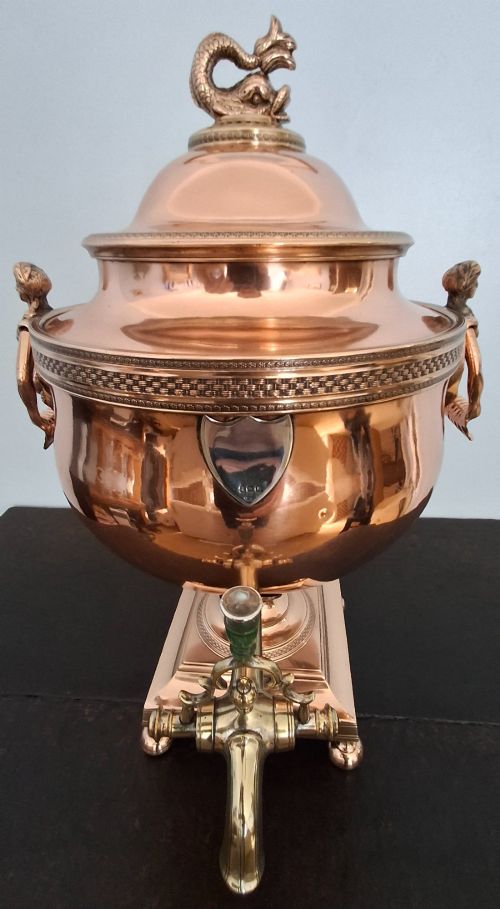
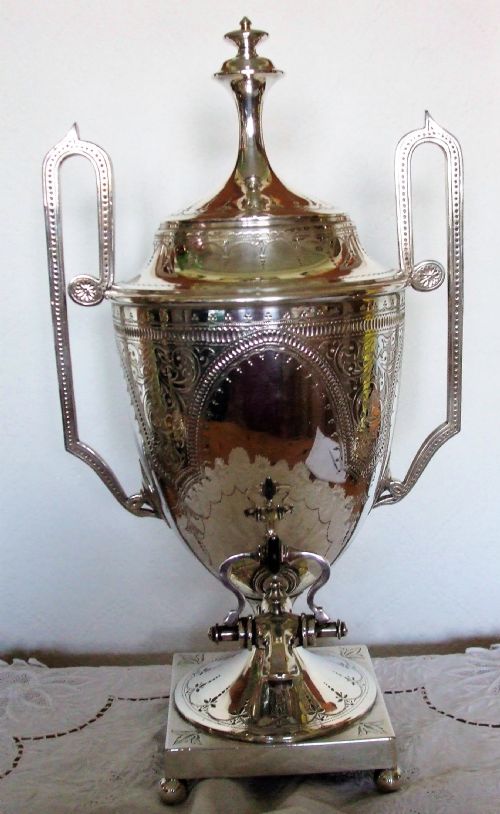
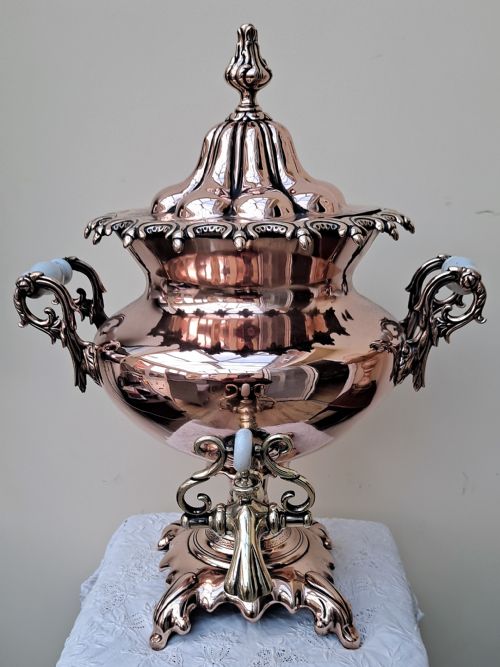
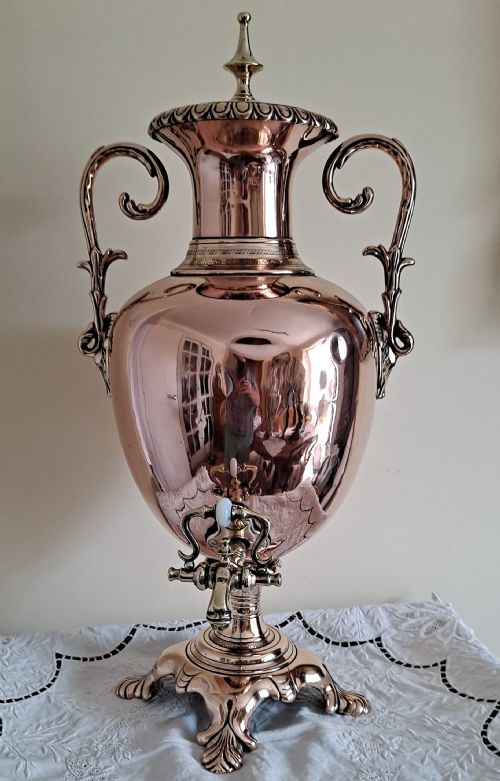
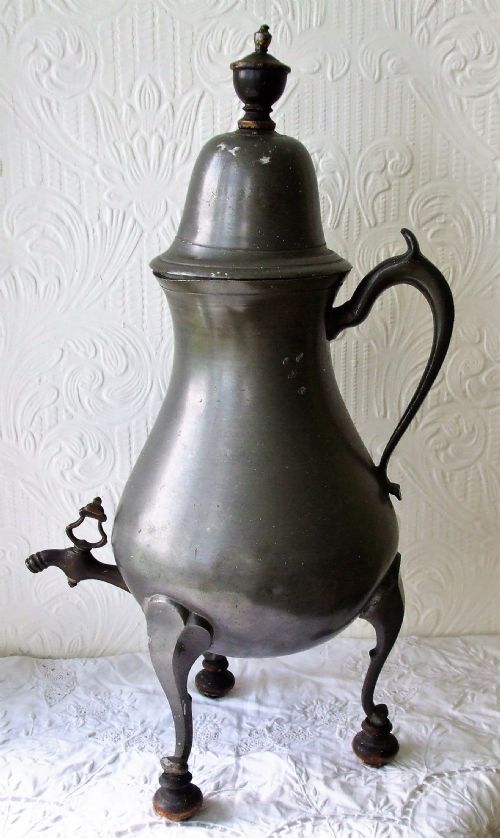
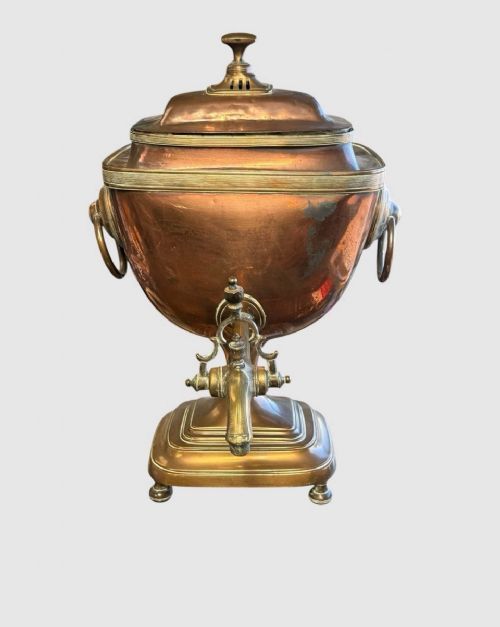
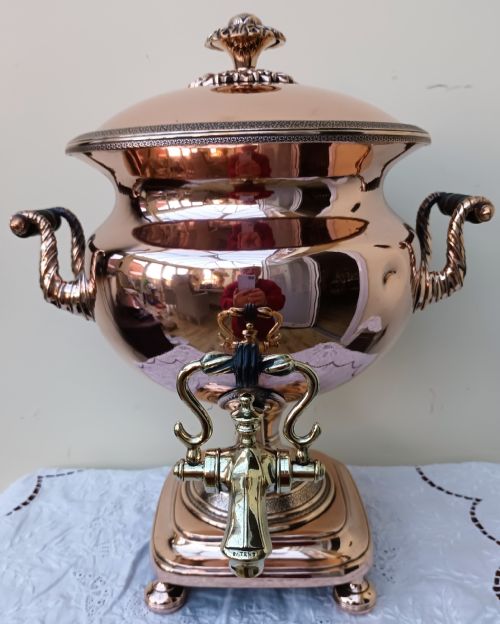
A vintage tea dispenser is fundamentally a large vessel designed for heating and serving water or tea, most commonly encountered as a samovar or tea urn on this page. These pieces date across the Georgian, Regency, Victorian, and Edwardian periods, stretching from the late eighteenth century into the early twentieth century.
The forms span straightforward metallic cylinders and decorative urns shaped by historical styles including Georgian Neoclassical. Originating largely from English workshops, alongside Dutch and continental examples, they combine practical service with heavy decorative presence.
How they were made
Construction relies heavily upon metals such as copper, brass, bronze, and pewter, often shaped into substantial body panels with fitted taps and handles. Many pieces incorporate bone details or sit upon cast bronze and brass footings.
Silver plating on base metals represents another major technique, seen in examples finished by prominent Sheffield makers. These materials are joined to create watertight vessels capable of enduring heat while maintaining ornate exterior decoration.
Vintage Tea Dispenser Retail Price Guide 2026
Typical asking prices for vintage tea dispenser among the pieces listed under this phrase on Sellingantiques today, from the lower quarter to the upper quarter. They describe what is for sale here now, not the wider market.
Many a Victorian dinner guest waited patiently while copper water vessels roared softly beside the sideboard.
What varies in quality
Quality rests upon the crispness of the metal casting, the weight of the copper or bronze, and the integration of secondary materials like bone handles and brass spouts. Higher quality pieces display harmonious proportions rooted in Regency and Georgian design rather than purely utilitarian mass production.
The distinction also lies in the survival of original components, such as internal heating cylinders and taps, alongside the finesse of surface finishing and decorative engraving.
Walker & Hall
The Vintage Tea Dispenser Glossary
- Samovar
- A heated metal urn traditionally used to boil water for tea, featuring an internal central tube for hot charcoal or a heating block in some iterations. These vessels form the majority of the tall dispensing containers found in this selection.
- Tea Urn
- A large covered container fitted with a tap at the base, utilised for serving hot tea or water at large gatherings. They mirror the function of a samovar but often lack the internal heating chimney.
- Silver Plate
- A thin layer of silver fused or electroplated onto a base metal such as copper or Britannia metal. This technique allowed makers to achieve the appearance of solid silver at a lower cost.
- Georgian Neoclassical
- A decorative style spanning the eighteenth and early nineteenth centuries characterised by classical symmetry, urn motifs, and restrained ornamentation. Pieces from this aesthetic often feature clean geometric lines and classical proportions.
- Pewter
- A malleable alloy composed primarily of tin, combined with copper, antimony, or bismuth. It provides a dull grey metallic finish well suited for historic vessels and coffee urns.
Vintage Tea Dispenser: Frequently Asked Questions
How do I use a vintage tea dispenser?
These vessels are primarily intended for display and historical collection rather than daily modern kitchen use. Many retain functional taps, but their internal components may require professional restoration before holding hot liquid.
For most buyers, they serve as striking decorative elements on sideboards or dining tables, celebrating historic metalwork and nineteenth-century hospitality.
What is the difference between a samovar and a tea urn?
A samovar typically includes an internal vertical tube designed to hold hot coals or a heating element to keep water boiling. A standard tea urn functions simply as a large dispensing vessel with a tap, lacking the central heating chimney.
Both forms share similar proportions and were used to serve hot water across the Georgian and Victorian eras.
How do I date a copper tea urn?
Dating relies upon stylistic markers, such as the classical proportions of Regency and George III pieces versus the heavier, more ornate ornamentation typical of the Victorian era. Examination of construction methods, handle shapes, and foot mounts also helps place a vessel within its period.
Makers' marks stamped onto silver plated examples provide definitive clues when traceable to specific nineteenth-century firms.
What metals are these dispensers made from?
The primary material across this selection is copper, frequently paired with brass for taps, handles, and decorative mounts. Some examples utilise bronze, pewter, or silver plating over a base metal.
Smaller decorative details occasionally incorporate bone for insulation on handles and spigots.