





Vintage Tantalus Bottles
These vintage tantalus bottles and locking frames hold spirits securely under lock and key, bringing period after-dinner hospitality to your sideboard.
Vintage Tantalus Bottles
Vintage tantalus bottles and their enclosing frames appear across Victorian, Edwardian, and Art Deco periods, predominantly housing three cut crystal or glass decanters. These locking barware sets originate from the nineteenth and early twentieth centuries, spanning periods from the 1850s to the 1930s.
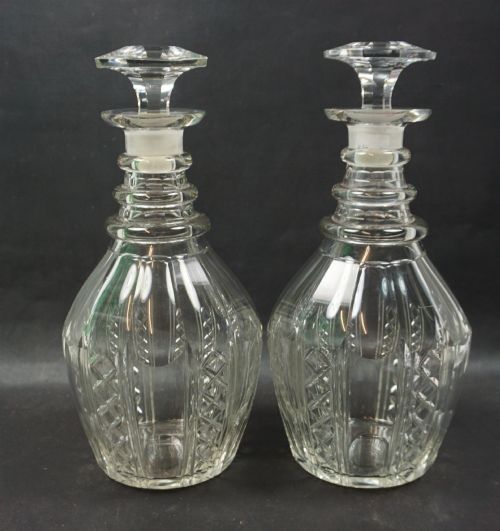
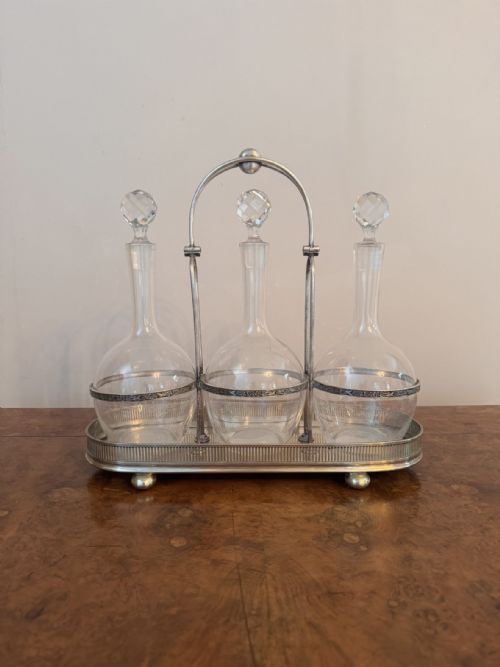
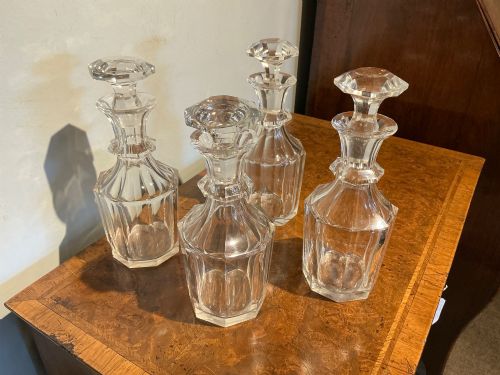
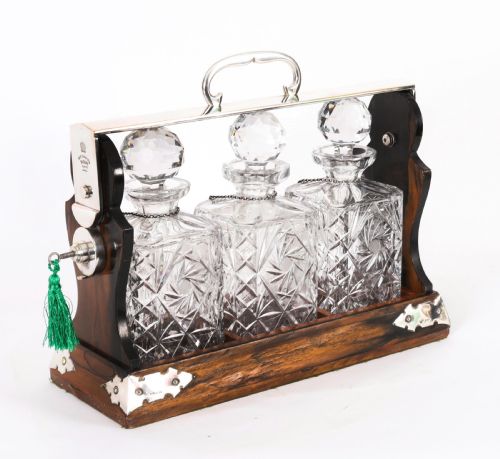
The primary forms on this page include oak and silver-plated three-bottle tantalus frames, alongside smaller two-bottle arrangements and occasional sets of loose liqueur decanters. Oak, mahogany, and coromandel frames house the glass securely while displaying the cut crystal contents.
Makers and retailers such as Betjemann’s, Elkington, The Goldsmith Co., and Hukin and Heath produced these locking decanter stands. They function both as standalone barware and as combined game boxes or after-dinner drinking sets.
Materials and construction
Makers constructed the frames from solid and veneered timbers including oak, mahogany, satinwood, and coromandel, often incorporating brass mounts, marquetry stringing, and silver plating. These structural woods support heavy glass decanters while providing decorative presence on the dining table or sideboard.
The glass elements consist of heavy cut crystal and cut glass decanters, sometimes accompanied by sterling silver collars, stoppers, and hardware. Metalwork combines cast brass, silver plate, and Old Sheffield plate with mechanical locking bars operated by keys.
Vintage Tantalus Bottles Retail Price Guide 2026
Typical asking prices for vintage tantalus bottles among the pieces listed under this phrase on Sellingantiques today, from the lower quarter to the upper quarter. They describe what is for sale here now, not the wider market.
Victorian hosts used locking tantalus frames specifically to stop housemaids from helping themselves to the evening brandy.
Distinguishing quality in frames and decanters
Quality rests in the precision of the locking mechanism and the weight of the timber frame, where marquetry inlay and substantial brass mounts elevate standard pieces. Finer examples feature branded maker signatures such as Betjemann’s patent locking bars and heavy silver-plated or sterling silver hardware.
The cut crystal decanters vary significantly in clarity, depth of cutting, and whether the set retains its matching original stoppers and key. Heavier crystal bodies with sharp, deep facets paired with undamaged wooden carcases represent the upper tier of surviving examples.
Betjemann’s·Elkington·The Goldsmith Co.·Hukin and Heath
The Vintage Tantalus Bottles Glossary
- Tantalus
- A locking drink container frame that restrains decanters behind a metal bar so they remain visible yet impossible to remove without a key. The term derives from the mythological figure Tantalus, who was kept thirsty just out of reach.
- Silver Plate
- A manufacturing technique where a thin layer of silver is fused or electroplated onto a base metal foundation such as copper or nickel silver. This process provided the visual appearance of solid silver for barware frames at a lower cost.
- Cut Glass
- Glass shaped and patterned by holding the vessel against rotating abrasive wheels, creating deep geometric facets. This technique refracts light through the decanter walls.
- Decanter Stand
- A portable frame designed to hold multiple beverage bottles safely during serving and storage. These stands often incorporate carrying handles and protective rims.
Vintage Tantalus Bottles: Frequently Asked Questions
What is a tantalus used for?
A tantalus holds alcoholic decanters securely inside a wooden frame fitted with a locking metal bar. This prevented household staff or guests from accessing the spirits without permission.
After dinner, the host would unlock the bar to pour drinks for guests before securing the bottles again. The locking design kept expensive whiskey, brandy, and liqueurs safe under lock and key.
How do you open a tantalus?
Opening a vintage tantalus requires the correct key inserted into the lock mechanism at the end of the wooden base or top bar. Turning the key releases the vertical retaining rod, allowing it to slide or pivot clear of the decanter stoppers.
Once the metal bar lifts away, the individual crystal decanters can be lifted out of their fitted compartments. Without the key, the bottles remain trapped beneath the metal restraint.
Are the decanters removable?
Decanters are fully removable when the locking bar is unlocked and slid into the open position. When the bar is locked down over the stoppers, the bottles cannot be lifted from the frame.
Each decanter sits in a precisely turned wooden recess lined with velvet or felt to prevent sliding during transport. The locking bar catches the top of each glass stopper to block vertical movement.
How do I date a tantalus?
Dating a tantalus involves examining the wood species, hardware construction, lock mechanism patents, and the cutting style of the crystal decanters. Victorian examples often feature heavy oak with elaborate brass mounts, while Edwardian versions lean towards simpler oak frames.
Silver hallmarks on mounts or collars provide exact assay office years, and patent stamps on locks offer a manufacturing terminus post quem. Art Deco pieces from the 1930s display streamlined chrome or sterling silver details alongside distinct geometric crystal profiles.