



Vintage Table Place Markers
These vintage table place markers organise grand dining tables while showcasing miniature silver craft from the Victorian to the Art Deco eras.
Vintage Table Place Markers
Vintage table place markers appear primarily as place card holders and menu holders, designed to designate seating arrangements and display dining options. These small objects sit beside settings to guide guests and complement formal table service.
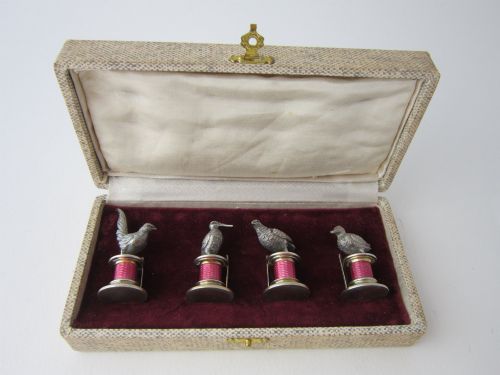
Most examples found here hail from the Edwardian and Victorian periods, with pieces extending into the 1930s. Makers produced them singly, in pairs, or in larger sets such as sets of four, six, or twelve.
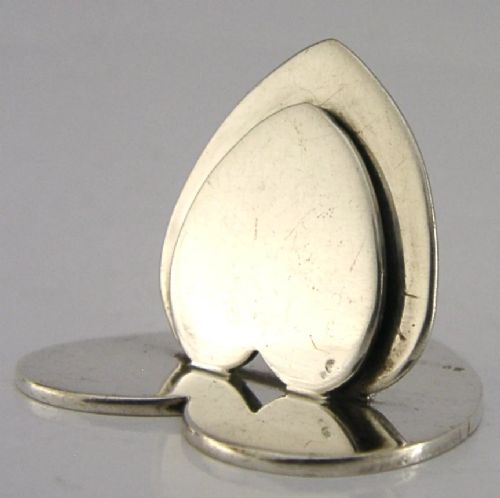
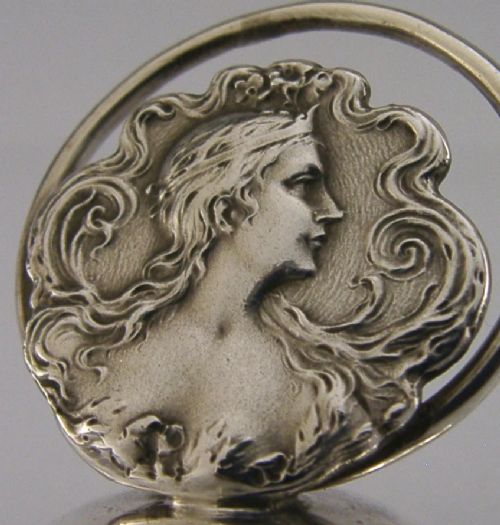
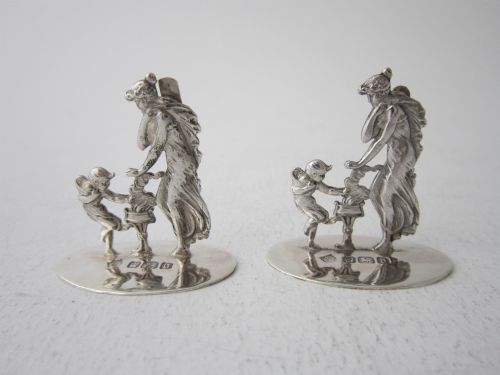
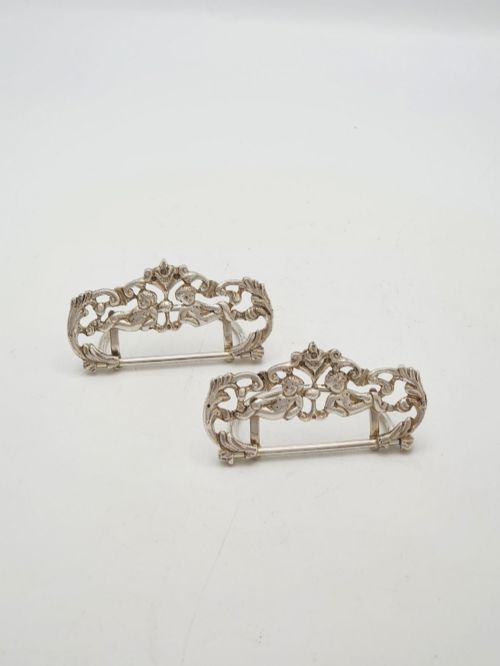
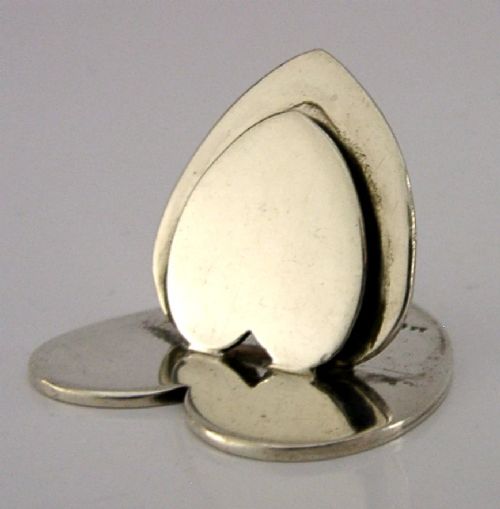
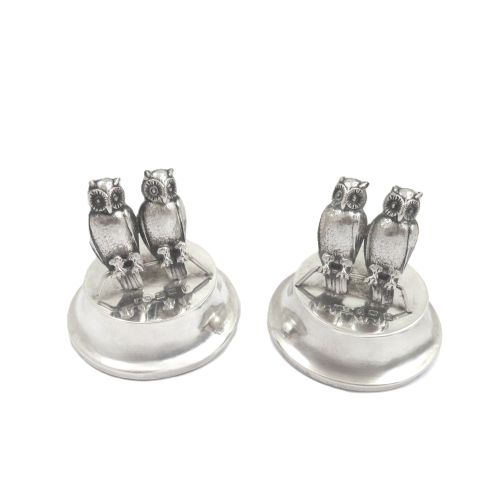
The forms frequently draw on nature and figural subjects, including birds like grouse and owls, animal themes such as horses heads and foxes, cherubs, maidens, and symbols like love hearts.
Materials and Construction
Silversmiths constructed these pieces predominantly using sterling silver and silver plate, shaping metal through casting, chasing, and engraving. Certain items incorporate guilloche enamel or standard enamel to add colour and surface contrast.
Backings and bases occasionally integrate textiles such as silk and velvet, providing a subtle texture beneath the metalwork or supporting fitted cases. Construction relies on weighted bases or sturdy flat feet to keep menu cards and name cards upright during meals.
Vintage Table Place Markers Retail Price Guide 2026
Typical asking prices for vintage table place markers among the pieces listed under this phrase on Sellingantiques today, from the lower quarter to the upper quarter. They describe what is for sale here now, not the wider market.
Silver owls and foxes keep quiet vigil over dinner conversation, holding menus in their metallic talons and paws.
Evaluating Quality and Detail
The complexity of the design also dictates standing, with simpler geometric or heart shapes differing from elaborate enamelled pieces or named maker output. Complete sets matched across four or more items retain greater cohesion than assembled groups.
Sampson Mordan·Liberty
The Vintage Table Place Markers Glossary
- Place Card Holder
- A small weighted stand designed to hold a small card bearing a guest's name at a dinner table. They emerged in various figural and decorative motifs during the late Victorian and Edwardian periods.
- Menu Holder
- A desktop or table accessory intended to keep a dinner menu upright for diners to read. They share many stylistic traits with place card holders.
- Guilloche Enamel
- A decorative technique where translucent enamel is applied over precision-machined metal engine turning. It creates a repeating geometric pattern visible beneath the coloured glass layer.
- Sterling Silver
- An alloy of silver containing 92.5 percent by mass of silver and 7.5 percent by mass of other metals, usually copper. This standard forms the primary metal for the finer markers on this page.
- Arts and Crafts
- A design movement advocating traditional craftsmanship using simple forms and medieval, romantic, or folk styles of decoration. Pieces from this tradition avoid mass-produced uniformity.
Vintage Table Place Markers: Frequently Asked Questions
How were place markers used?
Hosts placed them at individual dining settings to direct guests to their assigned seats or to display the evening's menu.
They served as conversational centrepieces while keeping the table orderly during multi-course meals.
How do I date these silver items?
Dating relies on hallmarks stamped into the silver, which indicate the assay office, standard, and year of manufacture.
Stylistic cues such as Edwardian naturalism or Art Deco geometry also help narrow down the production period.
Are these markers sold as sets?
They appear both individually and in matched pairs or larger sets spanning four, six, or twelve pieces.
Complete matching sets were originally intended for larger dinner parties and remain harder to find than single examples.