


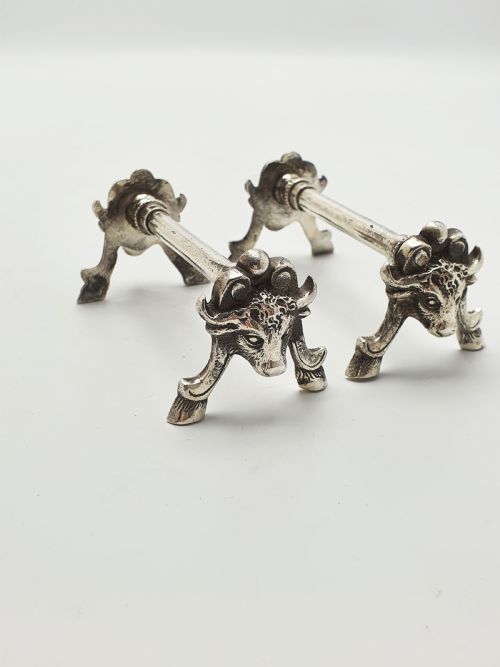


Vintage Table Knives
These vintage table knives and related dining accoutrements bring substance to the table through period craftsmanship in silver, steel, and mother-of-pearl.
Vintage Table Knives
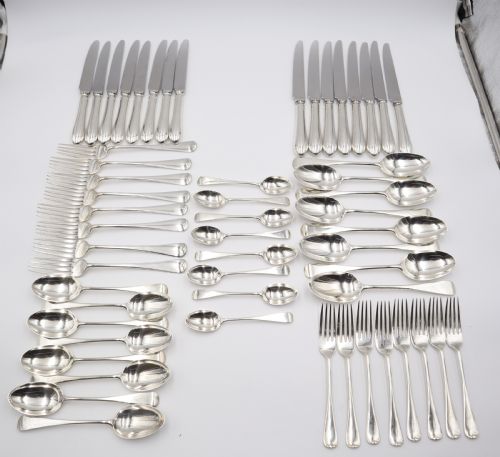
When buyers search for vintage table knives, they encounter a range of dining implements and accessories spanning the nineteenth and twentieth centuries. The selection encompasses individual fruit knives, fish serving pieces, and complete cutlery sets alongside supporting table items like knife rests, trays, and butter dishes.
Victorian and Edwardian examples predominate alongside Art Deco and traditional designs. Materials vary from sterling silver and silver plate to steel blades paired with handles of mother-of-pearl, bone, or Bakelite.
The assortment reflects diverse origins including British, American, Dutch, and Balkan workshops. Buyers find both cased presentation sets and individual functional implements.
Materials and construction
Metalworking techniques dictate the form of these pieces, utilising sterling silver, silver plate, nickel silver, and steel for blades and rests. Silversmiths employed casting, stamping, and heavy plating over base metals, while blade smiths utilised tempered steel.
Handles and rests frequently incorporate organic and early synthetic materials including mother-of-pearl, bone, glass, and Bakelite. These elements are pinned, collared, or set into metal mounts using traditional assembly methods.
Vintage Table Knives Retail Price Guide 2026
Typical asking prices for vintage table knives among the pieces listed under this phrase on Sellingantiques today, from the lower quarter to the upper quarter. They describe what is for sale here now, not the wider market.
Listings feature 19th Century, Victorian, Edwardian, and Art Deco periods, utilising sterling silver, silver plate, steel, mother-of-pearl, and Bakelite.
Distinctions in quality
Gauge of metal and weight differentiate standard production items from heavier, premium examples. Substantial silver plating or solid sterling construction provides greater durability and longevity.
The choice of handle material and the precision of decorative detail, such as cast animal figures or engraved blades, separate ordinary dining implements from finer presentation pieces.
Creswick·International Silver Co·Adie Brothers
The Vintage Table Knives Glossary
- Silver plate
- A layer of silver fused to a base metal core such as copper or nickel silver. This technique offered the appearance of solid silver at a lower cost.
- Sterling silver
- An alloy containing 92.5 percent silver by weight, combined with other metals for strength. It represents the standard for quality silver objects.
- Knife rest
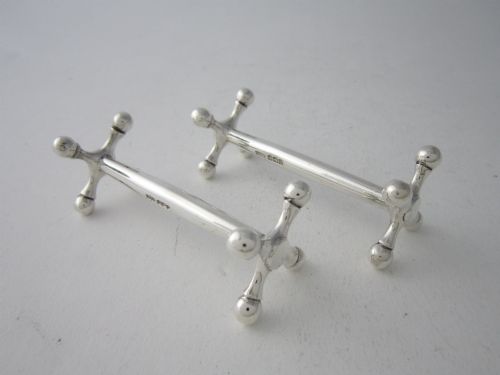
- A small support placed on the dining table to keep blades elevated between courses. They prevent food residue from soiling table linens.
- Mother-of-pearl
- The iridescent inner layer of certain mollusc shells used for knife handles. It provides a decorative, durable surface with natural lustre.
- Silver gilt
- Silver objects that have been coated with a thin layer of gold on the surface. This technique adds warmth and protects the underlying silver from tarnishing.
Vintage Table Knives: Frequently Asked Questions
How do I clean vintage silver knives?
Clean silver components with a soft cloth and a specialised silver polish, avoiding abrasive pads that scratch the metal. Keep moisture away from handles made of bone, pearl, or organic materials.
Store pieces in dry conditions to minimise tarnishing. Hand washing is essential, as dishwashers damage antique adhesives and organic handle materials.
Can I use these knives daily?
Solid silver and heavy silver-plated items withstand regular use if washed by hand immediately after dining. Steel blades require prompt drying to prevent oxidation and staining.
Delicate mother-of-pearl or antique bone handles warrant more careful handling. Reserve fragile cased sets for special occasions rather than everyday meals.
What are knife rests used for?
Knife rests support carving knives, table knives, or fish cutlery between courses during formal meals. They keep dirty blades elevated above the tablecloth.
Originating in earlier dining traditions, they appear in materials ranging from silver and glass to ceramic and Bakelite.
How do I identify Victorian pieces?
Victorian items often feature hallmarks indicating the assay office, date letter, and maker's mark for British pieces. Stylistic markers include ornate Rococo Revival scrolling or traditional floral engraving.
Heavy gauge construction and natural materials like mother-of-pearl and bone are characteristic of this nineteenth-century period.