




Vintage Sweetmeats Basket
These vintage sweetmeats basket examples bring elegance to any table, combining pierced silver and delicate glass.
Vintage Sweetmeats Basket
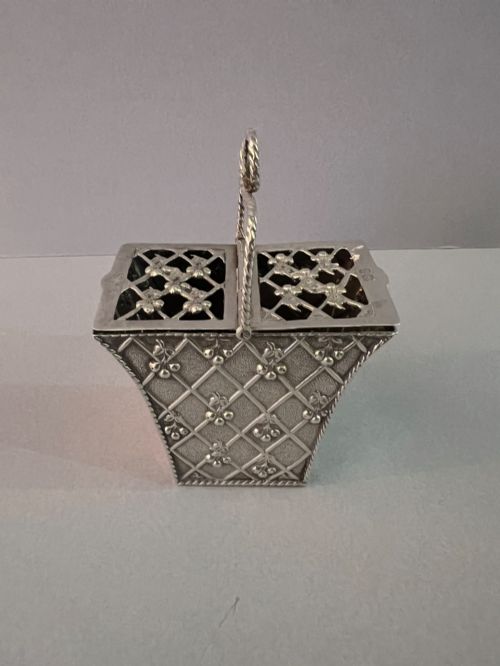
A vintage sweetmeats basket gathers small confectioneries, sweetmeats, or bonbons into a container designed for display and service. These pieces bridge the gap between functional tableware and decorative objects, frequently taking the form of open vessels or handled dishes.
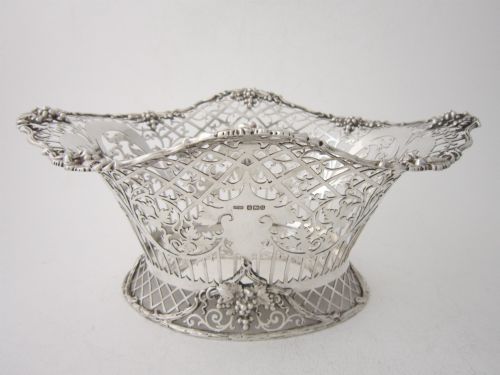
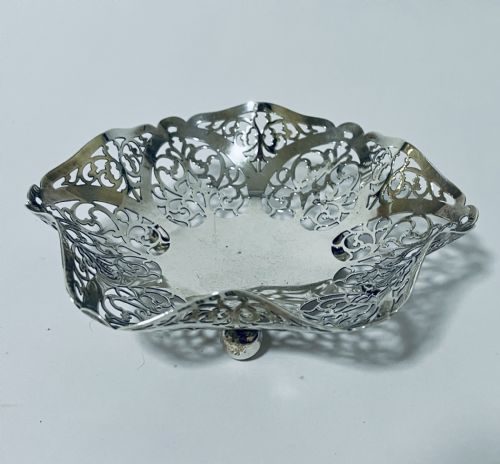
Most examples found here date from the Edwardian period, the 1920s, and the 1930s, alongside earlier Victorian and Georgian specimens. The forms range from simple sugar baskets to swing-handled oval baskets and pierced bonbon dishes.
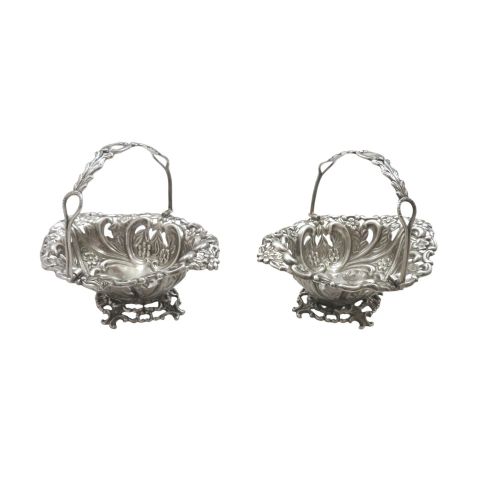
Design influences vary widely, incorporating Edwardian grace, Art Nouveau curves, and Neoclassical Revival motifs. The selection includes both sterling silver and silver plate, often paired with coloured glass inserts or tortoiseshell.
Materials and Construction
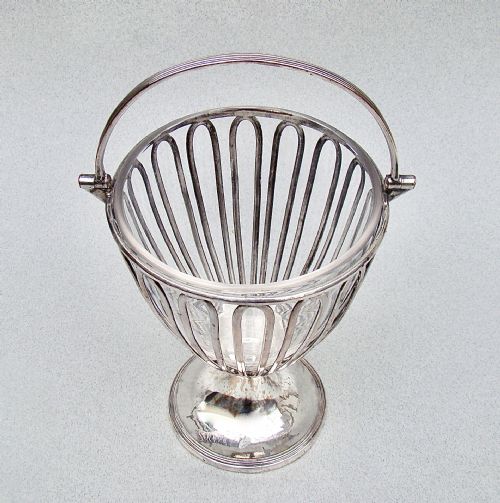
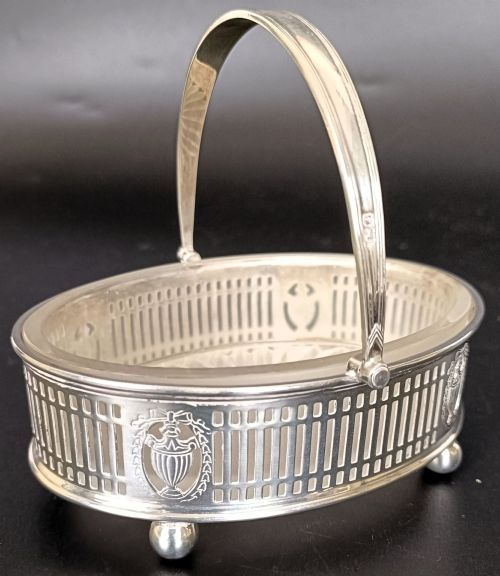
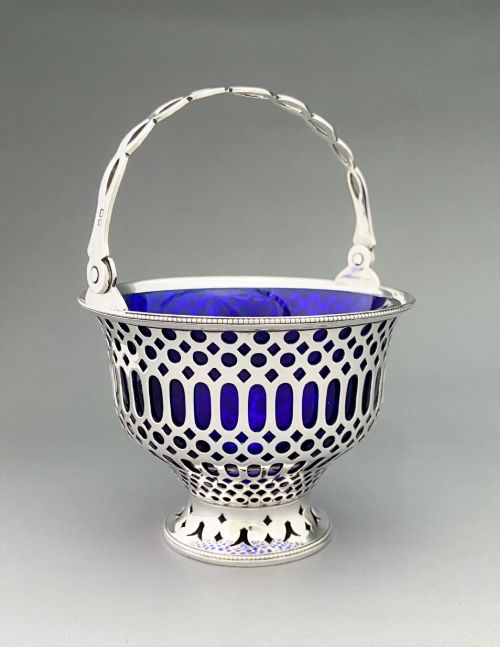
Silversmiths constructed these baskets primarily from sterling silver, silver plate, and Old Sheffield plate, utilising techniques such as wirework and piercing to create lightweight, openwork patterns. Many items incorporate swing handles attached to oval or circular bowls.
Contrasting materials frequently complement the metalwork, including cobalt glass liners that sit within pierced silver frames and panels of tortoiseshell or cane. These mixed-media constructions require precise joining of glass, shell, and metal.
Vintage Sweetmeats Basket Retail Price Guide 2026
Typical asking prices for vintage sweetmeats basket among the pieces listed under this phrase on Sellingantiques today, from the lower quarter to the upper quarter. They describe what is for sale here now, not the wider market.
The listings span periods from Georgian wirework and Victorian solid silver through to Edwardian pierced designs and 1930s swing-handled styles.
Markers of Quality
Quality in these baskets rests on the crispness of the piercing, the weight and balance of the metal, and the retention of original glass liners or internal fittings. Pieces with well-executed wirework or defined Art Nouveau ornament display greater artisan skill.
The presence of clear hallmarks, maker marks, and well-preserved plating or solid silver surfaces distinguishes superior examples. Maker attribution, such as designs associated with documented firms, adds historical weight to the physical construction.
Roberts and Belk
The Vintage Sweetmeats Basket Glossary
- Sweetmeat
- A small confection, dry sweet, or bonbon served at the conclusion of a meal. These baskets were specifically proportioned to hold such delicacies.
- Wirework
- Metal manipulated into open geometric or linear patterns. This technique creates a skeletal framework that is both decorative and structurally sound.
- Swing handle
- A movable handle attached to opposite sides of a basket rim on pivots. It drops to the side when the dish sits on a table.
- Old Sheffield plate
- A composite material made by fusing a thin sheet of silver to a thicker copper base. It was produced before electroplating became common.
- Pierced
- Metal decorated by cutting or piercing holes through the surface to form decorative motifs. This reduces weight while increasing visual lightness.
Vintage Sweetmeats Basket: Frequently Asked Questions
What are vintage sweetmeats baskets?
These pieces are small, decorative containers designed to hold sweets, sugar, or bonbons during dining and tea service.
They combine metalwork such as sterling silver or plate with openwork piercing, wirework, and occasionally glass liners.
How were sweetmeats baskets used?
Historically, they served confectioneries on the dining table or drawing-room sideboard for guests to select from during dessert.
The movable swing handles allowed diners to pass the basket easily between seats.
Today, collectors use them to display small objects or retain them as decorative silver table centrepieces.
How do I care for silver baskets?
Maintain the metal with gentle cleaning using appropriate silver polish, avoiding abrasive cloths that might damage fine piercing or thin plating.
Keep glass liners washed separately in warm soapy water and dried thoroughly before replacing them in the metal frame.
How can I tell the periods apart?
Georgian and early nineteenth-century pieces often feature heavy wirework or Old Sheffield plate construction with classical lines.
Edwardian and later twentieth-century examples tend toward lighter pierced silver, Art Nouveau curves, or geometric forms characteristic of the 1920s and 1930s.