






Vintage Suzani
These vintage suzani textiles bring Central Asian tribal needlework into modern spaces as striking wall hangings and decorative covers.
Vintage Suzani
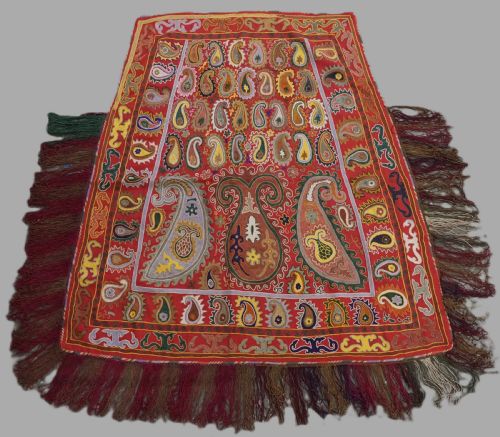
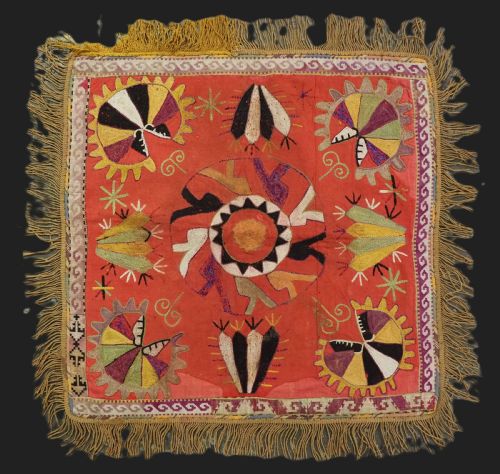
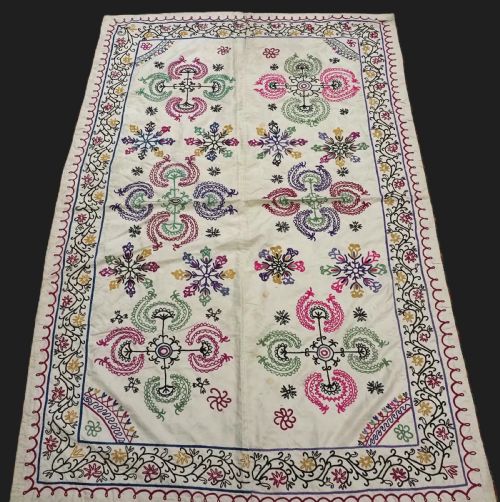
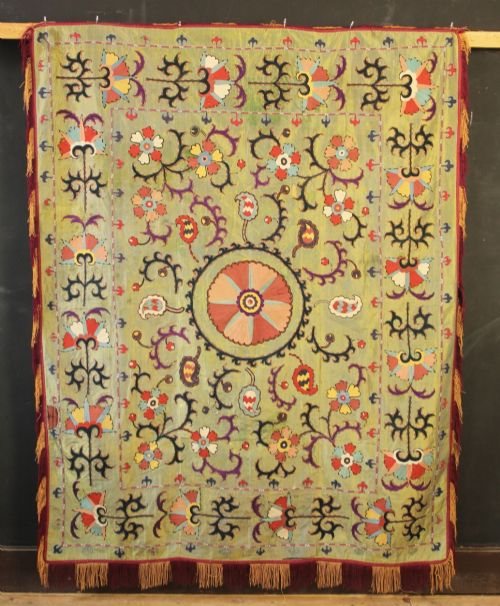
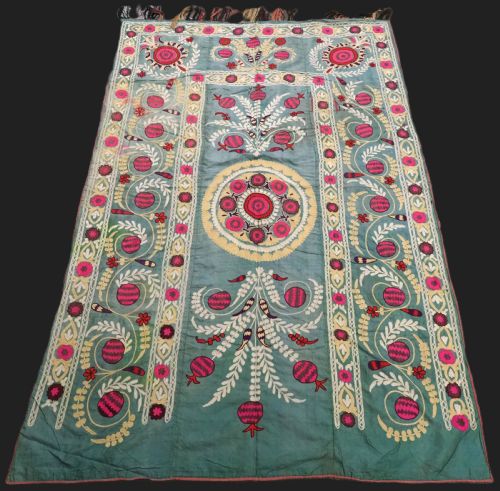
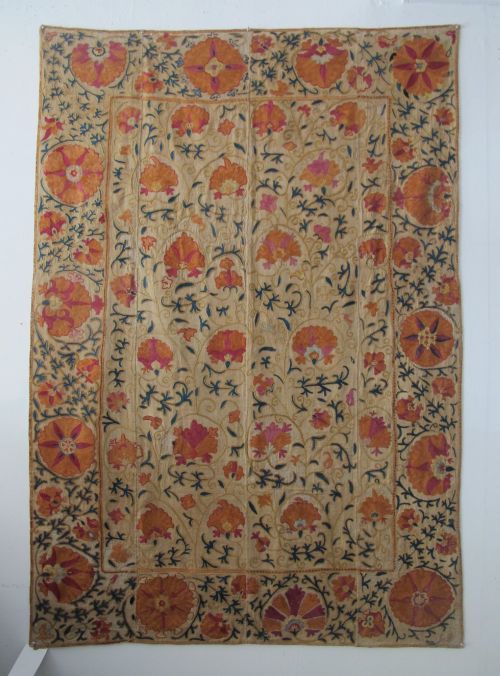
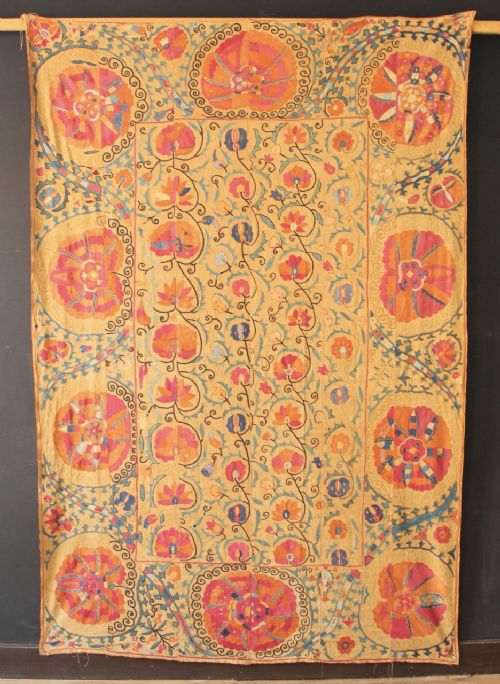
When searching for a vintage suzani, buyers encounter embroidered Central Asian textiles created across Uzbekistan and neighbouring regions from the nineteenth century into the early twentieth century. These pieces encompass large wall hangings, bed covers, and smaller tribal items such as dowry embroideries and ceremonial horse covers.
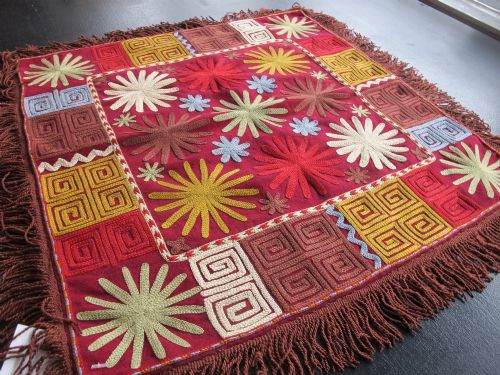
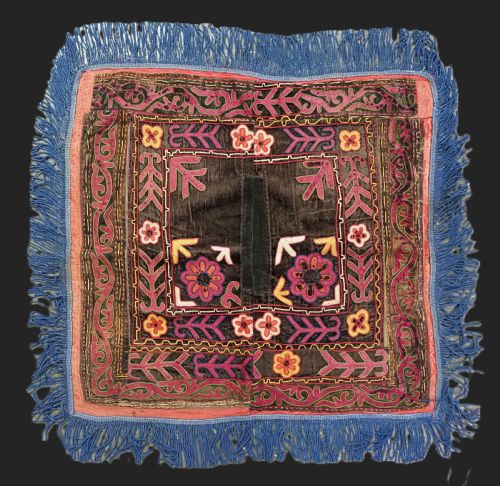
The selection includes specific regional types like Tashkent palak embroideries, Bukhara designs, and compact Lakaiilgich panels. Makers utilised cotton, silk, and wool grounds to work dense floral, architectural, and medallion motifs.
Most examples originate from traditional workshops and nomadic or village communities, displaying regional variations in format and stitchwork. Buyers find everything from full-work panels covering the entire ground to smaller nim suzanis and prayer formats.
Materials and Technique
Artisans embroidered these textiles primarily using fine silk thread applied to woven foundations of cotton, wool, or adras, a local silk and cotton blend. Grounds appear in various tones, including red, yellow, black, and green.
The needlework relies on specialised techniques executed by hand, creating textured surfaces that define the patterns of medallions, stars, and floral arrangements. Textile strips are occasionally joined together, as seen in kilim-woven variations.
Vintage Suzani Retail Price Guide 2026
Typical asking prices for vintage suzani among the pieces listed under this phrase on Sellingantiques today, from the lower quarter to the upper quarter. They describe what is for sale here now, not the wider market.
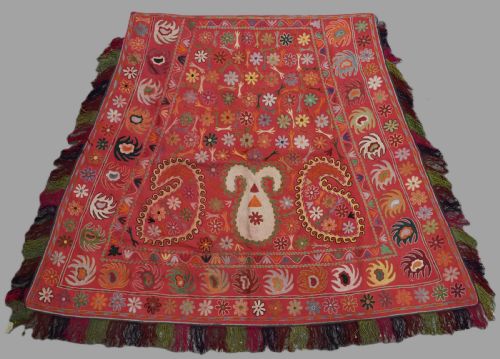
Several embroidered horse and saddle covers survive, showing that even equestrian gear received elaborate bridal needlework.
Factors of Quality
Quality rests on the density of the embroidery and the complexity of the composition, distinguishing fully worked palak panels from simpler layouts. The precision of the needlework and the balance of the design elements also set finer examples apart.
Preservation of the original ground fabrics and silk threads influences the integrity of each piece. Vibrant, harmonious colour distribution across the embroidered surface indicates superior execution by the maker.
The Vintage Suzani Glossary
- Suzani
- An embroidered tribal textile originating from Central Asia, traditionally worked in silk on a cotton or wool foundation. These pieces served as wall hangings, bed covers, and ceremonial furnishings.
- Palak
- A fully embroidered Tashkent suzani type featuring dense overall patterns, often dominated by large central star motifs. The needlework covers almost the entire ground fabric.
- Ilgich
- A small-format Central Asian embroidery piece, frequently associated with the Lakai tribe and utilised as a dowry hanging or tent bag decoration. They display distinct tribal geometric and zoomorphic elements.
- Nim suzani
- A smaller variant of the standard suzani, roughly half the size of full-scale bed covers or large wall hangings. These compact pieces offer versatility in interior placement.
- Adras
- A traditional Central Asian fabric woven from a combination of silk and cotton threads. It serves as a sturdy coloured ground for silk embroidery.
Vintage Suzani: Frequently Asked Questions
How were suzanis used?
Historic households utilised these textiles primarily as wall hangings, decorative bed covers, and ceremonial horse or saddle covers.
Smaller pieces also functioned as tent bags and domestic furnishings within nomadic and village communities.
How do I hang a vintage suzani?
Mounting these textiles safely involves attaching a supportive cotton sleeve to the reverse edge and sliding a padded batten through it.
This method distributes the weight evenly across the fabric without causing stress to the historic silk embroidery.
How do I identify regional styles?
Regional types differ through specific design vocabulary, scale, and ground materials, such as the dense star patterns of Tashkent palaks.
Lakai tribal pieces often feature distinct compact motifs and smaller dimensions compared to larger urban workshop panels.