



Vintage Style Trilogy Ring
A vintage style trilogy ring carries three stones across the finger, bringing together stones of character in gold and platinum.
Vintage Style Trilogy Ring
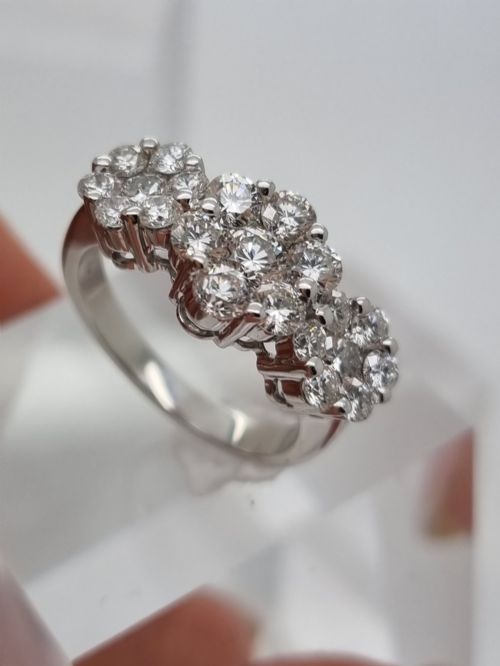
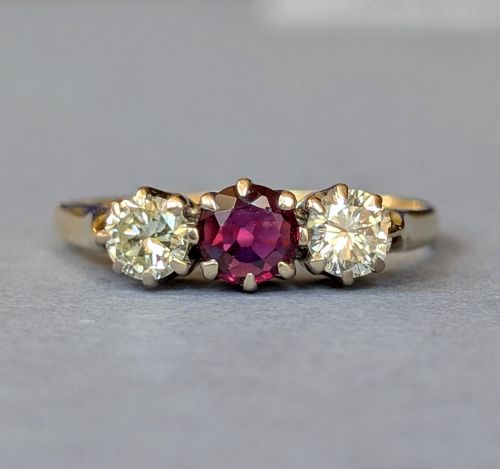
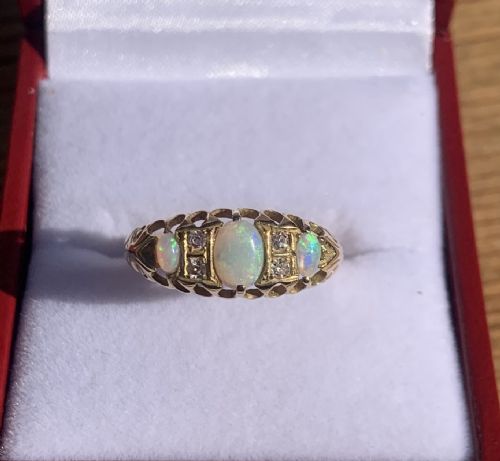
A vintage style trilogy ring holds three stones in a row, representing the past, the present and the future. The pieces found here span the Victorian era, the 1920s, the 1930s, the 1950s and the 1960s, showing how jewellers returned to the three-stone layout across successive decades.
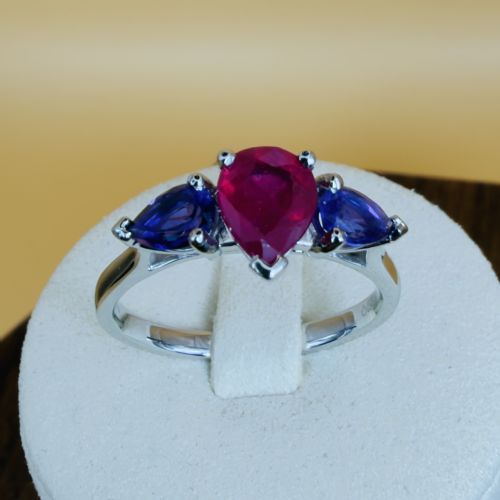
You will meet gold and platinum settings carrying diamonds, rubies, sapphires, opals, amethysts, emerald paste and pear cut stones. The forms range from traditional diamond rows to arrangements set with coloured gems.
The style adapts through the periods, shifting from Victorian mounts to Art Deco geometric lines and mid-century interpretations. Each piece uses the three-stone format to give the hand a balanced, classic profile.
How they were made
Maker's hands shaped these rings in 18ct gold, 9ct gold, white gold and platinum. These metals provided the strong foundations required to hold three stones securely in line.
The stones themselves include old cut diamonds, pear cut gems, rubies, sapphires, opals and amethysts. Jewellers arranged these materials in claw settings and dress ring mounts designed to catch the light from multiple angles.
Even paste makes an appearance here, proving that historical style cared as much for clever sparkle as it did for heavy vaults.
What varies in quality
Quality rests in the presence of the stones and the harmony of their grouping. A superior ring balances the centre stone with matching shoulders so the visual weight reads correctly across the hand.
The choice of metal and the crispness of the setting work together to elevate the piece. Heavier gold and platinum mounts show a finer hand in construction than lighter commercial work.
The Vintage Style Trilogy Ring Glossary
- Trilogy ring
- A ring set with three stones in a horizontal row across the finger. This layout is traditionally associated with the past, present and future.
- Old cut diamond
- A diamond cut by hand before modern machinery standardised proportions. These stones display smaller tables and higher crowns, creating a soft candlelit sparkle.
- Platinum
- A dense, white precious metal used in jewellery for its strength and bright finish. It allows for slender settings that secure stones firmly without bulk.
- Pear cut
- A gemstone shape combining a round brilliant cut and a marquise cut, resembling a teardrop. This cut adds length and variation to a three-stone arrangement.
Vintage Style Trilogy Ring: Frequently Asked Questions
How do I wear a three stone ring?
These rings sit comfortably on the finger either on their own as a statement piece or paired alongside a plain band. The horizontal spread of the three stones makes them suitable for daily wear when chosen in durable metals like platinum or 18ct gold.
Consider the height of the setting and the shape of the stones when matching them with other bands on your hand.
What metals are used in vintage trilogy rings?
The listings show pieces formed in 18ct gold, 9ct gold, white gold and platinum. Platinum provides a crisp, bright white setting favoured in earlier decades, while yellow gold offers a warmer traditional tone.
Each metal choice changes the overall character of the ring and how the stones interact with the light.
How do I date a vintage ring?
Dating relies on the structural style, the cut of the stones and the metal characteristics. Art Deco pieces from the 1920s and 1930s often feature geometric work and old cut diamonds, whereas Victorian examples carry distinct heavier mounts.
Comparing the setting style and gemstone cuts against known period markers helps place the ring in its correct era.