

Vintage Style Gemstone Ring
A vintage style gemstone ring brings together historical design motifs and colourful stones, offering a distinct character that modern jewellery often lacks.
Vintage Style Gemstone Ring
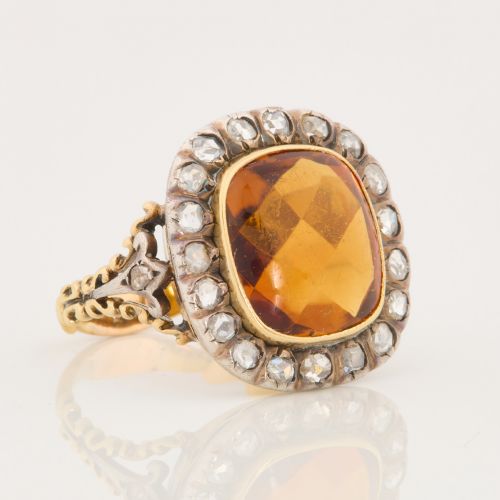
A vintage style gemstone ring spans multiple periods from the nineteenth century through the mid-twentieth century, encompassing Victorian, Edwardian, Art Deco, and mid-century designs. Buyers exploring this selection encounter cluster rings, boat rings, and multi-stone dress rings set with central gems surrounded by diamonds.
The materials utilised range from traditional yellow and white gold to platinum, mounting precious and semi-precious stones such as rubies, sapphires, emeralds, and opals. These pieces reflect specific historical revivals alongside original items from the 1920s, 1950s, and 1960s.
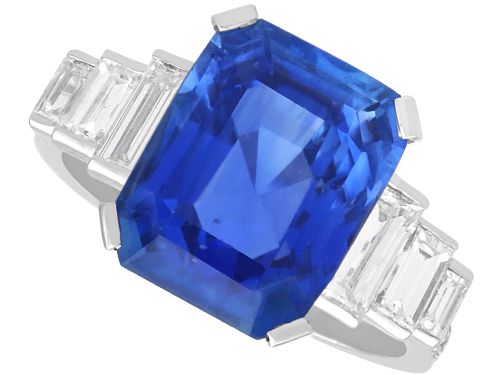
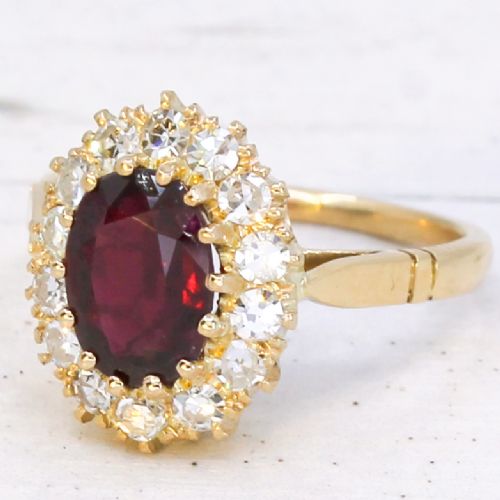
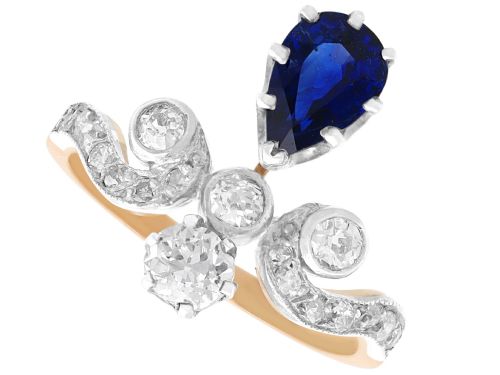
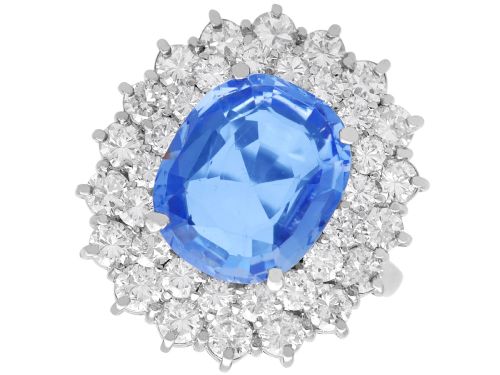
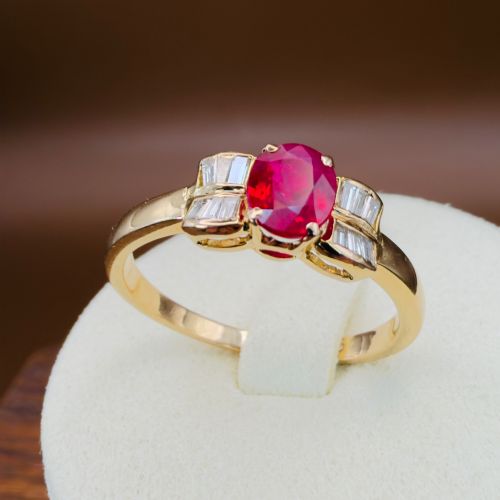
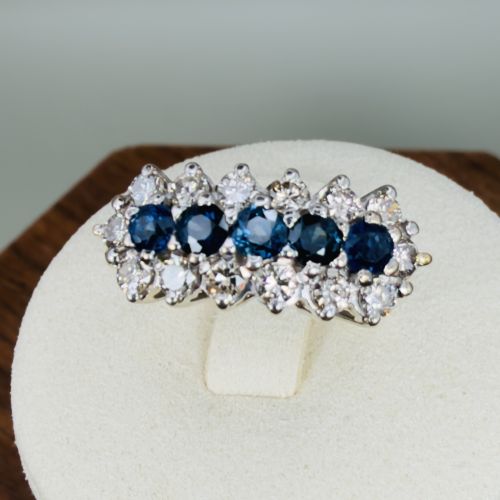
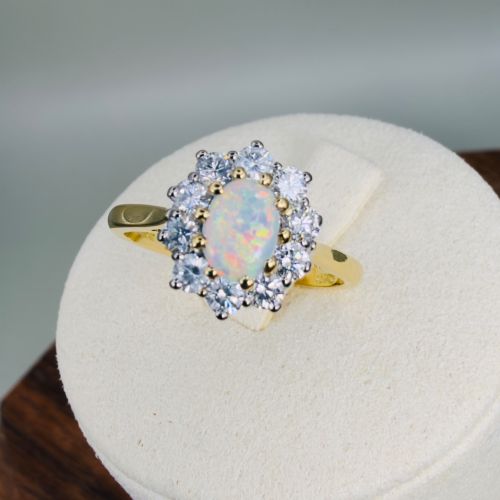
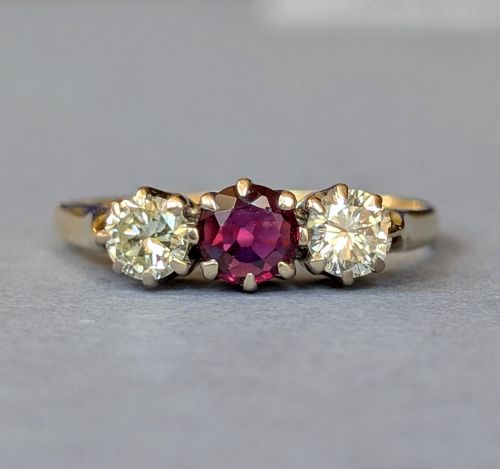
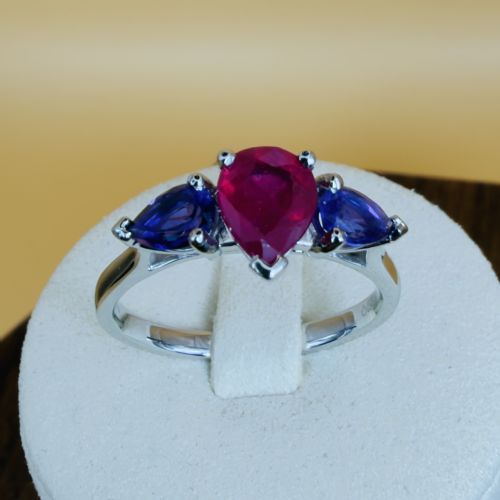
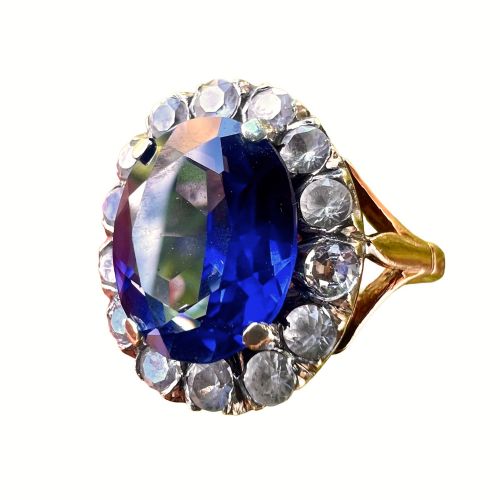
Cluster configurations dominate the selection, often pairing a deep blue sapphire or vibrant red ruby with brilliant-cut diamond borders. Alternative forms include three-stone arrangements and floral motifs that display the craftsmanship of their respective decades.
Materials and construction
Goldsmiths constructed these rings primarily in 18ct gold, 9ct gold, and platinum, frequently combining yellow gold bands with white gold or platinum settings to enhance the brilliance of mounted diamonds. Gemstones are secured using claw settings, bezel mounts, or flush settings depending on the period and the stone cut.
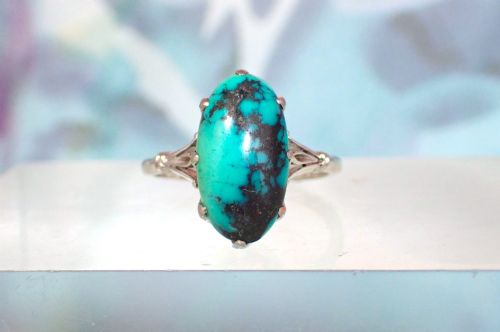
Lapidaries shaped stones into oval, round, pear, and princess cuts, alongside smooth cabochons for opals, jade, and kunzite. The integration of calibre-cut stones and baguette diamonds reflects the geometric precision associated with Art Deco and mid-century aesthetics.
Listings feature items spanning the Victorian era through the 1960s, constructed in 18ct gold, platinum, and 9ct gold.
Assessing quality and character
Quality rests upon the natural origin, saturation, and clarity of the primary gemstone, alongside the uniformity and matching of secondary diamond accents. Unheated sapphires or emeralds with fine crystal structure occupy the upper tier of the range.
Metalwork execution defines the standard of the mounting, visible in the delicacy of millegrain edges, the symmetry of cluster arrangements, and the sturdiness of the shank. Heavier platinum and 18ct gold settings provide greater durability compared to lighter 9ct alternatives.
The Vintage Style Gemstone Ring Glossary
- Cluster ring
- A ring featuring a central gemstone encircled by a border of smaller stones, typically diamonds. This arrangement maximises visual impact and light reflection.
- Navette style
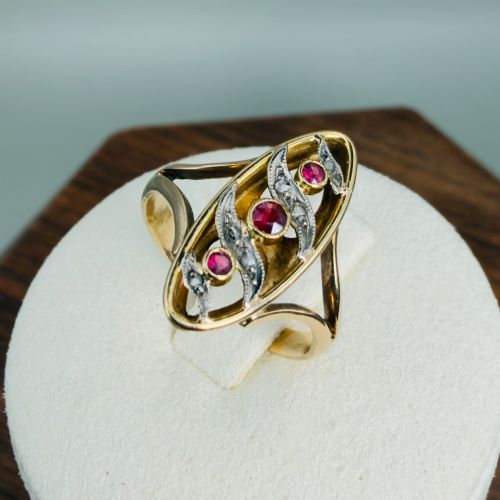
- A ring shape resembling a small boat or eye, elongated along the finger. It is also known as a marquise shape in gemstone cutting.
- Cabochon
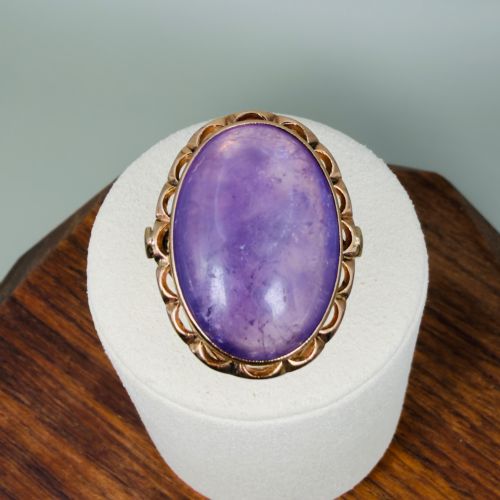
- A gemstone shaped and polished with a convex, rounded top rather than faceted. This cut is common for opaque or translucent stones like opals and jade.
- Millegrain
- A decorative technique involving tiny raised metal beads along the edge of a setting. This detail is characteristic of Edwardian and Art Deco jewellery.
- Boat ring
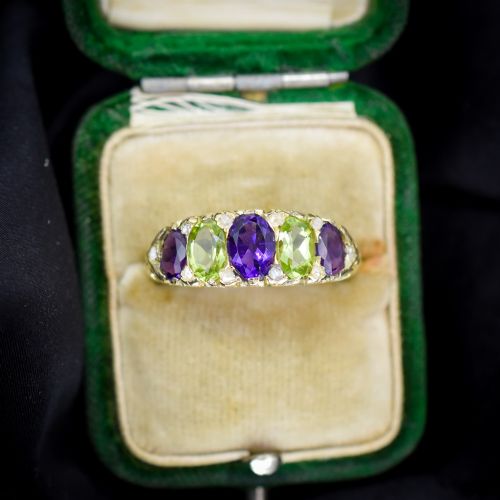
- A ring design with a curved, boat-like profile that sits low across the finger. It frequently incorporates a row of graduated stones.
Vintage Style Gemstone Ring: Frequently Asked Questions
How do I clean my gemstone ring?
Clean most gemstone rings using warm water, mild soap, and a soft-bristled brush to remove accumulated oils from beneath the stones. Avoid harsh chemical cleaners that may damage softer materials.
Take particular care with opals and pearls, as they are porous and sensitive to moisture and abrupt temperature changes. Consult a professional jeweller if the setting appears worn or loose.
Are these rings suitable for daily wear?
Diamonds, rubies, and sapphires possess high hardness ratings that withstand regular daily use. Platinum and 18ct gold settings offer the structural resilience required for everyday rings.
Softer stones like opals, emeralds, and pearls demand greater caution to prevent scratching or impact damage. Removing the ring during heavy manual tasks preserves its longevity.
How do I identify the period of a ring?
Period identification relies upon a combination of gemstone cuts, metal types, and stylistic motifs. Edwardian pieces often feature platinum-topped gold with millegrain work, while Art Deco designs showcase geometric symmetry and calibre-cut stones.
Hallmarks stamped inside the band provide official assay office marks and date letters. Comparing these stamps with historical assay records clarifies the year of manufacture.
What is a cluster ring?
A cluster ring groups multiple stones together to create the visual impression of a single larger gem. Typically, a prominent coloured gemstone occupies the centre, framed by a halo of smaller diamonds.
This design became popular for maximising sparkle and colour contrast within a single piece of finger jewellery. Variations range from floral layouts to tight geometric squares.