
Vintage Study Desk Drawers
Vintage study desk drawers bring order to a room, offering compartments and writing surfaces rooted in Victorian and Edwardian craftsmanship.
Vintage Study Desk Drawers
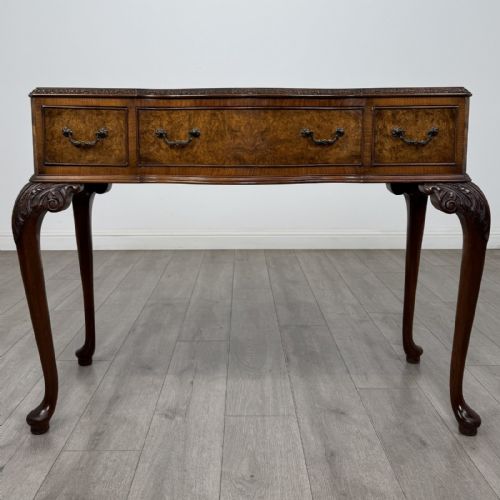
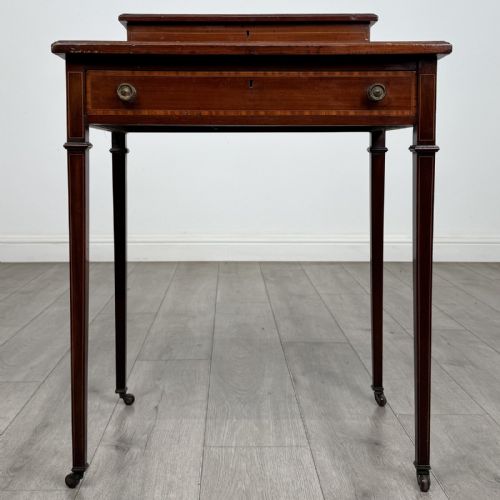
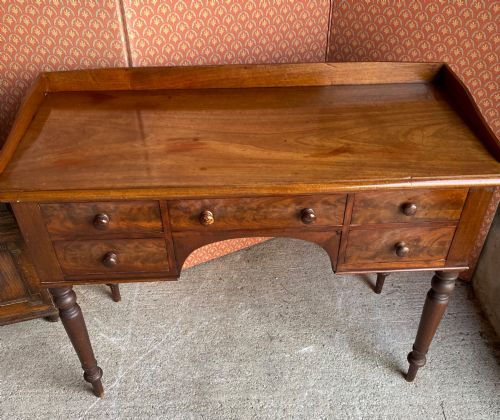
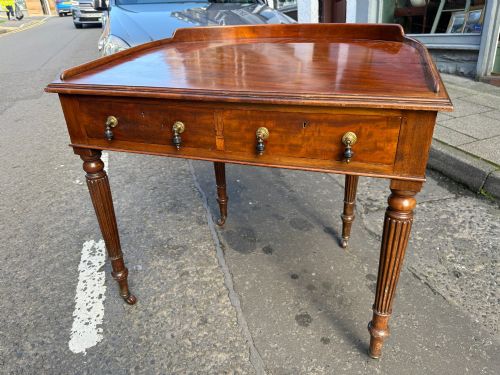
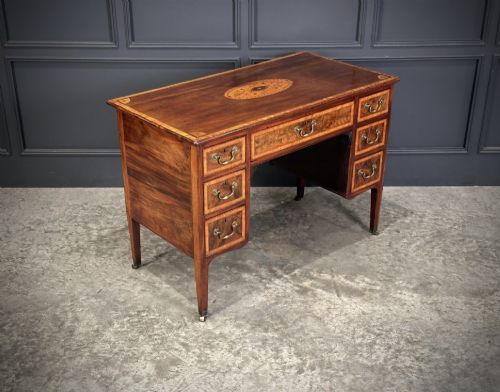
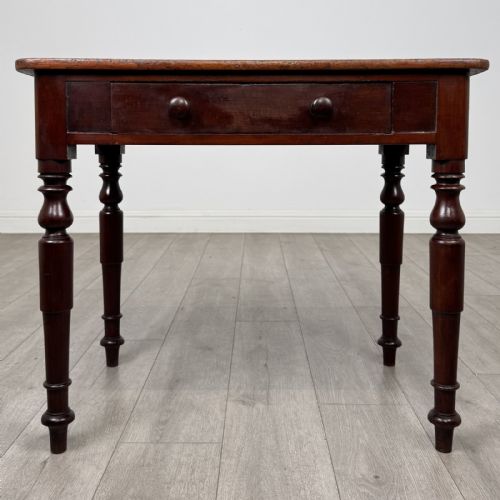
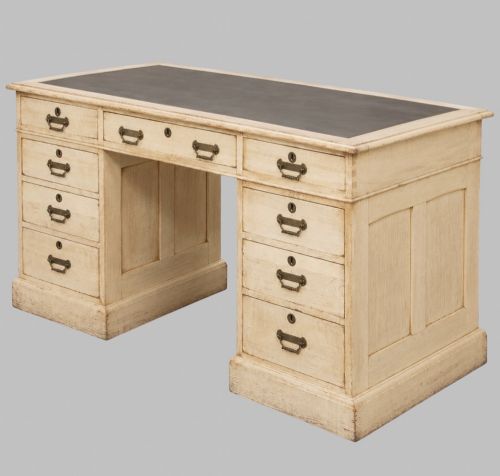
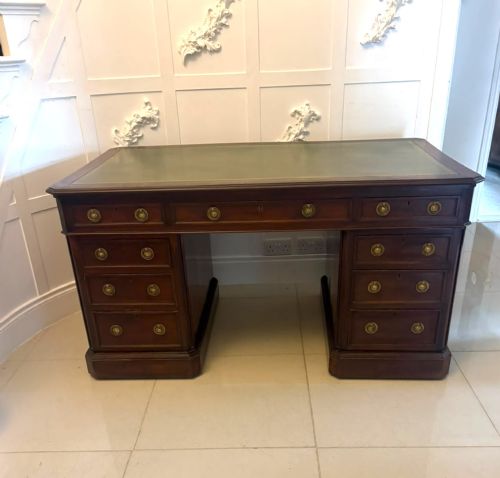
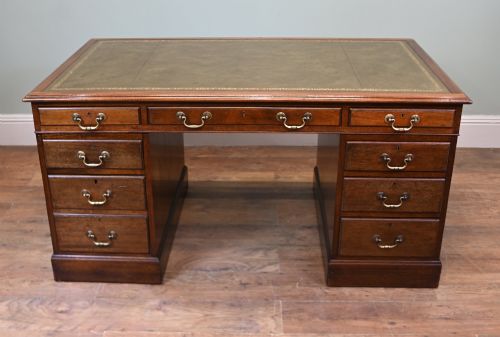
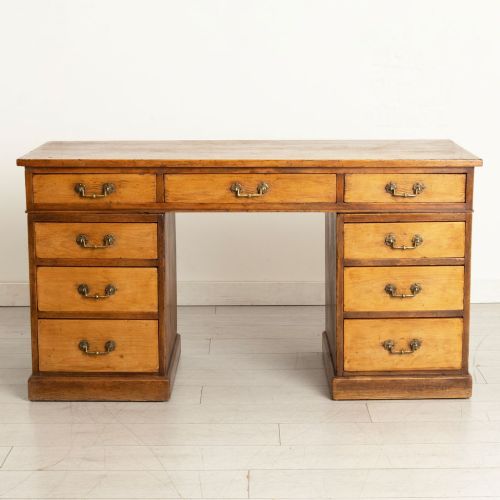
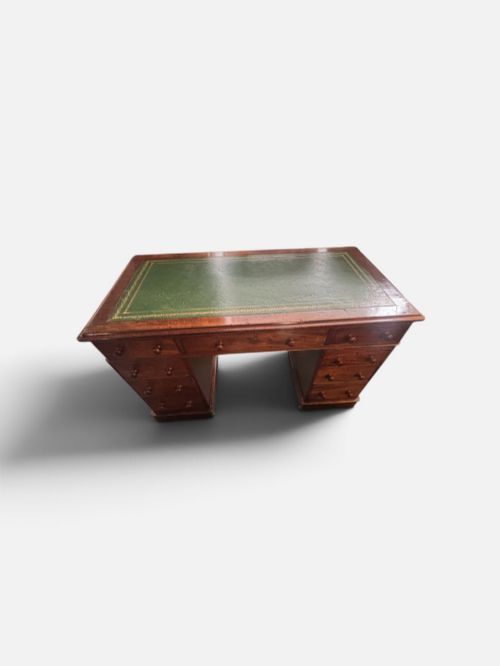
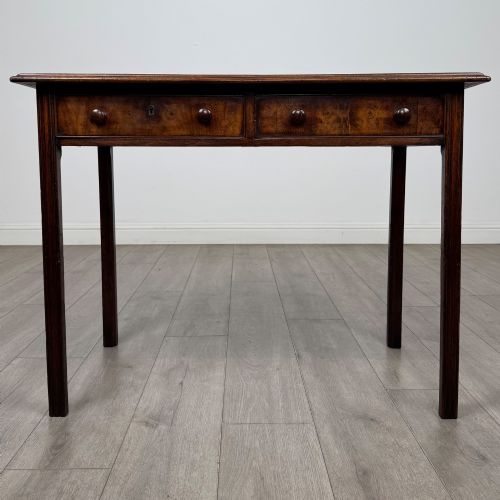
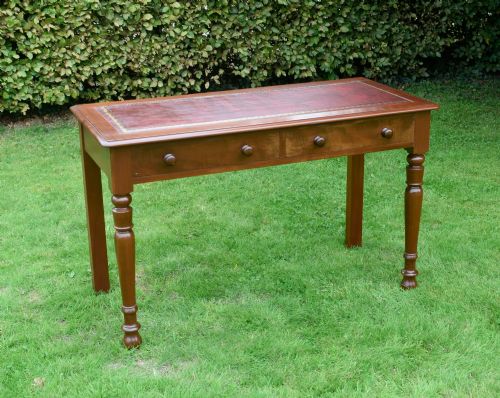
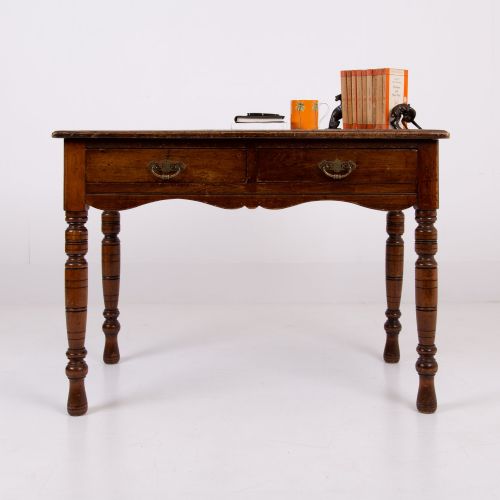
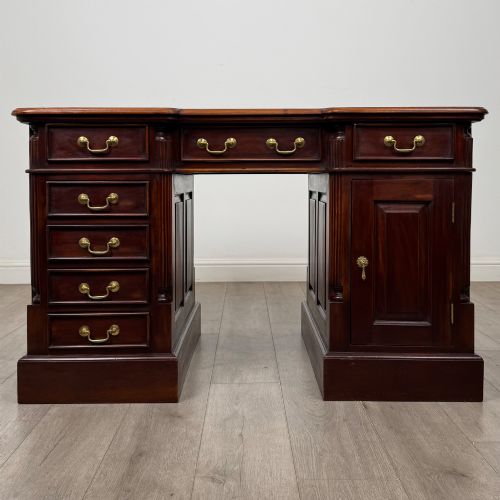
When you search for vintage study desk drawers, you encounter pieces designed for correspondence and paperwork, spanning the nineteenth and early twentieth centuries. These take the form of pedestal desks, kneehole desks, writing tables, and bureaux constructed during the Victorian, Edwardian, and later periods.
Materials and construction methods
Cabinet makers utilised dense hardwoods such as mahogany, oak, and walnut, frequently incorporating burr walnut veneers to create decorative surfaces on drawer fronts and tops. Pine often served as a secondary timber for internal drawer construction.
Joinery relied on traditional techniques like dovetailing for drawer boxes to ensure durability under daily use. Brass hardware, leather inserts, and original locks completed the construction of these functional workspaces.
Listings feature woods including mahogany, oak, walnut, burr walnut, and pine across Victorian and Edwardian periods.
Judging the quality of drawers and desks
Quality rests in the selection of timber and the precision of the cabinet work, particularly in how drawers fit within their carcases. Finely figured burr walnut or flame mahogany veneers separate standard utility pieces from high-status items.
The presence of maker stamps, original brass handles, and intact leather writing surfaces elevates a piece. Superior execution is visible in the neatness of the dovetail joints and the thickness of the secondary timbers.
Edwards & Roberts·Heals of London·Hobbs & Co.
The Vintage Study Desk Drawers Glossary
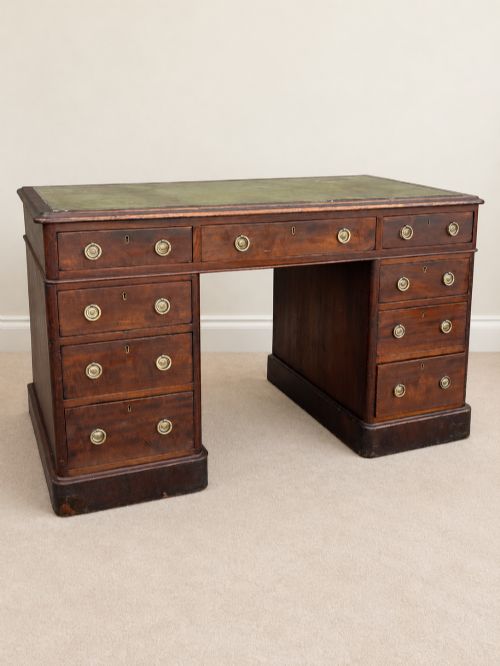
- Pedestal desk
- A freestanding desk comprising two banks of drawers supporting a single top. This form provides substantial storage space on either side of the user.
- Kneehole desk
- A compact desk featuring a central recess for the legs, flanked by one or two tiers of drawers. This configuration offers a smaller footprint than a full partners desk.
- Writing table
- A table designed primarily for writing, typically fitted with one or more drawers beneath the top. Unlike a pedestal desk, it lacks banks of drawers reaching the floor.
- Bureau
- A desk featuring a sloping flap that opens to reveal a fitted interior of small drawers and pigeonholes. These often sit above a set of wider full-width drawers.
- Dovetail
- A joint formed by interlocking wedge-shaped fingers, used extensively in drawer construction. Hand-cut dovetails indicate older, finer cabinet making.
- Partners desk
- A large desk designed to be used from both sides simultaneously, featuring matching banks of drawers beneath a shared top.
Vintage Study Desk Drawers: Frequently Asked Questions
How do I care for leather desk tops?
Leather writing surfaces require gentle cleaning with a damp cloth and occasional treatment with appropriate leather dressings to prevent cracking.
Avoiding direct sunlight and excessive moisture preserves the supple quality of the hide over decades of use.
Are Edwardian desks different from Victorian ones?
Edwardian desks often display lighter proportions and draw upon earlier Georgian or Regency revival styles, moving away from heavy dark timbers.
Victorian pieces tend to be more robust, utilising dense mahogany and walnut with deeper mouldings and pronounced bracket or plinth bases.
What is a kneehole desk?
A kneehole desk is a smaller pedestal form with a recessed central space for the sitter, flanked by columns of drawers.
This layout maximises storage capacity while maintaining a comfortable seating position for writing or administrative tasks.