

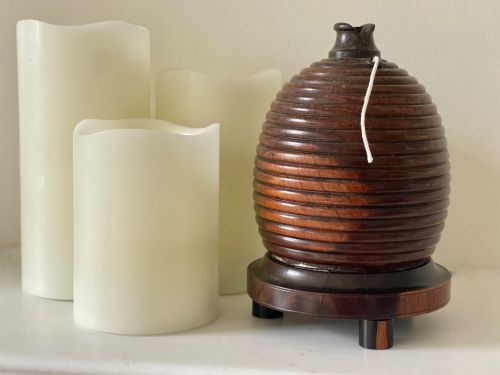
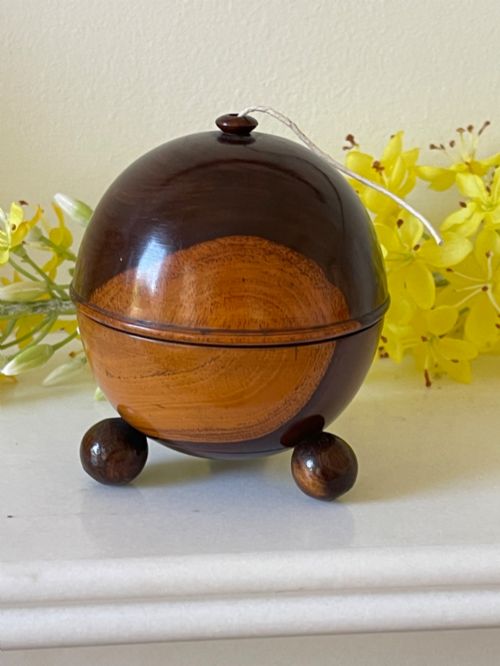
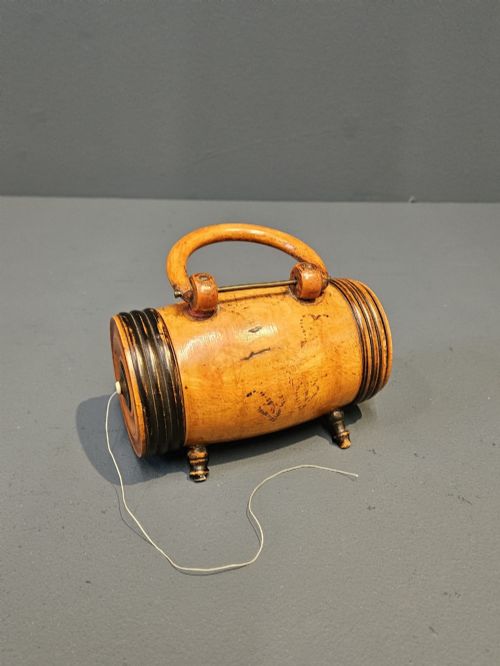


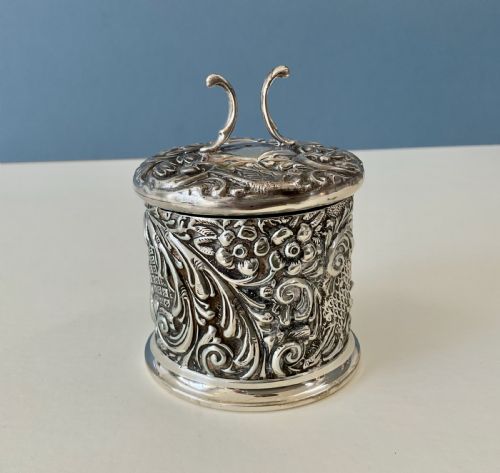


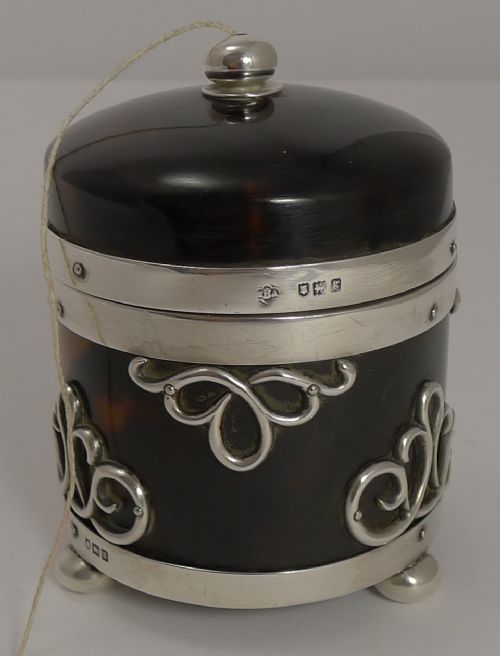

Vintage String Holder
These vintage string holder examples are practical desk accessories and treen barrels designed to dispense twine neatly in the home or office.
Vintage String Holder
A vintage string holder is a functional desk accessory or utilitarian container designed to keep twine accessible and tidy in domestic and workspace settings. These pieces range from simple desk accessories to decorative treen barrels, boxes, and dispensers intended for everyday use.
Buyers searching for a vintage string holder encounter various forms originating from the nineteenth and early twentieth centuries, including the Victorian and Edwardian eras. The most common versions on this page are turned wood barrels, spherical boxes, and dispensers fashioned from timber or metal.
Makers of the period produced these items in distinct styles such as Victorian treen and Art Deco, utilising materials that suited both utilitarian workspaces and refined writing desks. Each form reflects the specific domestic needs of the nineteenth century and the early twentieth century for controlled twine dispensing.
How they were made
Woodworking techniques dominate the construction of these pieces, with turners shaping native and exotic timbers on a lathe to create symmetrical forms like bee hives, spheres, and barrels. Craftsmen selected dense hardwoods such as sycamore, fruitwood, maple, lignum vitae, and Karelian birch for their durability and smooth finish.
Other examples incorporate metalwork and glass, pairing sterling silver mounts and fitted cutters with turned wooden bases or glass jars. These mixed-media pieces required precise assembly to secure the metal dispensing rims and lids onto the glass or wooden bodies.
Vintage String Holder Retail Price Guide 2026
Typical asking prices for vintage string holder among the pieces listed under this phrase on Sellingantiques today, from the lower quarter to the upper quarter. They describe what is for sale here now, not the wider market.
Some nineteenth-century turners carved wooden string boxes to resemble beehives, complete with tiny decorative bees buzzing around the lid.
What varies in quality
The sophistication of the turning and the choice of material determine the standing of an individual piece within its type. Finely figured timbers like Karelian birch or dense lignum vitae command greater appreciation than standard softwoods, while intricate treen shapes such as bee hives demonstrate superior craftsmanship.
The presence of original integrated metal cutters and hallmarked sterling silver mounts elevates the utility and refinement of the object. Pieces that retain their smooth operational mechanics and harmonious proportions represent the finer end of surviving examples.
The Vintage String Holder Glossary
- Sycamore
- A light-coloured hardwood frequently utilised by nineteenth-century turners for domestic items. Its dense grain resists splitting during regular use.
- Fruitwood
- A generic term for timber harvested from fruit-bearing trees such as apple or pear. Cabinetmakers valued it for its fine grain and warm tone.
- Lignum Vitae
- An extremely dense and heavy hardwood known for its oily self-lubricating properties. It was commonly selected for items subject to friction and wear.
- Karelian Birch
- A distinctive timber characterised by swirling grain patterns and dark inclusions. It appears frequently in decorative twentieth-century objects.
- Mauclineware
- A type of nineteenth-century wooden souvenir or utility ware, often decorated with photographic views or distinct surface treatments. Pieces made in this manner usually bear a specific manufacturing style.
Vintage String Holder: Frequently Asked Questions
What is a vintage string holder?
A vintage string holder is a small decorative or utilitarian vessel designed to house a ball of twine and dispense it smoothly through a central aperture. These items were essential desktop or kitchen accessories in eras before self-adhesive tape and modern packaging.
Craftsmen produced them in diverse forms, from turned wooden spheres and bee hives to silver-mounted glass jars. They combined practical utility with the decorative standards of their respective decades.
How were string holders used?
They were placed on desks, packing tables, or in kitchens to keep twine from tangling while parcels were wrapped or documents tied. A ball of string sat inside the container, with the loose end threaded through a cutter or small hole in the lid.
This kept the workspace orderly and ensured string was instantly accessible for daily domestic and commercial tasks. The integrated cutters allowed users to sever the twine quickly without reaching for scissors.
How do I date a string holder?
Dating relies on identifying the prevailing material, style, and any assay marks present on silver mounts. Victorian examples often feature dark treen and fruitwood turnings, whereas twentieth-century pieces may display Art Deco influences and Karelian birch.
Examining the turning marks and construction methods provides further clues to the period of manufacture. Hallmarks on silver collars supply exact calendar years where applicable.
Can I still use these for modern twine?
Most vintage string holders accommodate modern cotton or jute twine provided the ball size matches the internal cavity. Standard twine balls fit easily into spherical boxes and wooden barrels designed a century ago.
Users simply place a fresh ball inside, thread the end through the aperture or cutter, and secure the lid. They function just as effectively today as they did in the nineteenth century.