









Vintage Storage Box Bench
A vintage storage box bench combines practical concealment with seating, offering a robust timber or upholstered seat that lifts to reveal generous interior capacity.
Vintage Storage Box Bench
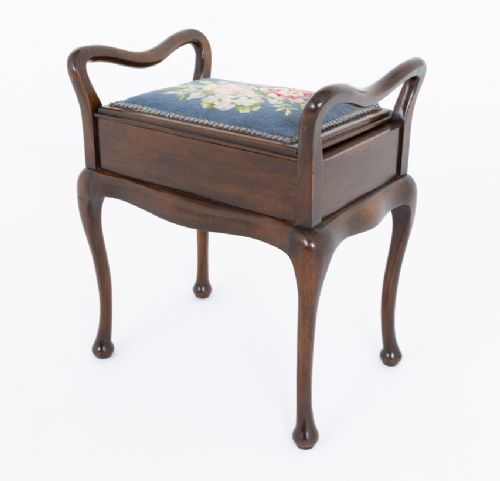
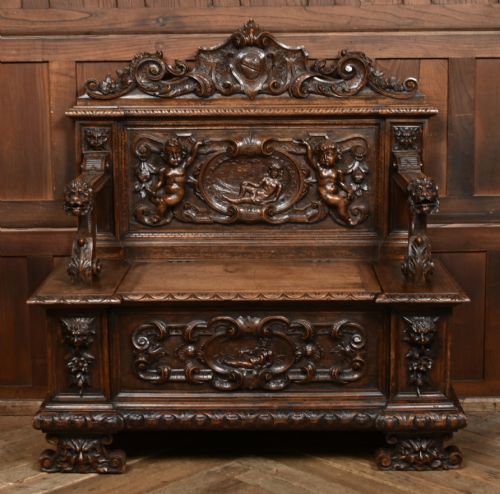
When you examine a vintage storage box bench, you encounter forms that merge utility with furniture, primarily appearing as settles, hall benches, blanket chests, and ottomans. These dual-purpose pieces serve entryways, living spaces, and bedrooms by providing hidden depths for household items while doubling as everyday seating.
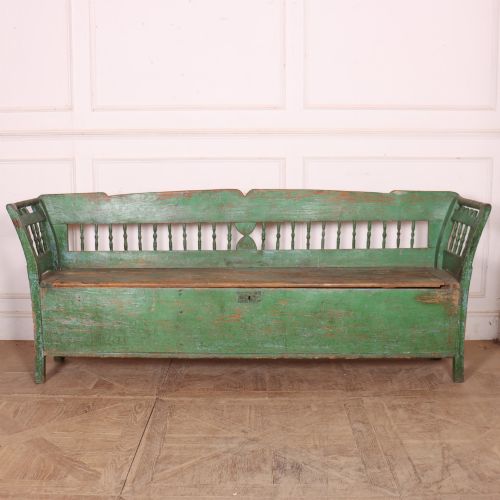
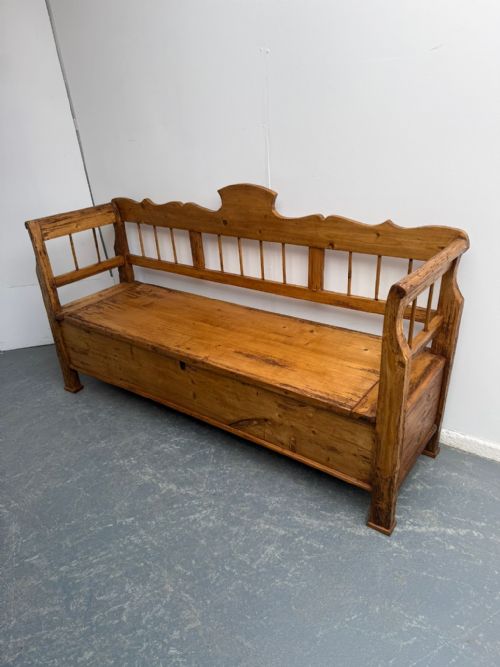
The selections span diverse regional workshops, ranging from English oak and pine country pieces to painted Swedish examples, Austrian farmhouse benches, and carved Indian or colonial variations. Oak and pine dominate the offerings, built heavy and utilitarian to withstand generations of daily domestic use.
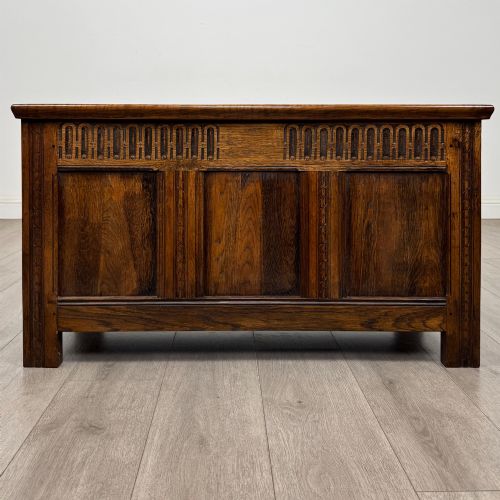
Dated examples stretch from the Georgian and Victorian eras through the Edwardian period and into the early twentieth century, incorporating styles from Jacobean Revival to Art Nouveau and Arts and Crafts. Buyers find both rustic painted finishes and dark polished timbers equipped with hinged lids, fall-fronts, or fold-over tops.
How they were made
Cabinetmakers and rural joiners constructed these benches primarily using solid timbers like oak, pine, mahogany, and walnut, joined with traditional framing techniques to support regular weight on the lids. Metal hinges, iron brackets, and brass decoration reinforced the heavy timber lids and storage compartments against constant lifting and daily wear.
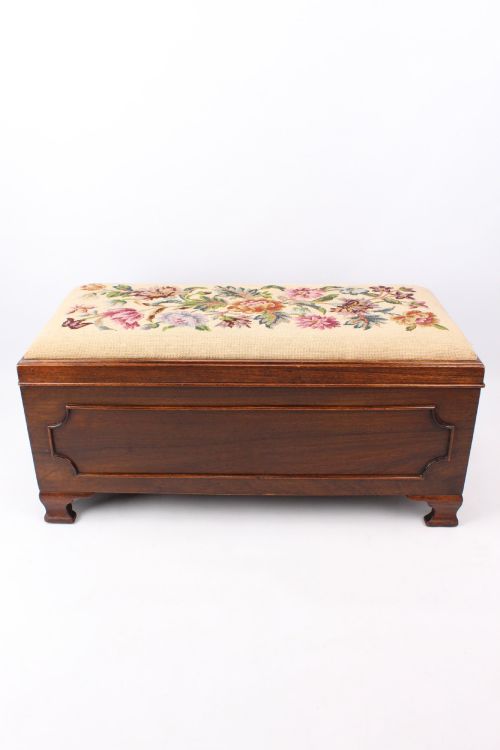
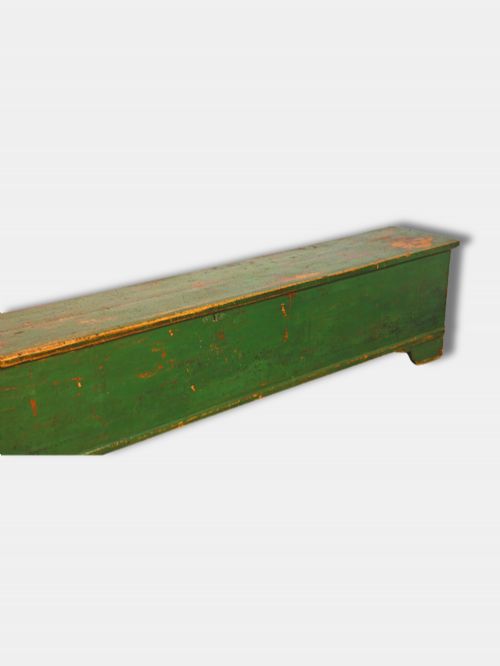
Surface treatments varied widely depending on regional tradition and workshop practice, utilising natural wax, dark polish, or layered paint in grey, black, and green. Upholstered versions incorporated horsehair or modern stuffings beneath fabric, leather, needlework, and leatherette seats secured with tacking.
Vintage Storage Box Bench Retail Price Guide 2026
Typical asking prices for vintage storage box bench among the pieces listed under this phrase on Sellingantiques today, from the lower quarter to the upper quarter. They describe what is for sale here now, not the wider market.
Listings feature 19th-century pine, Victorian oak, and Edwardian mahogany storage box benches alongside painted Scandinavian and Austrian country pieces.
What varies in quality
The integrity of the timber framing and the original movement of the hinged mechanism distinguish standard utility items from finer country and formal pieces. Solid oak and figured mahogany construction with hand-carved panels demand superior carpentry compared to plain softwood built strictly for utilitarian storage.
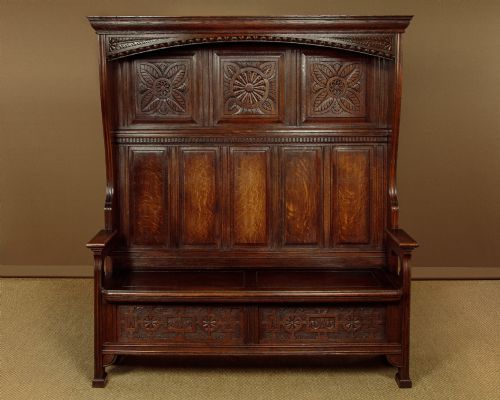
Preservation of original painted surfaces, authentic patination on leather upholstery, and intact period hardware substantially elevate a piece above later adaptations or heavily restored examples. The refinement of decorative carving, from simple Edwardian geometric patterns to intricate Anglo-Indian relief work, marks the upper tiers of craftsmanship.
Hallett & Sons
The Vintage Storage Box Bench Glossary
- Settle
- A wooden bench with a high back, solid arms, and a box seat compartment beneath the hinged lid. This form kept drafts away from sitters in older hallways.
- Cassapanca
- An Italian wooden chest bench featuring a backrest and armrests, serving as both seating and storage. These substantial forms often display elaborate carved panelling.
- Monks bench
- A convertible timber piece with a hinged top that folds down over the arms to form a table. It provides dual functions for compact domestic interiors.
- Ottoman
- A low, upholstered seat or bench without a back, fitted with a lift-up lid for storing blankets and textiles. They frequently appear in mahogany, walnut, and leather.
- Blanket box
- A large rectangular chest designed for linen storage, occasionally modified with added seating or feet. They form the simplest ancestor of the storage bench.
Vintage Storage Box Bench: Frequently Asked Questions
How do I date a storage bench?
Dating relies on timber species, tool marks, and stylistic clues such as Victorian carving or Arts and Crafts simplicity. Secondary woods and fastener types further help narrow down the decade of production.
Heavily oxidized pine and hand-forged iron hinges point toward earlier nineteenth-century origins, whereas factory-standard brass screws often indicate Edwardian or later manufacture.
Can I use a hall bench daily?
Most solid oak and pine benches are built robustly for heavy daily use in entrance halls and boot rooms. Their sturdy frame construction easily accommodates sitting while removing shoes.
Upholstered ottomans require slightly more care depending on the condition of the internal webbing and padding beneath the leather or fabric top.
How do I maintain the wood?
Routine maintenance involves applying a quality beeswax to nourished timber surfaces to protect against dryness and fading. Avoid placing antique wood in direct sunlight or near heat sources.
Painted surfaces require gentle dusting with a dry cloth rather than liquid cleaners to preserve the historic finish and underlying pigment.