




Vintage Stoneware Pot
A vintage stoneware pot brings dense, heavy material and salt-glazed texture into a room, holding plants, liquids, or dry goods with quiet authority.
Vintage Stoneware Pot
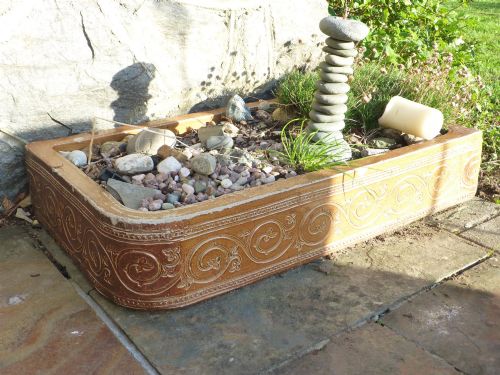
When you search for a vintage stoneware pot, you encounter heavy functional vessels spanning the nineteenth century through the early twentieth century. The selections on this page run from large garden planters and troughs to smaller interior cache pots, jardinieres, confit jars, and utility measuring jugs.
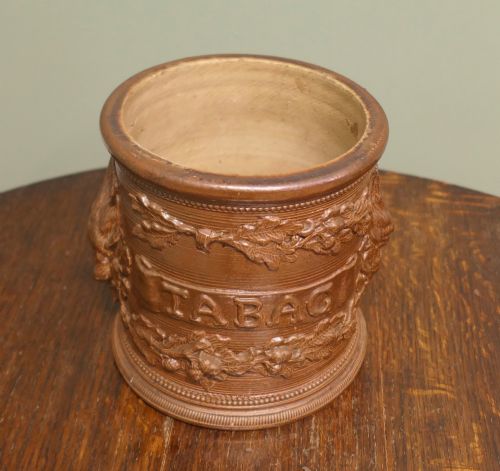
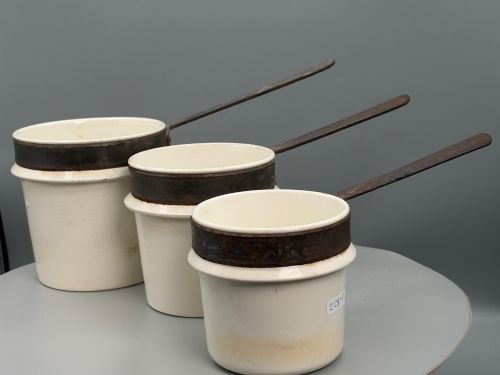
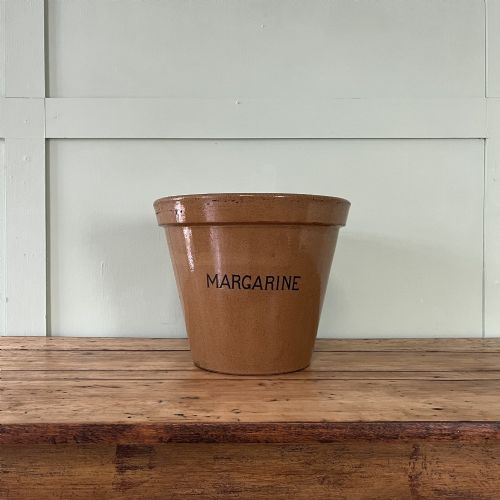
Most pieces stem from English and French workshops, encompassing Victorian, Georgian, and Art Nouveau styles. You also find specialised forms such as tobacco jars, apothecary jars, inkwells, and bonsai planters alongside utilitarian cooking dishes and margarine bowls.
The dominant forms are garden planters and jardinieres designed to hold plants and trees, often accompanied by matching stands or pedestals. These sturdy vessels bring domestic utility and horticultural display together through durable fired earth.
Materials and construction methods
Potters shaped these vessels from dense clay bodies, firing them at high temperatures to vitrify the material into impermeable stoneware or dense earthenware. Many examples utilise salt-glazing techniques, where salt thrown into the kiln during firing creates an orange-peel textured finish.
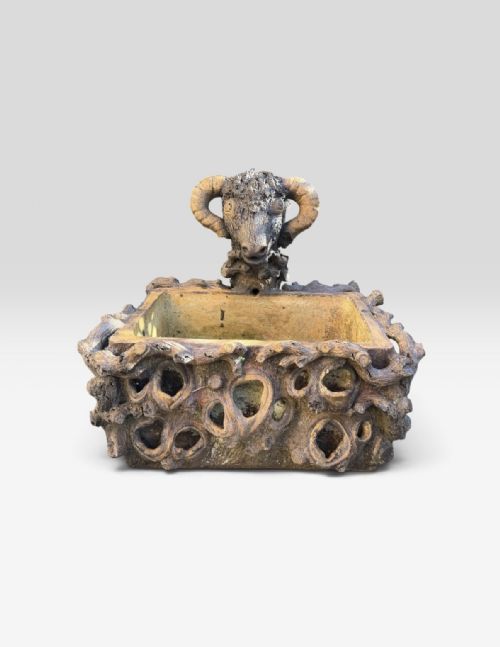
Surface finishes range from simple green and white glazes to complex blue flambé treatments and faux bois surface moulding that mimics natural wood. Iron bands, handles, and occasional silver collars provide structural reinforcement and functional contrast to the heavy ceramic bodies.
Vintage Stoneware Pot Retail Price Guide 2026
Typical asking prices for vintage stoneware pot among the pieces listed under this phrase on Sellingantiques today, from the lower quarter to the upper quarter. They describe what is for sale here now, not the wider market.
Among the functional vessels sits a solitary nineteenth-century stoneware rugby ball inkwell, proving that potters occasionally traded plain utility for sporting whimsy.
Distinctions in craftsmanship and design
Quality reveals itself in the crispness of moulded relief work, the even distribution of glaze, and the structural balance of large forms like garden troughs and pedestals. Simpler utilitarian cooking dishes and margarine bowls rely on straightforward throwing lines and robust utility, whereas pieces from major potteries show deliberate artistic ambition.
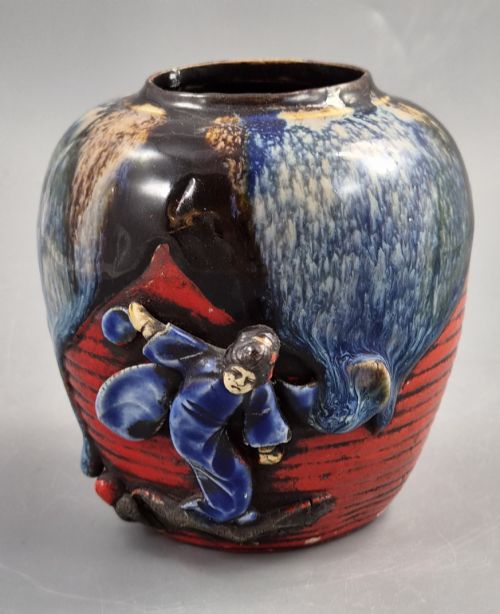
Artistic collaboration and specific decorative treatments separate standard utility vessels from notable studio and factory pieces. Elaborate modelling, such as climbing figures on Japanese jars or detailed botanical motifs on Art Nouveau jardinieres, elevates a humble clay vessel into a piece of decorative art.
Wedgwood·Royal Doulton·Guichard Carriès·Doulton Lambeth·Enoch Wood & Sons·Makuzu Kozan II
The Vintage Stoneware Pot Glossary
- Stoneware
- A robust, vitrified ceramic pottery fired at high temperatures until the clay body becomes non-porous and impermeable to liquids. This dense material resists chipping and holds moisture well.
- Salt-Glazed Stoneware
- Pottery glazed by throwing common salt into the kiln during the high-temperature firing process. The salt vaporises and combines with the silica in the clay to form a durable, textured glassy coating.
- Jardiniere
- An ornamental pot or stand designed to hold a live plant or flower arrangement. These decorative vessels often sit on matching pedestals in an interior or conservatory.
- Confit Jar
- A traditional French earthenware or terracotta pot featuring a glazed upper section, originally used for preserving meats and fats. Their generous proportions and earthy glazes make them popular decorative objects.
- Jasperware
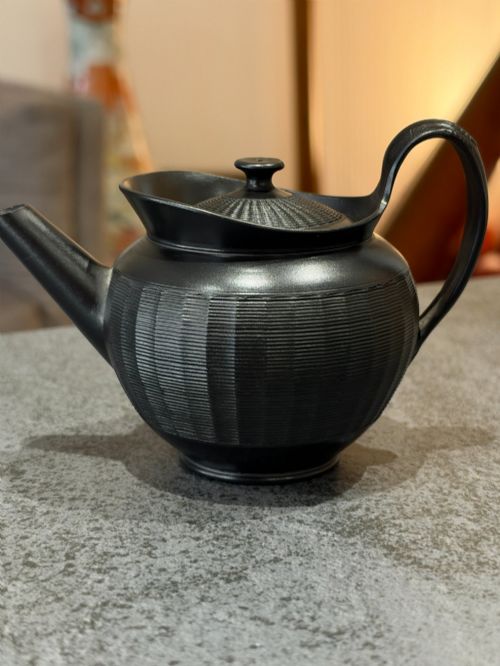
- A type of fine stoneware developed by Wedgwood, characterised by a matte unglazed exterior surface contrasted with raised white moulded figures. It typically appears in shades of blue or sage green.
- Faux Bois
- An artistic technique that imitates wood grain or wooden textures in other materials like ceramic or stone. Makers applied this style to garden planters to blend ceramic vessels into natural surroundings.
Vintage Stoneware Pot: Frequently Asked Questions
How were vintage stoneware pots used originally?
These vessels served practical functions in domestic, commercial, and agricultural settings. Households stored preserved foods, liquids, and dry goods in utilitarian jars and measuring vessels.
Larger troughs and jardinieres held plants in orangeries and gardens, while specialised containers stored tobacco, ink, and apothecary supplies.
Can I use these planters outdoors?
Many of these pieces were created specifically for garden and conservatory use, utilising dense, frost-resistant materials. Large troughs and planters accommodated substantial plants and small trees on patios and in courtyards.
Winter conditions can still affect older ceramics, so moving delicate or porous earthenware indoors during freezing weather remains prudent.
How do I distinguish nineteenth-century pieces?
Nineteenth-century items often show heavier thrown bodies, traditional salt glazes, and utilitarian stamps or maker marks characteristic of Victorian and Georgian production. Forms tend to prioritize straightforward function, thick walls, and simple iron reinforcements.
Later pieces from the early twentieth century introduce brighter artistic glazes, experimental forms, and distinct Art Nouveau styling.
What is the difference between stoneware and earthenware?
Stoneware is fired at significantly higher temperatures, causing the clay body to vitrify and become completely waterproof and extremely durable. This makes it ideal for holding liquids and enduring outdoor environments.
Earthenware is fired at lower temperatures, resulting in a more porous material that usually requires an applied glaze to hold water.