




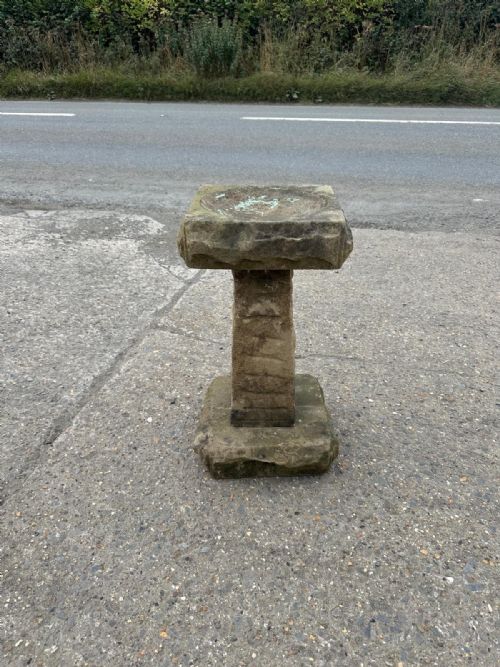


Vintage Stone Feature
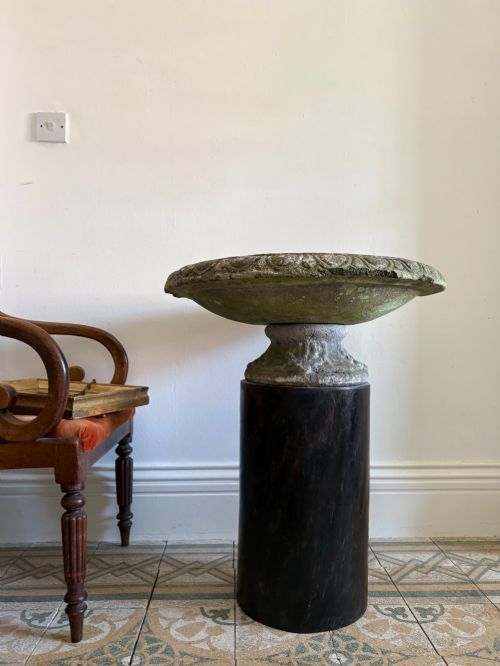
These vintage stone feature pieces are architectural elements and garden ornaments that bring genuine age and texture to a courtyard or terrace.
Vintage Stone Feature
When you search for a vintage stone feature, you are looking at items shaped from hard materials to serve architectural or decorative purposes in gardens and landscapes. The pieces on this page span several centuries, reaching back to the eighteenth century through to the mid-twentieth century.
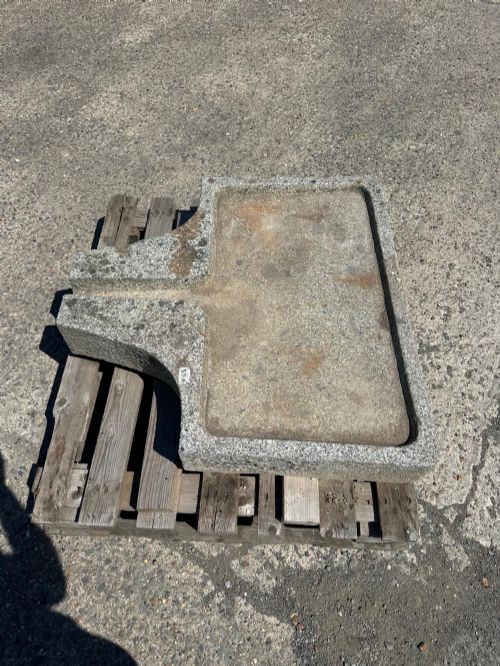
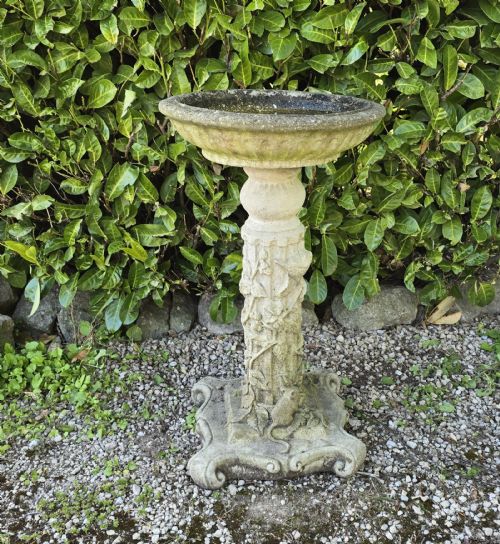
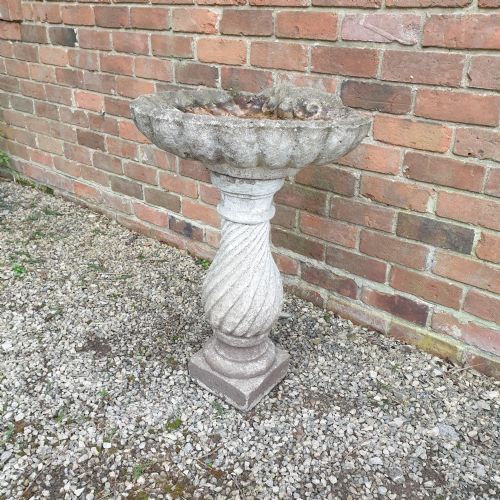
The selection here includes functional farm items and ornamental garden pieces, such as staddle stones, millstones, birdbaths, planters, columns, and statues. You are most likely to encounter weathered staddle stones and granite millstones alongside cast stone birdbaths from the early to mid-twentieth century.
Makers and masons from the eighteenth, nineteenth, and early twentieth centuries produced these objects for practical estate use or classical garden display. Their forms reflect regional vernacular traditions and neoclassical revivals across Britain and Europe.
How they were made
Stonemasons shaped natural materials like sandstone, granite, Purbeck stone, and limestone using hand chisels and cutting tools. These quarried pieces carry tool marks and surface weathering built up over decades or centuries of exposure.
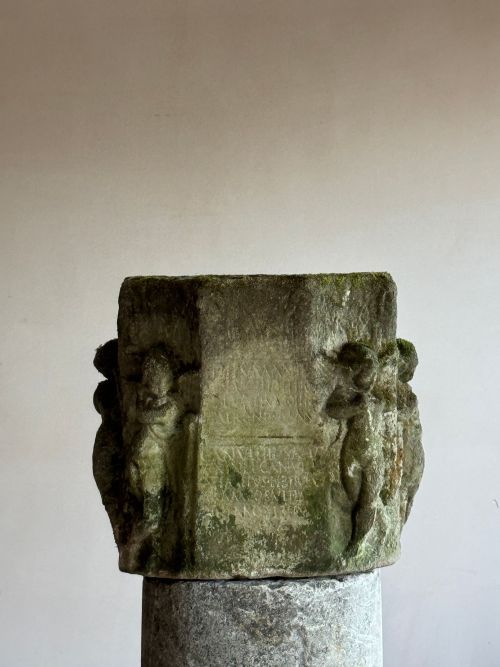
Other items utilise cast stone, composition stone, or reconstituted stone poured into moulds to capture classical details such as neoclassical birdbath basins, Roman funerary altars, and ornamental crowns. Forged iron handles and tethers were sometimes added to functional stones like millstones and presses.
Listings feature items spanning from the eighteenth century through the Edwardian era to the mid-twentieth century.
What varies in quality
The distinction between pieces lies in the depth of hand-carved detail, the integrity of the original material, and the character of the weathering. Natural quarried sandstone and Cornish granite show distinct mineral grains and tool work that machine-cut modern items lack.
Cast stone examples vary according to the sharpness of the original mould and the quality of the aggregate used in the composition. Surface growth such as moss and lichen adds a mature patina that indicates prolonged outdoor exposure.
The Vintage Stone Feature Glossary
- Staddlestone
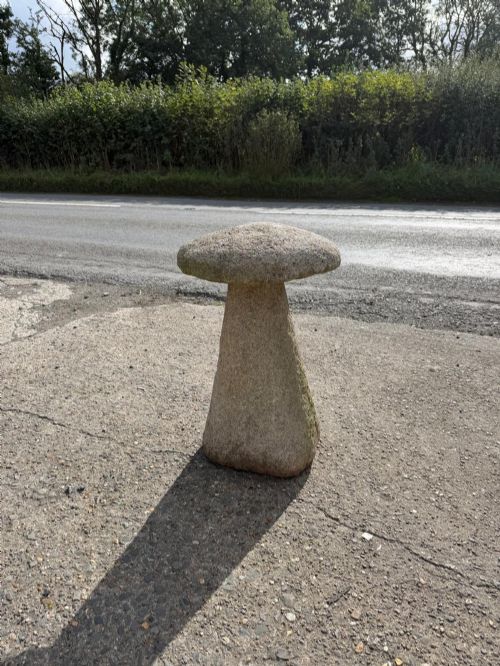
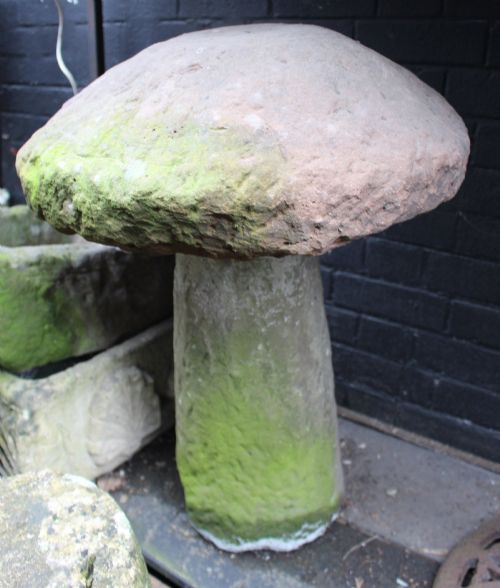
- A mushroom-shaped support stone originally used to raise granaries and barns off the ground to keep damp and vermin away. They typically feature a separate cap and base.
- Millstone
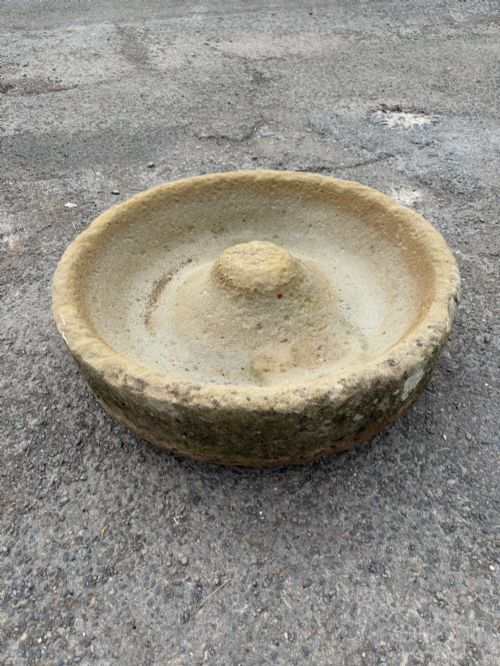
- A heavy circular stone used in pairs for grinding grain or minerals. Examples often retain central apertures and forged iron handling fixtures.
- Cast stone
- A refined architectural concrete building product manufactured to simulate natural cut stone. It was widely utilised for garden ornaments and neoclassical planters in the Edwardian period and later.
- Pilaster
- A rectangular architectural element that projects slightly from a wall to give the appearance of a classical support column. Antique halves and fragments appear in salvage collections.
Vintage Stone Feature: Frequently Asked Questions
What is a staddle stone used for?
Staddle stones were traditionally placed beneath timber granaries and storehouses to elevate buildings above ground level. This kept stored corn dry and prevented rats and mice from climbing up into the harvest.
Today, they are used as garden ornaments, placed on lawns or along pathways as sculptural focal points that bring a sense of history to outdoor spaces.
How do I clean an antique stone birdbath?
Antique stone benefits from gentle cleaning with water and a soft brush to remove loose dirt while preserving the accumulated patina of age. Avoid harsh chemical cleaners and pressure washers, which can erode soft sandstone and strip away historic surface character.
Allowing natural moss and lichen to remain is common practice among collectors, as it highlights the outdoor history of the piece.
How can I tell the age of a stone garden ornament?
Dating stone depends on observing tool marks, material composition, and the degree of weathering across the surface. Hand-carved items from the eighteenth and nineteenth centuries display irregular chisel strokes and mineral wear, whereas twentieth-century cast stone often shows uniform mould lines and aggregate textures.
Stylistic cues such as neoclassical revival motifs or Edwardian proportions also help place an object within a specific era.
Are millstones very heavy?
Granite and sandstone millstones and grindstones are exceptionally dense and heavy objects that require careful mechanical equipment for transport and placement. Their weight made them stable working tools in mills and farms without requiring ground fixings.
When positioning one in a modern garden, ensure the ground is level and firm to support the load safely.