


Rustic Stone Garden
Rustic stone garden pieces are heavy utility items and planters shaped from granite, sandstone, and limestone that bring age and texture to outdoor spaces.
Rustic Stone Garden
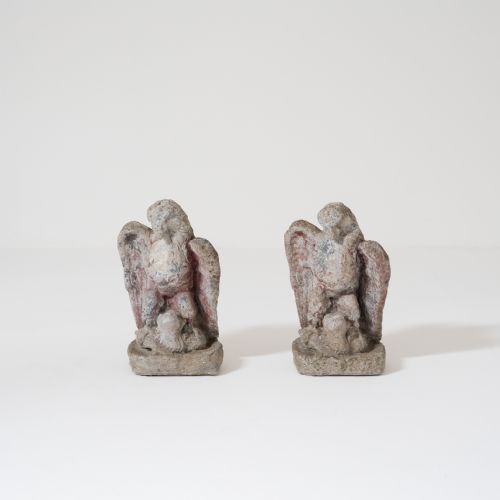
A rustic stone garden selection comprises functional agricultural remnants and weathered ornaments spanning the seventeenth century through to the mid twentieth century. Buyers encounter utilitarian objects like staddle stones, troughs, millstones, and mortars alongside decorative urns, bird baths, and planters.
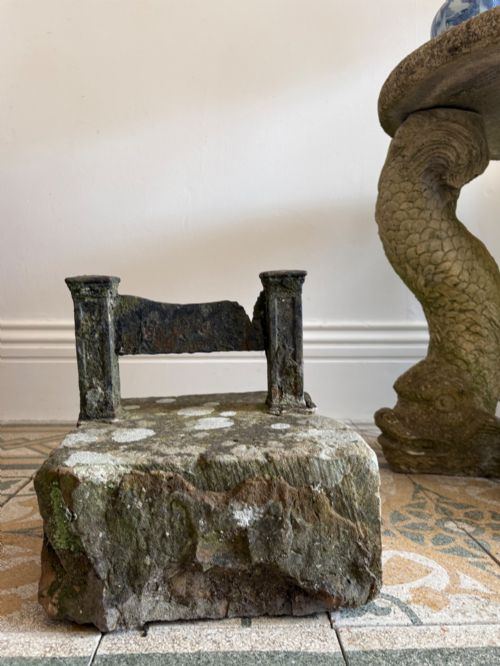
Granite staddle stones and sandstone troughs form the backbone of these listings, often originating from seventeenth and eighteenth century farmyards. These pieces carry genuine utilitarian history, having once supported grainricks or served as feeding vessels before finding a second life in landscaping.
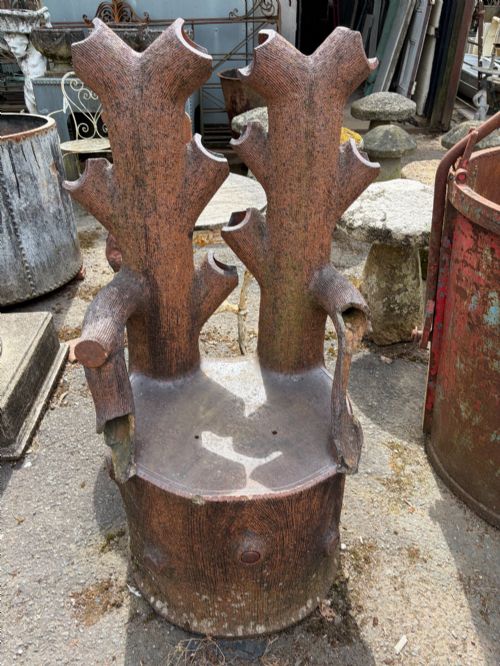
Victorian and later twentieth century additions introduce lighter reconstituted stone, bird baths, and faux bois seats to the grouping. The selection balances hard working agricultural granite with softer limestone and sandstone ornaments designed specifically for period grounds.
Materials and construction methods
Masons shaped natural materials like Cornish granite, Purbeck stone, sandstone, and limestone using hand chisels and heavy hammers. These dense stones weather slowly, retaining tool marks and surface irregularities that reveal the manual effort involved in their creation.
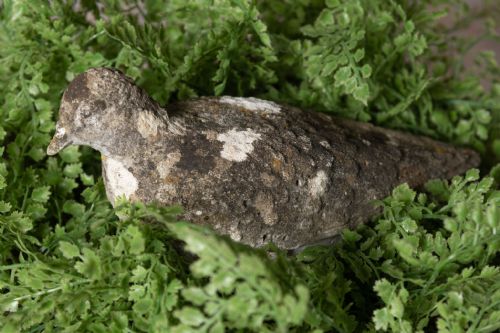
Reconstituted stone and composite mixtures emerged later, utilising crushed aggregate bound with cement to mould complex bird baths, pigeons, and garden planters. Older utilitarian items like millstones and press bases relied purely on the natural cleavage and weight of solid rock.
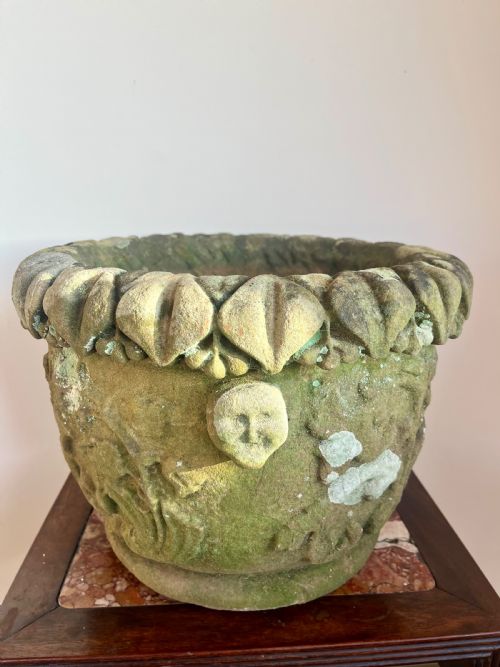
One exceptional planter is made from stone salvaged directly from the Houses of Parliament after damage sustained during the Blitz in World War Two.
Quality factors in weathered stone
Quality rests in the integrity of the material and the honesty of the weathering, where deep natural patination from moss and lichen enhances the surface without obscuring the form. Pieces cut from single blocks of Cornish granite or Purbeck stone hold their structural sharpness better than soft stone alternatives.
Proportion and original purpose dictate desirability, giving functional staddle stones and large rectangular troughs an architectural edge over later moulded ornaments. The clarity of hand-chiseled surfaces separates honest agricultural relics from lesser or heavily repaired examples.
The Rustic Stone Garden Glossary
- Staddlestone
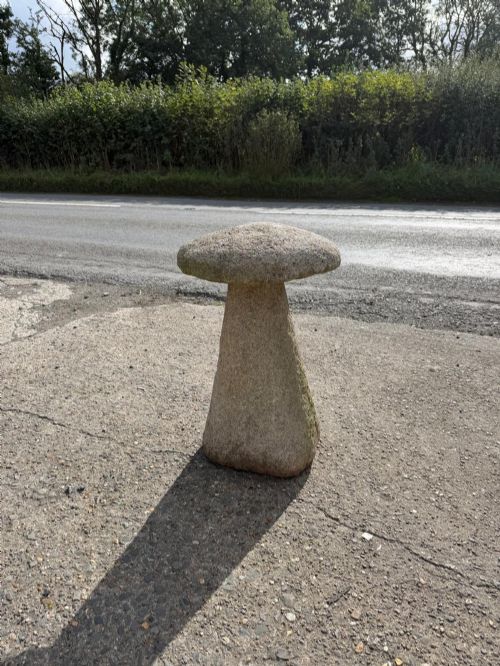
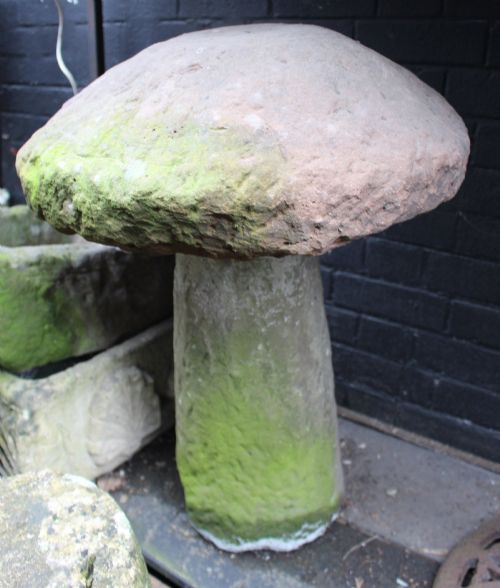
- A mushroom shaped stone support originally used to elevate granaries above damp ground and deter rodents. These feature a distinct cap and base carved from solid granite or sandstone.
- Millstone
- A heavy circular stone wheel used in pairs for grinding grain or pressing materials. These massive granite or limestone discs often retain central apertures and forged iron handling tethers.
- Trough
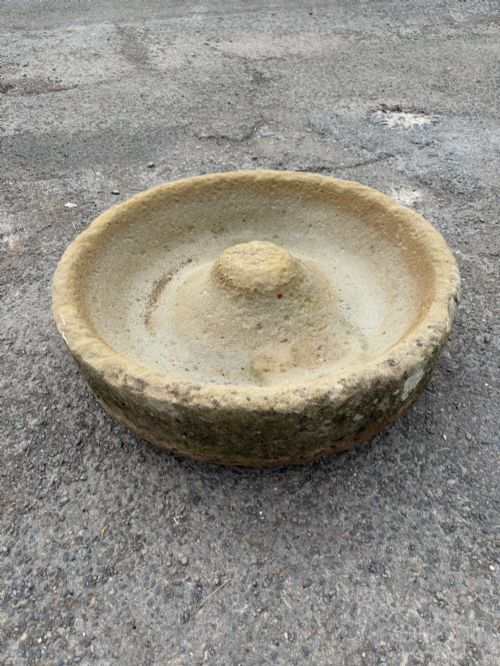
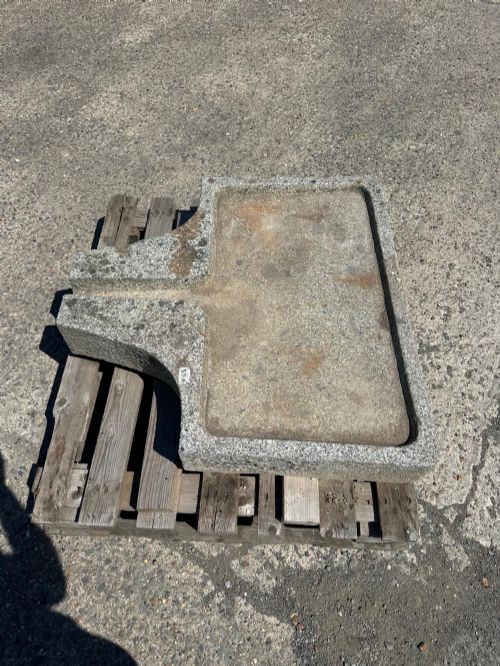
- A long rectangular stone vessel hewn from a single block for watering livestock. Antique examples show deep hand-chooled interiors and heavy exterior weathering.
- Faux bois
- Concrete or stone shaped and textured to imitate natural wood. This technique appears on Victorian garden seats and planters.
- Mortar
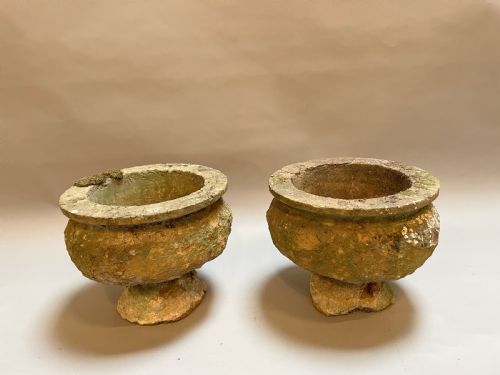
- A heavy stone bowl used with a pestle for grinding materials down. Early examples in limestone and hard stone date back to the sixteenth and seventeenth centuries.
Rustic Stone Garden: Frequently Asked Questions
What is a staddle stone?
A staddle stone is a mushroom shaped architectural support traditionally carved from granite or sandstone. Farmers used them in sets to raise timber granaries off the ground to keep stored grain dry and free from rats.
Today, these distinctive stones are repurposed as garden ornaments, often arranged along paths or used to punctuate planting beds with historic rural character.
How do I date antique stone troughs?
Dating stone troughs relies on observing the tool marks left by the mason and the overall composition of the stone. Eighteenth century and earlier troughs were laboriously hand-hewn from single blocks, resulting in irregular exterior dimensions and deep, squared interior basins.
Later Victorian and twentieth century versions often utilised machine sawn edges or softer limestone and composite materials. Natural weathering, including the presence of established moss and lichen, also offers clues to a piece's age.
Are stone garden pieces frost proof?
Dense natural stones such as granite, hard sandstone, and Purbeck limestone withstand freezing temperatures well because they absorb very little moisture. Their solid mineral composition prevents the internal cracking that can ruin softer materials during winter freezes.
Softer soft stone ornaments or reconstituted mixtures require more care during severe frosts. Ensuring proper drainage in planters prevents trapped water from expanding and damaging the vessel.
How do I clean antique stone?
Cleaning antique stone should be approached gently to preserve the natural patination, moss, and lichen accumulated over centuries. Plain water and a soft bristle brush usually suffice to remove loose dirt without stripping the historic surface character.
Harsh chemical cleaners and pressure washers should be avoided as they scour away the outer skin of the stone and erase tool marks. Allowing weathering to remain maintains the authentic appearance of garden antiques.