
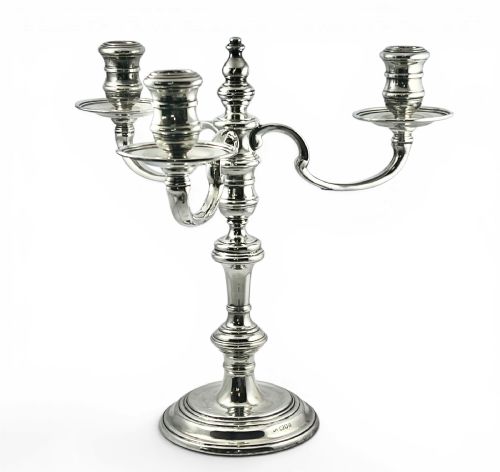
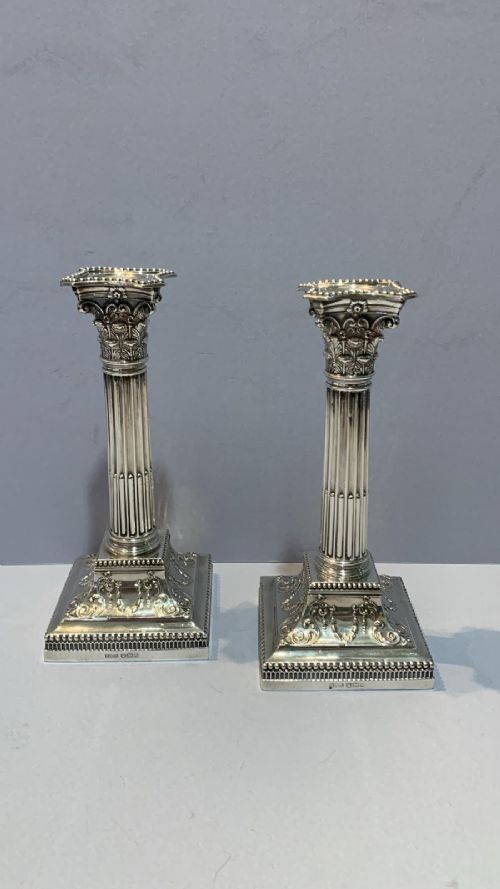


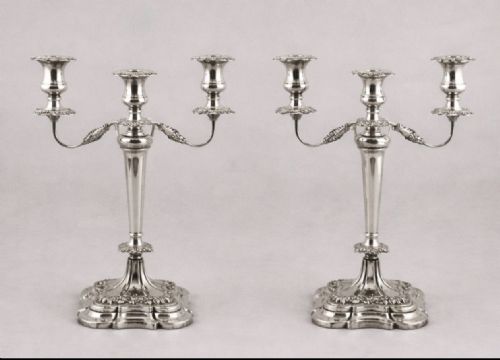


Vintage Sterling Silver Candelabrum
These vintage sterling silver candelabrum pieces bring genuine substance to a dining table, combining solid metal weight with traditional craftsmanship.
Vintage Sterling Silver Candelabrum
Examples span several decades and stylistic revivals, taking inspiration from Edwardian, Georgian, and Art Deco traditions. Pieces originate from periods such as 1890, the Edwardian era, and mid-century decades up to the 1960s.
How they were made
These items rely on solid sterling silver, worked through traditional manufacturing techniques including hand-wrought shaping and meticulous silversmithing. Makers employ casting and hammering methods to build structural branches and weighted bases.
Design details draw on historical revivals such as Neoclassical, Rococo, and Arts and Crafts styles, incorporating decorative motifs into the metalwork.
Robert Edgar Stone items bring a tangible trace of workshop hammering directly to the dining table.
What varies in quality
Quality rests on the depth of the silversmith's skill, distinguishing standard production work from hand-wrought pieces made by notable makers. Subtlety in stylistic revival detailing and clean execution of decorative motifs elevate the standing of a piece.
The physical substance of the metal and the structural integrity of the branches determine the overall character and durability of the item.
Robert Edgar Stone·Elkington and Company
The Vintage Sterling Silver Candelabrum Glossary
- Sterling silver
- A standard alloy consisting of ninety-two point five percent silver by mass and seven point five percent other metals, usually copper. This composition provides the durability required for functional tableware.
- Art Deco
- A design style characterised by sleek geometric lines and stylised motifs, popular during the early to mid-twentieth century. It moves away from floral ornamentation towards streamlined forms.
- Arts and Crafts
- A movement prioritising traditional craftsmanship and visible hand-working over mass production. Pieces in this style often display honest construction and tactile finishes.
Vintage Sterling Silver Candelabrum: Frequently Asked Questions
How do I clean a silver candelabrum?
Use a soft cloth and a reputable silver polish specifically formulated for sterling silver to remove tarnish. Avoid abrasive materials that can scratch the polished surface.
Work gently around engraved details and joints, then rinse thoroughly and dry with a soft lint-free cloth.
Are these pieces made of solid silver?
Yes, these items are fashioned from sterling silver, meeting the strict fineness standard for silver content. Many incorporate internal weighting in the base to ensure stability when the branches hold lit candles.
Examine the hallmarks stamped on the metal to verify the silver standard and assay office origin.
Can I use standard candles in them?
Most sockets are designed to fit standard taper candles securely. Measure the diameter of the drip pan nozzle before purchasing candles to ensure a proper fit.
Use non-drip candles to prevent wax from accumulating on the silver branches and decorative surfaces.
How do I identify the date of a piece?
British pieces feature hallmarks that include a date letter indicating the exact year of assay and manufacture. Additional stamps show the maker's mark and the lion passant denoting sterling standard.
Stylistic cues such as Edwardian restraint or mid-century Arts and Crafts hand-wrought texturing also point toward the period of creation.