
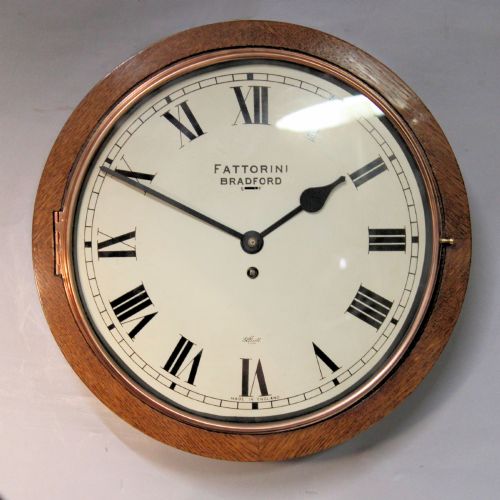
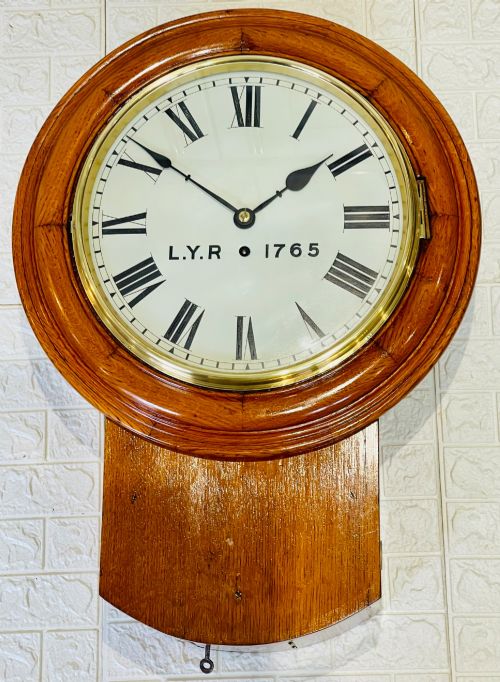
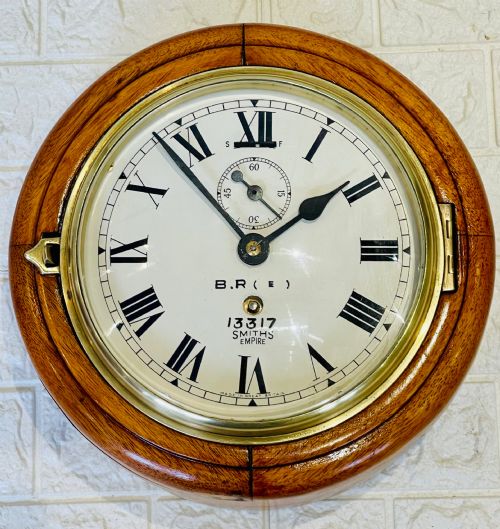
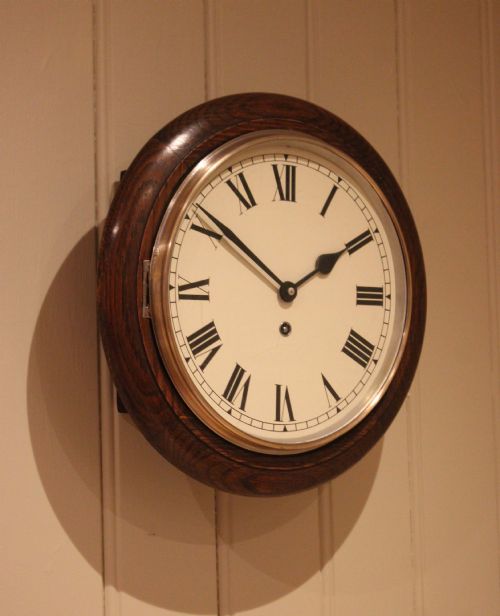
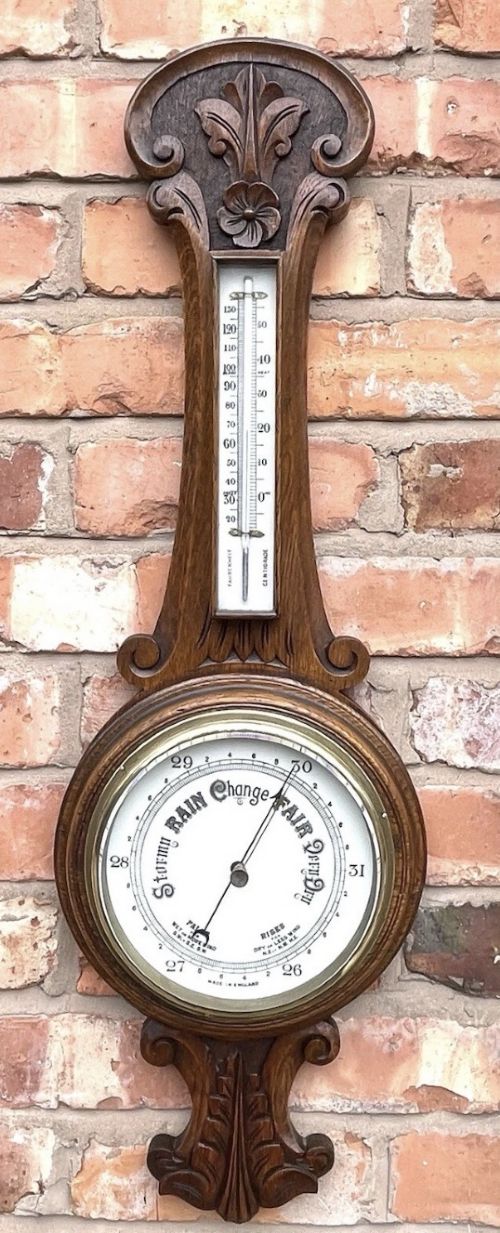


Vintage Station Clock Oak
These vintage station clock oak pieces bring sturdy utility and distinctive railway history directly into domestic interiors.
Vintage Station Clock Oak
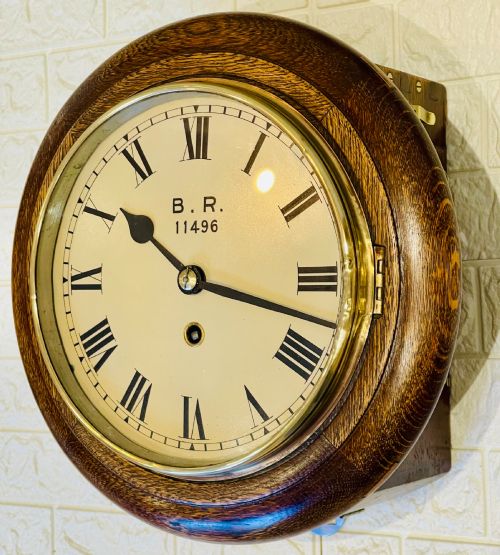
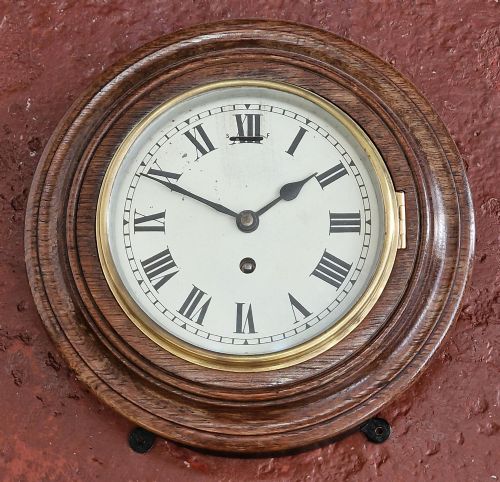
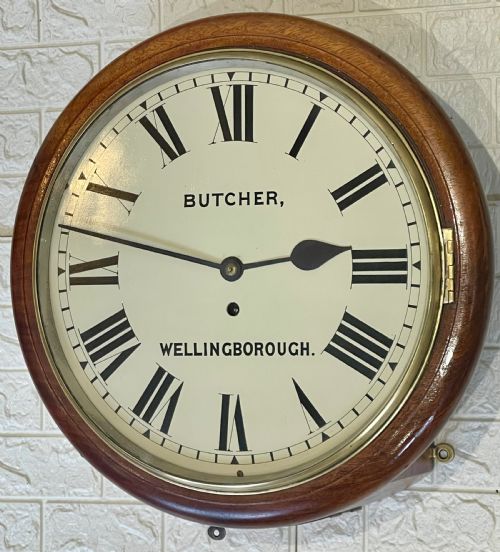
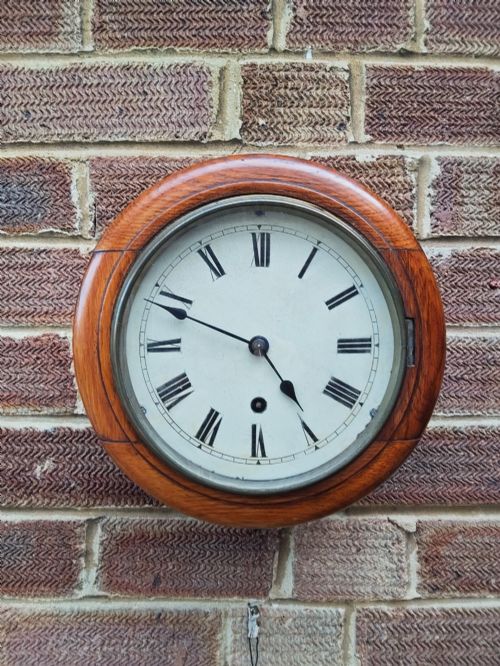
A vintage station clock oak piece combines practical timekeeping with robust timber framing originally built for public transit and commercial buildings. Buyers encounter round dial wall clocks alongside banjo barometers and desk weather stations spanning the Victorian era through to the mid-twentieth century.
The most common format in this selection is the wall-mounted dial clock housed in solid oak cases, often featuring railway company markings or simple circular bezels. These pieces bridge the gap between heavy industrial utility and domestic wall furniture.
Materials and construction
Clockmakers utilised solid oak and occasionally mahogany for timber cases, pairing them with protective brass bezels and clear glass faces. Dials were frequently finished in painted enamel with bold Roman or Arabic numerals designed for distance legibility in bustling terminals.
Internal mechanisms relied on chain-driven fusee movements or lever escapements to maintain consistent tension and accurate timekeeping. Cabinets often incorporated carved wooden details or architectural mouldings suited to public offices and railway stations.
Listings span from the late nineteenth century through to the nineteen-fifties, utilising oak, brass, glass, and enamel across various wall and desk formats.
Gradations of craftsmanship
Distinction across these pieces rests upon the precision of the mechanical movement and the crispness of the oak casing's grain and joinery. Fine examples display untarnished brass work, legible enamel dials, and authentic railway or retailer provenance.
Simpler domestic variants or heavily restored units sit lower down, where replacement parts or plain joinery replace original maker specifications. The weight of the timber and the complexity of the escapement ultimately dictate the standing of each piece.
Elliott·W&H Sch·Harrods·Zenith
The Vintage Station Clock Oak Glossary
- Fusee
- A conical pulley used in clock movements to maintain even driving power as the mainspring unwinds. This mechanism ensures consistent timekeeping across the duration of the wind.
- Dial clock
- A wall clock featuring a prominent circular face mounted within a wooden surround. They were standard fixtures in offices, schools, and railway platforms.
- Escapement
- The mechanical linkage that controls the release of power in a clock and gives the tick sound. Lever escapements provide reliable regulation for portable or wall-hung pieces.
- Barometer
- An instrument that measures atmospheric pressure to forecast weather changes. Many examples are housed in carved oak banjo frames alongside thermometers.
- Bulkhead clock
- A rugged timepiece designed to be mounted directly to the wall of a ship cabin or station room. They typically feature heavy metal cases with secure screw bezels.
Vintage Station Clock Oak: Frequently Asked Questions
How do I wind a fusee wall clock?
Use the provided key in the winding hole on the dial face, turning gently until resistance increases. Avoid over-winding to protect the internal chain and spring mechanism.
Ensure the pendulum hangs freely and the clock is plumbed straight on the wall before setting the hands to the correct time.
Where should I hang a heavy oak dial clock?
Mount the clock directly into a solid wall stud or use heavy-duty wall anchors capable of supporting the dense timber casing and brass movement. Position it away from direct heat sources and damp environments.
Keep the height at eye level to allow easy daily reading and routine maintenance such as winding and regulating.
How do I read an aneroid barometer?
Tap the glass lightly before reading to settle the needle, then observe whether the pointer moves toward rising or falling weather indicators. The secondary needle serves as a manual marker to track changes against the primary pointer.
Compare readings over several hours to anticipate local weather shifts accurately within your room.
How do I date a railway clock?
Examine the dial inscriptions, timber grain, and case construction style alongside any railway company lettering or retailer stamps. Victorian and Edwardian examples often display hand-painted wooden dials and fusee movements.
Later mid-century pieces shift toward simpler electric or lever movements housed in lighter oak veneers and standardised commercial frames.