
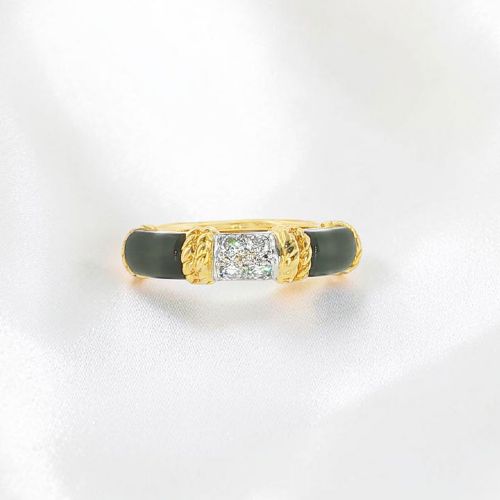


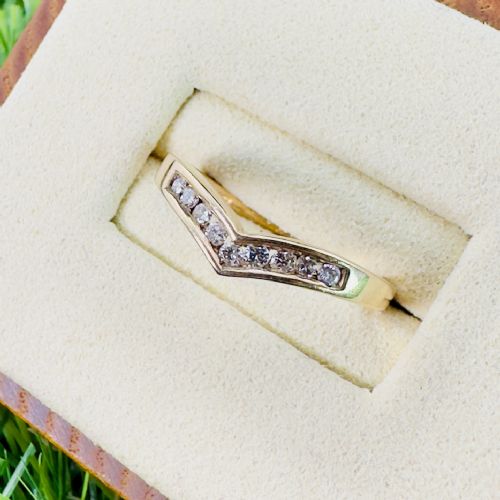


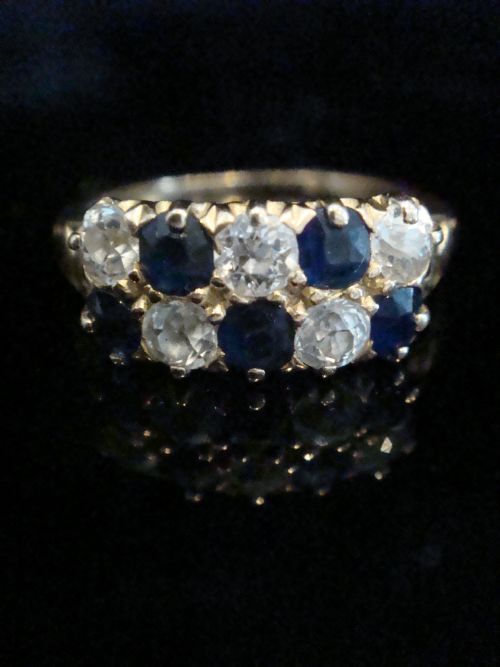
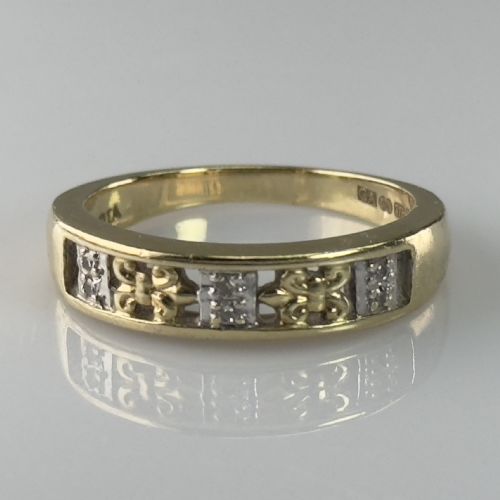
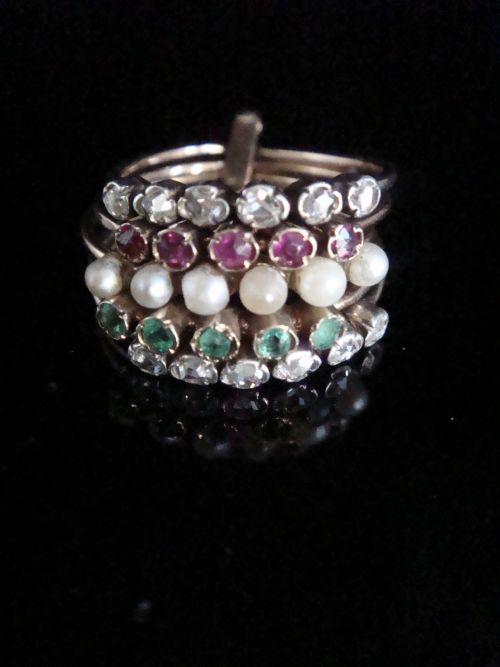


Vintage Stacked Diamond Ring
A vintage stacked diamond ring offers multiple bands or multi-stone settings designed to sit together on the hand, combining old-cut brilliance with period character.
Vintage Stacked Diamond Ring
When searching for a vintage stacked diamond ring, you encounter multi-row bands, half and full eternity designs, and multi-stone configurations created across various decades. These pieces include Edwardian harem rings, mid-century double half eternity bands, and traditional multi-stone arrangements.
The selection ranges from Victorian gold and sapphire half hoop rings to 1970s modernist interpretations and Art Deco white gold eternity bands. Gemstones such as ruby, sapphire, emerald, and pearl frequently accompany the diamonds in these stacked or multi-row formats.
You are most likely to meet 18ct yellow gold, 18ct white gold, and 9ct gold mountings housing old-cut diamonds alongside rubies, sapphires, and black onyx. These rings span periods from the Victorian era through Edwardian times and the 1930s up to post-1960 creations.
How they were made
Goldsmiths utilised 18ct yellow gold, 18ct white gold, 9ct gold, and 18ct rose gold to construct these multi-row bands and settings. Silver also appears combined with gold in earlier Edwardian multi-stone mounting techniques.
Diamonds are shaped as old cuts alongside standard brilliant cuts, secured within multi-stone half hoop, full eternity, and harem configurations. Additional stones such as natural sapphires, rubies, emeralds, pearls, and black onyx are integrated alongside the diamonds using traditional channel, claw, and flush setting methods.
Listings feature periods spanning the Victorian era, Edwardian times, Art Deco 1930s, 1950s, 1960s, and later twentieth-century decades.
What varies in quality
The standard of a vintage stacked diamond ring depends on the precision of the stone setting and the integrity of the gold or silver mount. Heavier metal weight in the shank and secure claw or channel work distinguish superior examples from lighter commercial production.
The visual harmony of the stones, particularly the matching of old-cut diamonds and coloured gems like sapphires, rubies, or emeralds, dictates the overall refinement of the piece. Well-preserved hallmarks and crisp decorative patterning on the gold indicate careful historical maintenance.
Kutchinsky
The Vintage Stacked Diamond Ring Glossary
- Harem ring
- A multi-row ring composed of several individual bands joined together or designed to sit closely as a stacked unit. These often incorporate mixed gemstones such as rubies, emeralds, sapphires, pearls, and diamonds.
- Eternity ring
- A metal band set continuously or halfway with gemstones representing endless love. Versions seen here include both full eternity and half eternity configurations.
- Old cut
- A diamond facet style popular before the modern brilliant cut was standardised, featuring a smaller table, higher crown, and open culet. These stones produce a distinctive softer light dispersion under candlelight.
- Wishbone ring
- A curved V-shaped band designed to fit snugly against another ring on the finger. This form is often used in stacked combinations.
- Half hoop ring
- A setting style where gemstones are arranged across the top arc of the band rather than encircling the entire finger.
Vintage Stacked Diamond Ring: Frequently Asked Questions
How do I wear a stacked diamond ring?
These pieces are designed to be worn alone as a statement or combined with other bands to create a layered effect on the finger. Multi-row designs already incorporate several tiers within a single mounting.
Matching the metal colour, such as 18ct yellow gold or white gold, helps create a cohesive look when pairing multiple rings together.
How do I identify an Edwardian ring?
Edwardian pieces often utilise platinum-topped gold, intricate pierced work, and combinations of diamonds with pearls, sapphires, or emeralds. Harem stacking rings and boat-shaped settings are typical of this period's aesthetic.
Examining the metalwork under magnification reveals the delicate hand-craftsmanship characteristic of the era before the First World War.
Are old-cut diamonds different from modern ones?
Old-cut diamonds possess hand-cut facets with smaller tables and deeper pavilions, producing a characteristic chunky sparkle rather than the precise brilliance of modern stones. They reflect ambient light in a warmer, more subtle manner.
These cuts are commonly found in Victorian, Edwardian, and 1950s settings.