
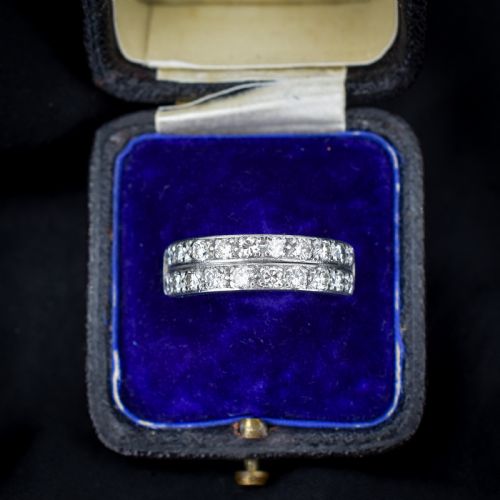


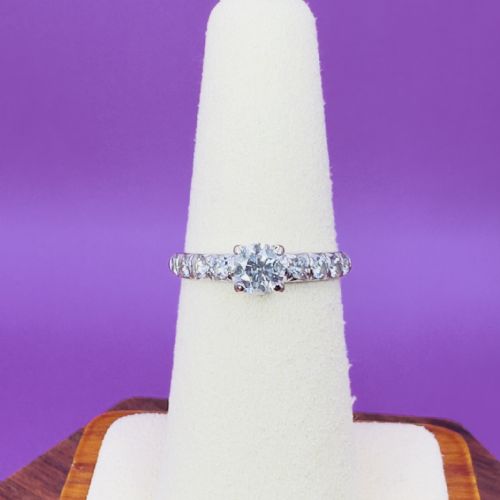

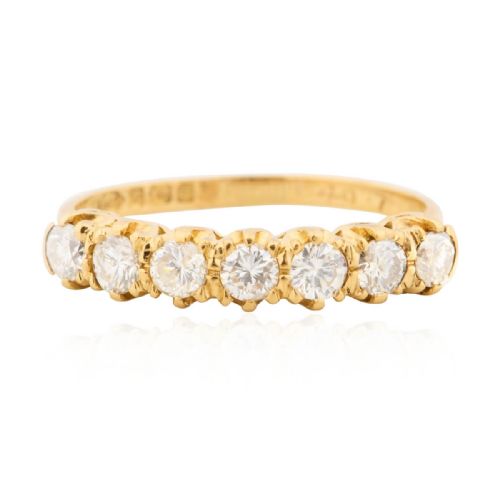


Gold Half Eternity Ring
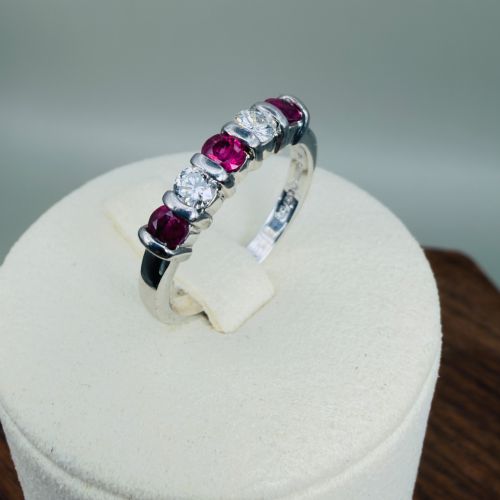
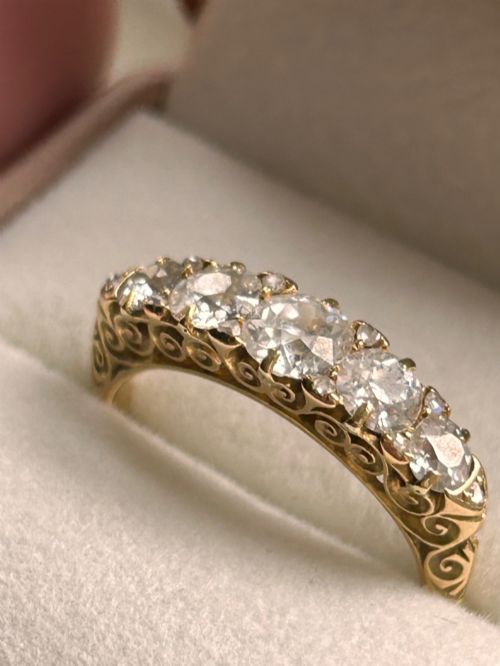
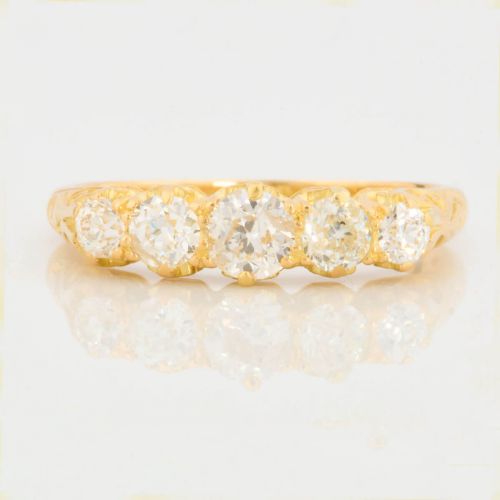
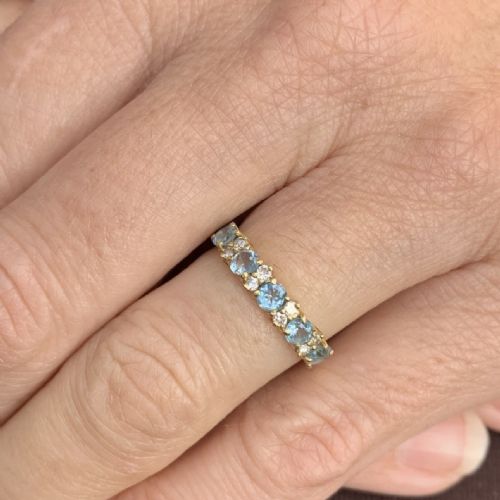
A gold half eternity ring carries a sequence of stones across the upper band, uniting the brilliance of diamonds with coloured gems.
Gold Half Eternity Ring
A gold half eternity ring displays a line of matched stones set along the visible face of the band, leaving the underside plain for comfort and resizing. These pieces span Victorian, Edwardian, Art Deco, and mid-century periods, showcasing how jewellers adapted the linear format over decades.
The versions most commonly encountered on this page pair brilliant-cut or old-cut diamonds with sapphires, rubies, or emeralds, mounted in yellow gold, white gold, or platinum. The format ranges from simple single-row bands to geometric double rows and crossover designs.
Materials and construction
Goldsmiths utilised 9ct, 14ct, and 18ct yellow and white gold, frequently combining platinum settings with gold bands during the Art Deco period to enhance the whiteness around diamonds.
Stones were secured using channel, gypsy, or claw settings depending on the period, allowing light to enter the diamonds, sapphires, and rubies from multiple angles.
Listings feature yellow gold, white gold, and platinum bands set with diamonds, sapphires, rubies, emeralds, turquoise, and pearls across Victorian to mid-century periods.
Assessing quality and craftsmanship
The standard of a gold half eternity ring rests on the precise matching of the stones for colour, cut, and clarity along the band. Graduated stones require exact symmetry, while uniform bands demand consistent sizing and tight settings.
Heavier metal gauge in the shank and minimal wear to the individual claws or channel walls indicate superior durability and careful previous handling.
Mappin and Webb
The Gold Half Eternity Ring Glossary
- Half eternity ring
- A ring set with gemstones along approximately half the circumference of the band. This design offers the visual impact of an unbroken stone setting while allowing the shank to be resized.
- Old-cut diamond
- A diamond cut by hand before modern machinery standardised facet proportions. These stones typically feature a smaller table and larger culet, producing a softer candlelit sparkle.
- Gypsy setting
- A mounting style where the gemstone is flush-set directly into the thick metal of the band. The metal is hammered or burnished around the girdle to secure the stone.
- Crossover ring
- A design where the shank splits or twists as it approaches the stones, creating an overlapping or entwined effect. This style was favoured during the Victorian and mid-century eras.
- Platinum
- A dense, durable white metal utilised in jewellery manufacturing. It holds small claw settings securely without losing its structural integrity.
Gold Half Eternity Ring: Frequently Asked Questions
Can a gold half eternity ring be resized?
Because gemstones occupy only the top portion of the band, a jeweller can usually alter the plain metal shank at the back. The feasibility depends on the specific stone coverage and the design of the shoulders.
Heavier shanks tolerate sizing better than delicate, heavily engraved bands. Consulting a specialist ensures the structural integrity of the setting remains intact during adjustment.
How do I wear a half eternity ring daily?
These rings pair comfortably alongside a plain wedding band or an engagement ring on the same finger. The smooth underside prevents rubbing against neighbouring fingers.
For everyday durability, select designs with channel or flush settings that protect the gemstone girdles from accidental knocks against hard surfaces.
What stones are typically paired with diamonds?
Sapphires, rubies, and emeralds appear frequently alongside diamonds in antique and vintage bands. These coloured gems provide traditional contrast within multi-stone layouts.
Turquoise and pearls also feature in earlier Victorian pieces, offering softer hues and distinct historic character.
How do I identify an Art Deco design?
Art Deco pieces display geometric patterns, sharp lines, and frequent use of platinum-topped white gold settings. The arrangement of stones often emphasises symmetry and structured repetition.
Double rows and channel settings are characteristic of this period, distinguishing them from earlier softer Victorian curves or later mid-century forms.