
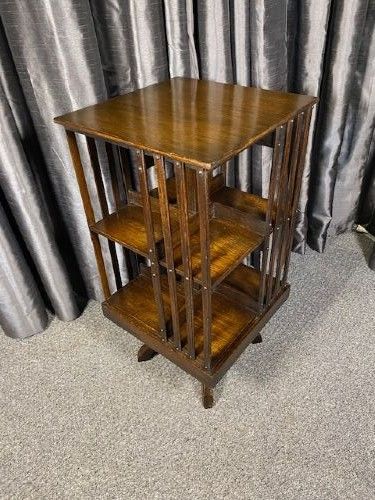
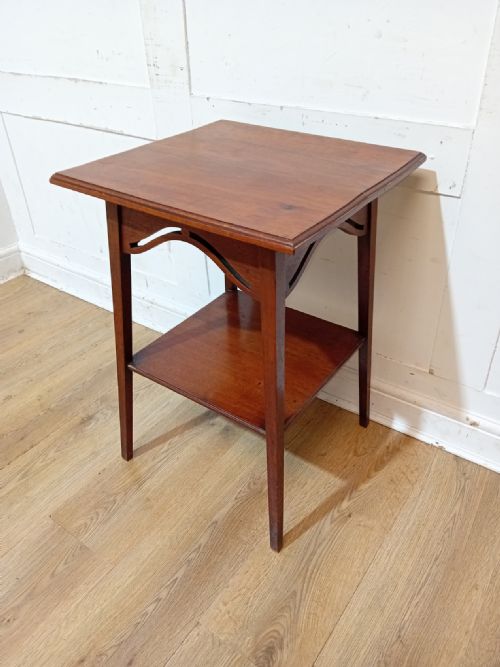
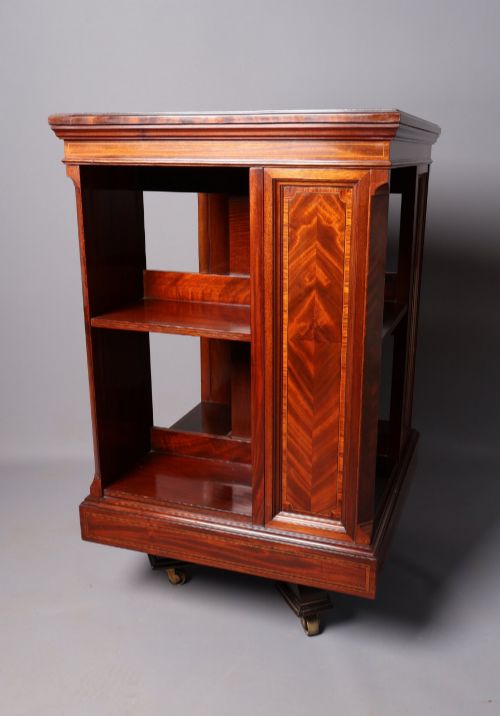


Vintage Square Tier Table
A vintage square tier table offers multiple levels of surface space in compact proportions, making it an essential piece for organising books or displaying ornaments in a sitting room.
Vintage Square Tier Table
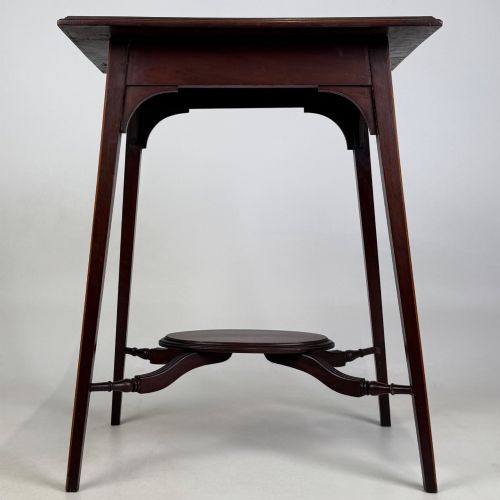
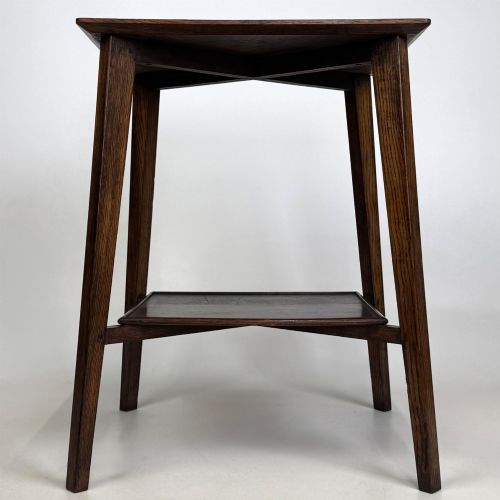
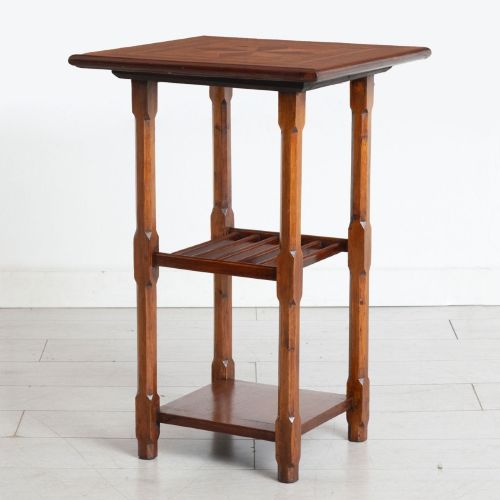
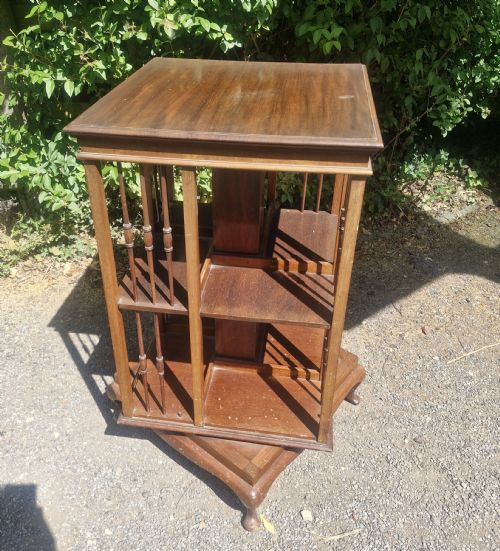
A vintage square tier table brings architectural form to everyday furniture, providing distinct levels stacked vertically to maximise utility without increasing the footprint in a room. The listings reveal these pieces primarily as occasional tables, side tables, and coffee tables, alongside related multi-level forms such as revolving bookcases.
Most examples you will encounter date from the Edwardian period and the 1930s Art Deco era, drawing on earlier design traditions like Sheraton Revival and Chippendale style. These tables serve a practical purpose beside seating, offering a lower shelf or multiple tiers to hold magazines, books, or decorative objects.
The materials span traditional timbers such as mahogany, oak, walnut, and satinwood, occasionally enhanced with boxwood or specimen wood inlays. Whether you prefer the restrained elegance of an Edwardian side table or the figured veneers of an Art Deco two-tier coffee table, each piece demonstrates how utilitarian furniture was elevated through thoughtful joinery and timber selection.
How they were made
Cabinet makers built these tiered structures using solid hardwoods like mahogany and oak for structural integrity, while applying fine veneers of walnut, satinwood, and specimen timbers to the visible surfaces. The grain of the wood was carefully considered, particularly in Art Deco examples where highly figured veneers create striking geometric patterns across the square top.
Inlaid decoration frequently appears across Edwardian pieces, incorporating contrasting woods such as boxwood and various tinted timbers to form delicate marquetry borders and classical motifs. Structural joints relied on traditional cabinet-making techniques to support multiple shelves securely without sacrificing the slender proportions expected of occasional furniture.
Common forms include square occasional tables, side tables, and revolving bookcases with multiple tiers.
What varies in quality
Quality in a tiered table rests upon the choice of timber and the precision of the underlying construction, distinguishing standard utility furniture from finer workshops. Superior examples employ thick, well-figured mahogany or walnut veneers that have been laid with care, whereas simpler pieces rely on plain, unadorned surfaces.
The refinement of the decorative details further separates the tiers, seen in the crispness of marquetry inlay, the integration of boxwood stringing, and the stability of the vertical supports. A well-executed piece maintains absolute rigidity across every level, ensuring the tiers remain parallel and true over decades of daily use.
Liberty of London
The Vintage Square Tier Table Glossary
- Tier
- A single level or shelf in a multi-level piece of furniture, designed to increase display and storage capacity.
- Marquetry
- Decorative patterns formed by the precise insertion of different coloured veneers into a prepared wood surface.
- Veneer
- A thin slice of superior or figured wood applied over a more stable secondary timber to improve appearance.
- Specimen wood
- Timbers gathered from various tree species, often contrasting in colour, used to create decorative geometric patterns.
- Stringing
- A narrow strip of contrasting wood inlaid into a channel in the surface of furniture to create a border.
Vintage Square Tier Table: Frequently Asked Questions
What is a tier table?
A tier table is a multi-level piece of furniture featuring two or more horizontal surfaces stacked vertically. This design provides additional display or storage space while maintaining a compact footprint.
These tables were commonly used beside seating in reception rooms to hold books, small lamps, or decorative objects. The lower tiers offer extra practicality without cluttering the main surface.
How do I date a tier table?
Dating a tier table involves examining the timber, construction methods, and stylistic details present in the piece. Edwardian examples often feature mahogany with delicate marquetry inlay, while 1930s Art Deco pieces typically showcase highly figured veneers and geometric forms.
Construction marks, such as the type of screws, glue blocks, and joint types, also provide clues to the era of manufacture. Comparing the decorative vocabulary to known historical styles helps narrow down the decade.
Where should I place a tier table?
A tier table works best beside a sofa, armchair, or in the corner of a room where surface area is needed without occupying much floor space. The multiple levels allow you to separate items, placing a lamp on top and books or magazines below.
Their compact square proportions also make them suitable as bedside tables or standalone display pedestals for ceramics and plants. Ensure the table is placed on a level surface so the upper and lower tiers remain stable.
Are these tables sturdy enough for daily use?
Most vintage tier tables were constructed from durable hardwoods like mahogany, oak, or walnut designed for everyday household service. Traditional joinery ensures the vertical supports and shelves remain rigid under normal weight.
To maintain their stability, avoid overloading the upper tiers and lift the table rather than dragging it when rearranging a room. Regular polishing preserves the timber and protects the surface from accidental moisture.