




Vintage Sports Drawing
These vintage sports drawing works on paper capture motion and competition across the decades, offering collectors authentic portrayals of past athletic and rural pursuits.
Vintage Sports Drawing
A vintage sports drawing captures dynamic movement, from the Olympic Games and horse racing to equestrian pursuits and hunting scenes, rendered by notable artists and illustrators. These original works record athletic endeavour and country sports through various mediums on paper.
Buyers encountering this selection will find pieces spanning the Victorian and Edwardian eras through to the mid-twentieth century, including the 1930s and 1950s. The subjects range from racing horses and hounds to coaching scenes and pugilistic stances.
Framed securely behind glass, these artworks bring historical athletic energy directly into domestic interiors. They offer a tangible connection to the sporting spectacles and rural traditions of earlier periods.
Materials and techniques
Artists typically employed paper as the primary support, applying media such as ink, watercolour, pastel, and chalk to build form and tone. These materials allowed for immediate, expressive strokes suited to capturing rapid athletic movement.
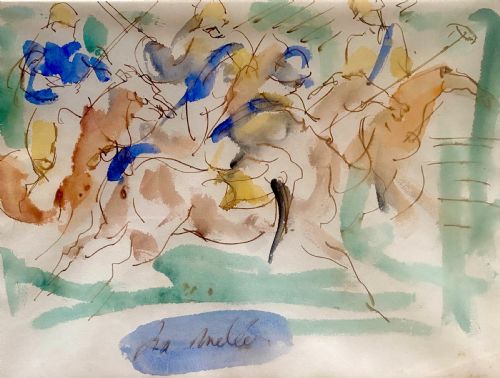
Many works incorporate mixed media on paper, combining ink with watercolour or pastel with coloured paper to enhance texture and depth. Protective framing using wood, walnut, or oak surrounds, often protected under glass, preserves the delicate media.
Even coarse fish with floats found themselves immortalised by crayon in nineteen hundred.
Assessing quality in sports works
Quality rests primarily upon the sureness of the hand and the artist's ability to convey kinetic energy with economy of line. A superior drawing captures the tension of a race or the precise posture of a runner through confident draughtsmanship.
The sophistication of the medium and the preservation of the paper surface distinguish finer examples. Works that retain their original framing and retain the vibrant pigment of the pastel or watercolour without fading represent the upper echelon of the range.
James Stroudley·Samuel Rabin·John Rattenbury Skeaping·Cecil Charles Windsor Aldin·Michael Lyne
The Vintage Sports Drawing Glossary
- Pastel
- A dry drawing medium consisting of powdered pigment and a binder, allowing for rich colour application on paper. It requires framing under glass to prevent smudging.
- Draughtsmanship
- The artist's skill in drawing and proportion, particularly evident in depictions of human and animal anatomy in motion.
- Expressionism
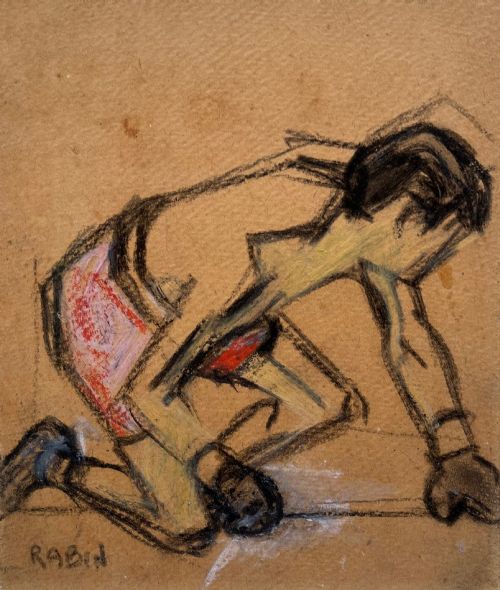
- A modernist style where the artist distorts reality for emotional effect, visible in certain twentieth-century sporting interpretations.
- Support
- The physical material, such as paper or coloured paper, upon which the artwork is executed.
- Triptych
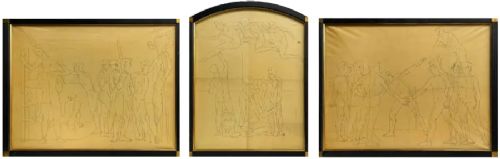
- A work of art divided into three sections or panels, often hinged or displayed together to tell a sequential story.
Vintage Sports Drawing: Frequently Asked Questions
How should I hang a pastel drawing?
Pastel drawings require placement away from direct sunlight to prevent fading of the delicate pigments over time.
Ensure the frame remains properly sealed under glass to protect the chalk or pastel particles from atmospheric moisture and dust.
What subjects appear in these drawings?
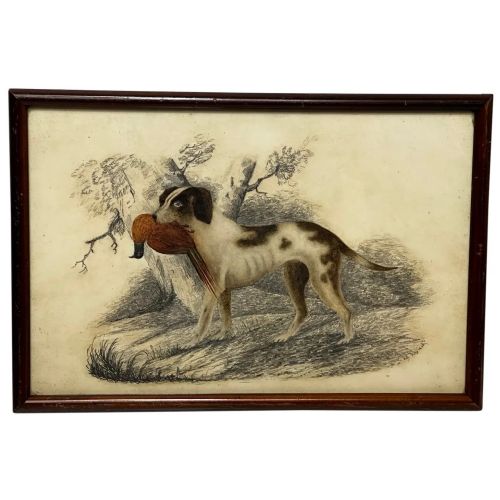
The subjects focus heavily on equestrian events, horse racing, hunting, coaching scenes, and athletics such as the Olympic Games.
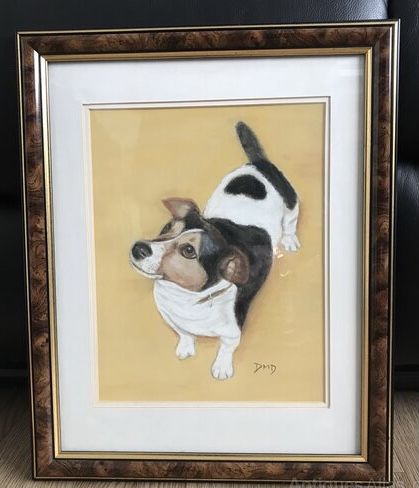
Artists also recorded canine subjects, still life arrangements, and magazine illustrations from the late nineteenth and twentieth centuries.
Are these works original art?
The selection consists entirely of original works on paper, including hand-drawn sketches, watercolours, and pastels rather than modern reproductions.
Many bear the signature or date of the artist who created them during periods such as the Edwardian era or the nineteen-thirties.
How do I identify an Edwardian piece?
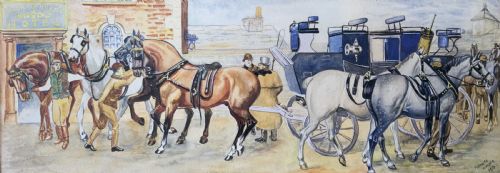
Edwardian artworks often reflect the leisurely rural pursuits, coaching traditions, and sporting pastimes popular during the early twentieth century.
Stylistic cues, traditional framing woods like oak or walnut, and period signatures help anchor these pieces to their historical timeframe.