




Male Nude Study
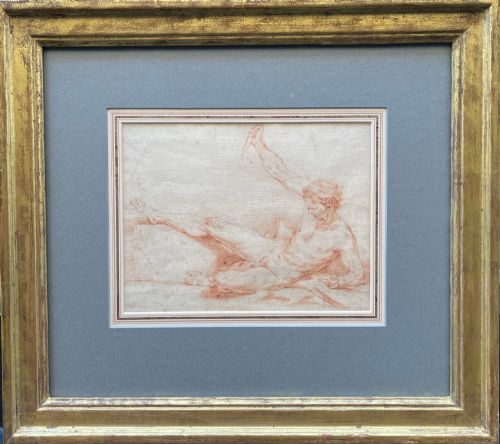
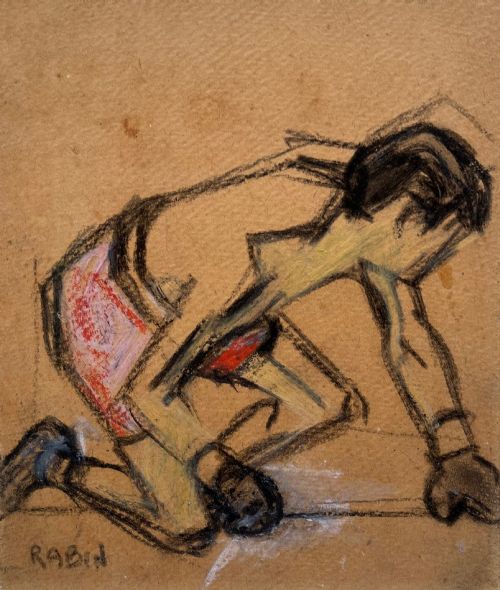
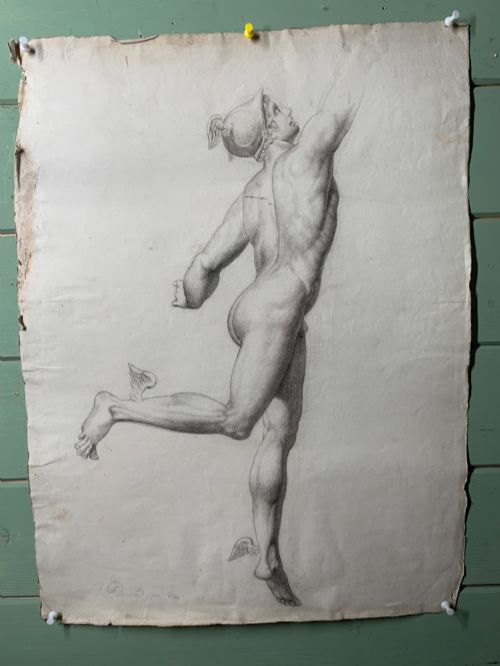
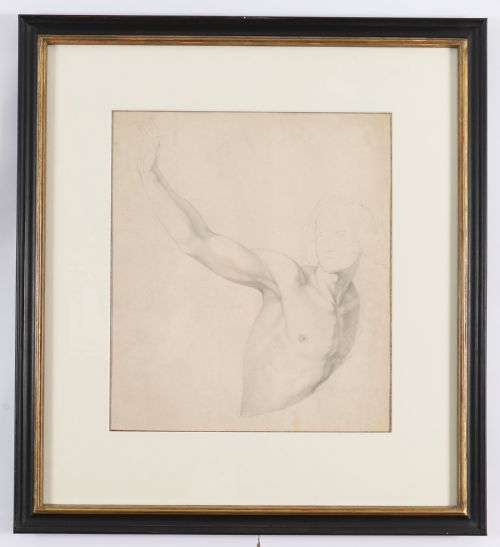
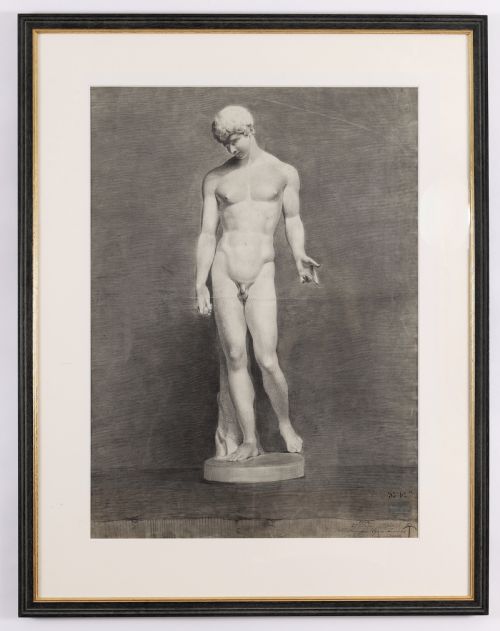
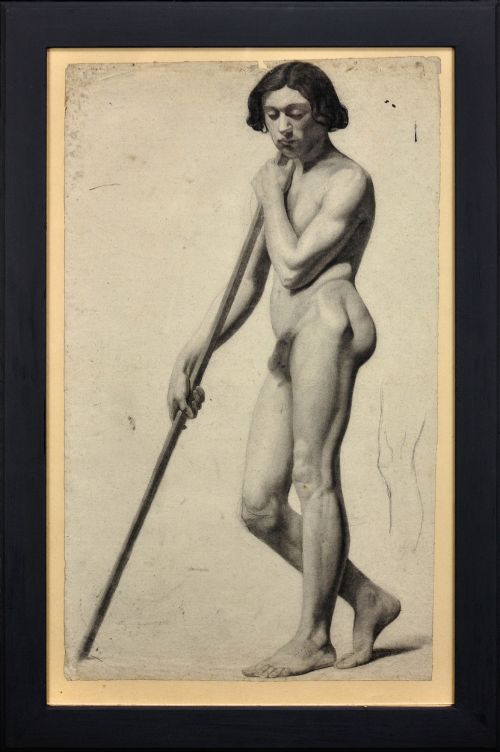
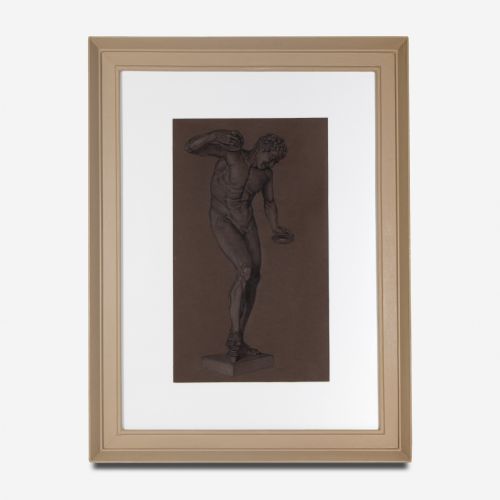
These drawings and sculptures of a male nude study capture the human form through academic discipline and classical proportion.
Male Nude Study
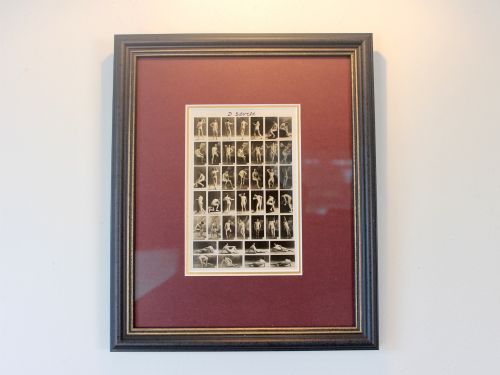
A male nude study represents the traditional academic training of artists through the rendering of the human figure from life or classical sculpture. These works range from rigorous nineteenth-century graphite and charcoal drawings on paper to bronze sculptures and photographic contact sheets.
The pieces emerge from various periods including the Georgian era, the nineteenth century, and the early twentieth century. Buyers encounter academic realism, Neoclassical influences, and modernist interpretations within these historical categories.
How they were made
Artists utilised traditional media such as graphite, charcoal, red chalk, and oil on paper to build form, tone, and musculature. Paper surfaces record the direct touch of the hand during long hours in the life-drawing studio.
Three-dimensional examples employ cast bronze and carved marble to translate anatomical observation into lasting material. Photographic works from the early twentieth century utilise contact printing from glass or film negatives to record the posed model.
Artists frequently borrowed classical poses from antiquity, ensuring generations of models held heroic stances while standing very still indeed.
What varies in quality
The strength of a male nude study rests upon the precision of anatomical structure and the confidence of the draughtsmanship. Superior examples demonstrate a deep understanding of skeletal proportion and muscular tension rather than mere surface detail.
Provenance and documentation elevate certain works, particularly those linked to academic submissions or recognised schools. The handling of light and shadow across the form distinguishes routine academy exercises from accomplished artistic achievements.
Hyacinthe Colin de Vermont·Samuel Rabin·Julian Mandel·Henry Arthur Roberts·Alexandre-Louis Martin
The Male Nude Study Glossary
- Academic art
- A style of painting and sculpture produced under the influence of European academies of art. It follows strict rules of proportion and classical composition.
- Life study
- A work of art created directly from a live human model. This practice formed the foundation of traditional artistic training.
- En grisaille
- A painting executed entirely in shades of grey or neutral greyish-brown. Artists often employed this technique to imitate sculpture.
- Charcoal
- A dry drawing medium made from finely ground organic materials held together by a gum or wax binder. It produces rich dark tones suitable for modelling the human form.
Male Nude Study: Frequently Asked Questions
What is a male nude study?
A male nude study is an artwork created to practice and demonstrate the accurate rendering of human anatomy and proportion from a living model or classical sculpture.
These works were standard exercises in traditional art academies and provide insight into historical training methods.
How were these pieces used?
Artists produced these studies as foundational practice for larger history paintings or sculptural projects. They served as working drawings or academy competition submissions rather than finished gallery pieces.
Over time, collectors came to value the raw immediacy and technical skill visible in these preparatory sheets.
How do I date a drawing?
Dating relies upon watermarks in the paper, inscriptions left by the artist, framing methods, and stylistic conventions of the period. Nineteenth-century academic drawings often feature stamp marks from specific ateliers or schools.
Comparison with documented works by known instructors helps narrow the decade of creation.
How should I display them?
Works on paper require conservation-grade framing with UV-protective glass to prevent fading of graphite, chalk, and ink. Bronze and marble sculptures need stable placement away from direct heat and moisture sources.
Proper lighting enhances the tonal contrasts and textural qualities inherent in these academic studies.