



Vintage Spode Ceramics
These vintage spode ceramics bring Georgian and Victorian utility and display together in earthenware, porcelain and stoneware.
Vintage Spode Ceramics
Vintage spode ceramics encompass a varied range of functional and decorative tableware spanning from the Georgian period through to the early twentieth century. When searching for vintage spode ceramics, collectors encounter dinner plates, tea plates, meat platters, sugar bowls, and water jugs.
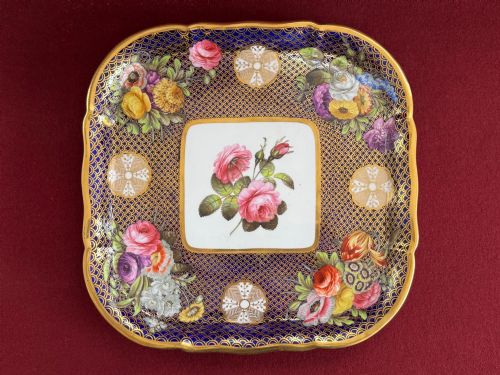
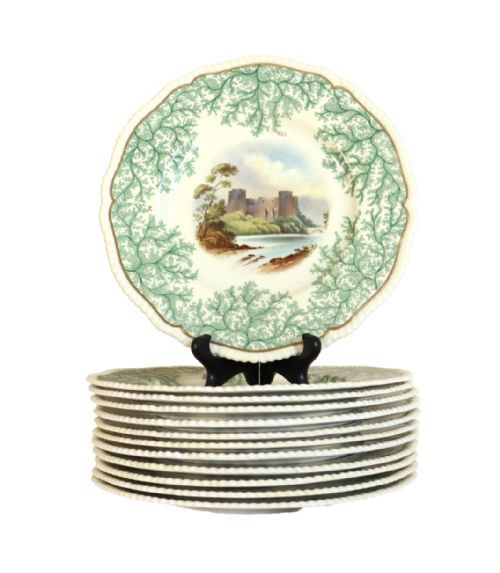
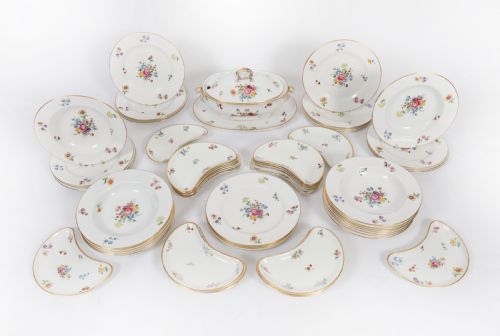
The objects listed display distinctive patterns such as the Tower pattern, Italian service, and Angouleme pattern alongside landscape scenes and seaweed borders. Forms range from single decorative trays and serving platters to extensive sixty piece dinner services.
Origins stretch across the nineteenth century, taking in Regency, Victorian, and Edwardian eras. Buyers find earthenware, stoneware, and porcelain pieces bearing transfer prints, gilt highlights, and enamel painting.
How they were made
Potters shaped earthenware, stoneware, felspar porcelain, and standard porcelain into plates, platters, jugs, and sucriers using traditional ceramic techniques. These bodies provided the foundation for both transfer-printed designs and hand-painted motifs.
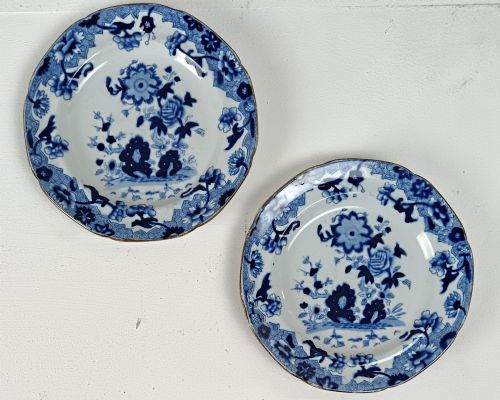
Makers applied blue and white transfer prints, such as the Bridge of Lucano landscape, alongside enamel colours and gold leaf or gilt detailing. Glaze finishes sealed the ceramic surfaces while specific bodies like New Stone added durability to functional tableware.
Vintage Spode Ceramics Retail Price Guide 2026
Typical asking prices for vintage spode ceramics among the pieces listed under this phrase on Sellingantiques today, from the lower quarter to the upper quarter. They describe what is for sale here now, not the wider market.
Listings feature earthenware, porcelain, stoneware, and felspar porcelain across Georgian, Regency, Victorian, and Edwardian periods.
What varies in quality
Quality differences emerge in the clarity of transfer-printed scenes and the precision of hand-painted enamel decoration. Pieces with crisp blue and white details and well-preserved gilt or gold leaf highlights represent the finer end of production.
The choice of body material also influences the character of each piece, distinguishing standard earthenware from refined felspar porcelain and New Stone. Scale and completeness, from individual tea plates to large graduated jugs and comprehensive dinner services, dictate the presence and visual impact of the ware.
Spode·Copeland Spode·Copeland·Ford Family
The Vintage Spode Ceramics Glossary
- Felspar porcelain
- A specific ceramic body formulation patented and utilised during the nineteenth century for its durability and bright white surface. It allowed for thinner vessel walls while retaining structural strength.
- Transfer print
- A method of applying intricate designs to ceramics by engraving a copper plate, pulling the image on tissue paper, and pressing it onto the biscuit ware before glazing. This technique enabled consistent mass production of complex landscapes like the Tower pattern.
- New Stone
- A dense, durable ceramic body introduced in the nineteenth century that bridged the gap between earthenware and porcelain. It suited robust tableware such as tea plates and heavy dinner services.
- Sucrier
- A small lidded vessel designed specifically for holding lump or loose sugar during tea service. These pieces frequently match larger tea and dinner sets.
- Enamel
- Opaque or translucent coloured glass decoration applied over the glaze and fired at a lower temperature. It brought vibrant hues to patterns alongside standard underglaze blue.
Vintage Spode Ceramics: Frequently Asked Questions
What periods do these pieces come from?
The inventory spans the Georgian, Regency, and Victorian eras, extending into Edwardian production around nineteen hundred. Pieces date from the early nineteenth century onwards.
Specific production years appear in individual listings, charting the evolution from early Georgian earthenware to later nineteenth century felspar porcelain.
How do I identify transfer printed patterns?
Transfer printed designs feature detailed monochrome scenes, most notably blue and white landscapes like the Tower pattern or the Bridge of Lucano. These images were transferred from engraved plates onto the ceramic surface.
Close inspection reveals the fine dot matrix or lines characteristic of nineteenth century copper plate printing beneath the transparent glaze.
What is the difference between earthenware and porcelain?
Earthenware provides a heavier, more porous ceramic body suited to everyday utilitarian vessels and traditional blue and white transfer ware. Porcelain and felspar porcelain offer a finer, whiter, and more translucent finish.
Porcelain pieces often accommodated delicate enamel painting and gold leaf highlights, whereas earthenware handled robust kitchen and dining tasks.
Can I use these antique services for dining?
Many dinner plates, tea plates, and platters remain physically sound for careful use during special occasions. Consideration must be given to the age of the glaze and any delicate gilt decoration.
Hand washing preserves the enamel colours and gold leaf on nineteenth century pieces far better than modern mechanical dishwashers.