


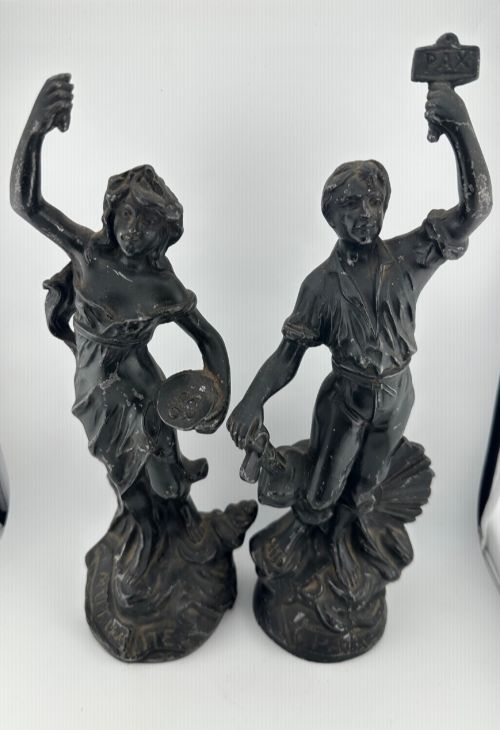

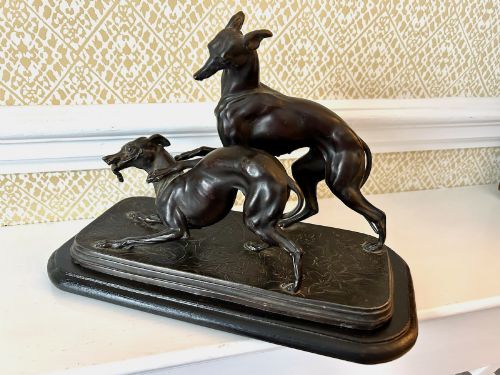


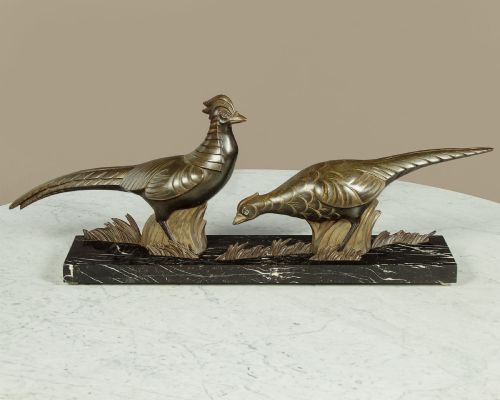
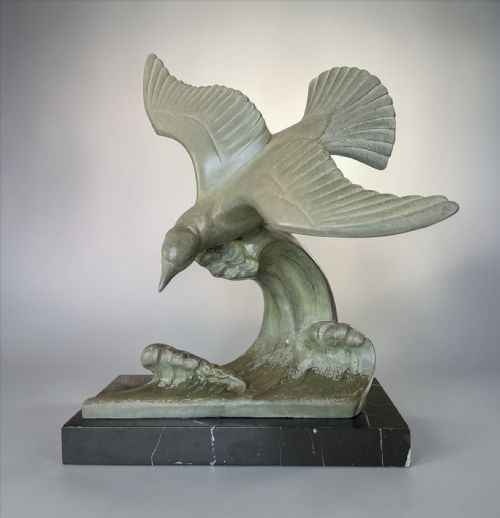


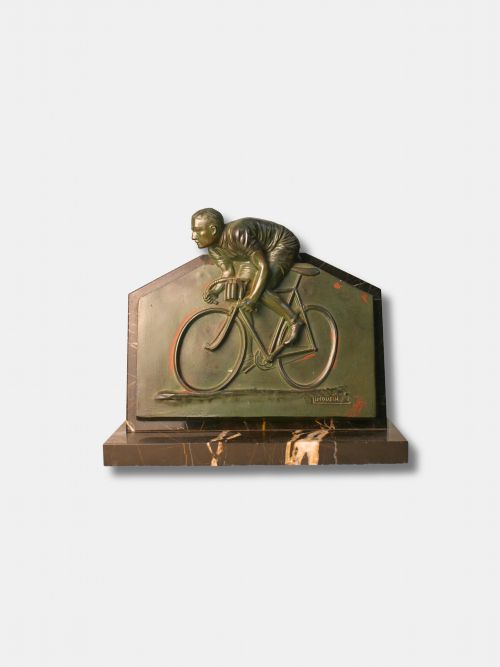


Vintage Spelter Statue
A vintage spelter statue delivers the decorative appeal of bronze at a lighter weight, bringing French flair and kinetic energy to a room.
Vintage Spelter Statue
When you search for a vintage spelter statue, you encounter cast metal figures that emulate bronze without the heavier metal's mass or cost. The selection on this page leans heavily into twentieth-century French production, particularly the dynamic geometries of the Art Deco period.
Beyond standalone figures of dancers, athletes, and animals, these pieces frequently double as functional objects. You will find them supporting lamp fittings, operating as table lighters, or mounted as bookends.
The subjects range from naturalistic depictions of stags, dogs, and pheasants to stylized human forms set upon contrasting plinths. Nineteenth-century examples also appear, often taking the form of soldiers, musketeers, or classical figures.
How they were made
Spelter, an alloy primarily composed of zinc, is cast into moulds to create the figures. Because zinc is softer and more brittle than bronze, makers frequently reinforced larger sculptures with internal armatures.
To disguise the grey, base metal beneath, makers applied surface finishes. Many pieces receive a patinated metal treatment to simulate aged bronze, whilst others are gilded or cold painted with pigments.
Vintage Spelter Statue Retail Price Guide 2026
Typical asking prices for vintage spelter statue among the pieces listed under this phrase on Sellingantiques today, from the lower quarter to the upper quarter. They describe what is for sale here now, not the wider market.
Some canine figures feature nodding heads, offering a charmingly interactive touch to your mantelpiece.
What varies in quality
The integration of the base plays a role in overall execution. Higher-grade works are mounted securely on heavy, polished slabs of marble, onyx, or alabaster that complement the metal figure above.
E Rousseau·Josef Lorenzl·P Sega·C Masson·Geo Maxim·Chiparus
The Vintage Spelter Statue Glossary
- Spelter
- A zinc-based alloy used as an economical alternative to bronze for decorative sculptures and lamps. It takes patination and paint well.
- Patinated metal
- A chemically or manually applied surface treatment that darkens or colours the metal to simulate age or bronze. This coating protects the underlying zinc alloy.
- Cold painted
- A decorative technique where paint is applied to metal at room temperature without subsequent firing. It is commonly found on detailed animal and human figurines.
- Garniture
- A set of ornamental objects designed to be displayed together, typically comprising a clock flanked by matching vases or figures. These sets often incorporate spelter elements.
- Plinth
- A heavy base block, frequently made of marble or onyx, that supports the metal sculpture. It adds physical stability and visual weight to the piece.
Vintage Spelter Statue: Frequently Asked Questions
How do I clean a spelter statue?
Dust the surface gently with a soft, dry cloth to remove loose particles.
Avoid using water, chemical solvents, or abrasive metal polishes, as these can strip away the original cold-painted finish or patination.
Are spelter statues heavy?
Spelter itself is lighter than bronze, but many figures are mounted on substantial bases of marble or onyx.
This combination gives the overall piece a reassuring weight whilst keeping the cast figure relatively light.
How can I tell spelter from bronze?
Spelter is softer and more brittle than bronze, and a discreet test beneath the base will reveal a silvery-grey metal rather than the reddish-brown of copper alloys.
Most spelter pieces also rely on surface patinas or paint to achieve their colour, whereas bronze develops its patina through oxidation.
Why are some figures attached to stone bases?
Stone bases made of marble, onyx, or alabaster provide necessary physical counterweights for the softer metal figures.
During the Art Deco period, contrasting coloured stones also enhanced the modern aesthetic of the sculpture.