











Vintage Spelter Sculpture
These vintage spelter sculpture pieces bring affordable metallic figures, lamps and clock sets from the nineteenth century through the Art Deco era into your interior.
Vintage Spelter Sculpture
When you search for vintage spelter sculpture, you encounter cast metal decorative objects ranging from nineteenth-century Victorian figures and French soldiers to Art Deco dancers, animals and table lamps. The versions you are most likely to meet on this page date from the nineteen-thirties and combine metal figures with marble or onyx plinths. These pieces often serve practical roles as mantel clocks, bookends, table lighters and lamps rather than standing purely as fine art.
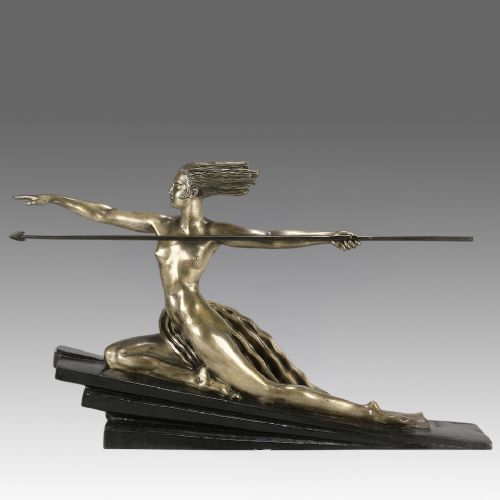
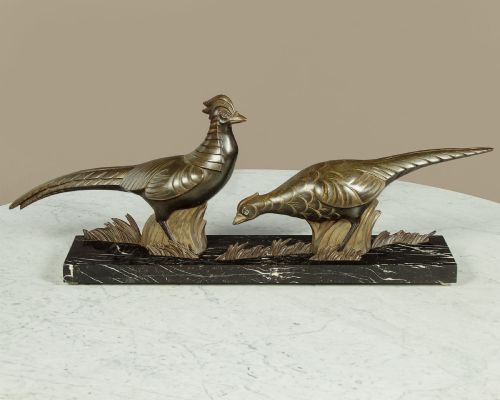
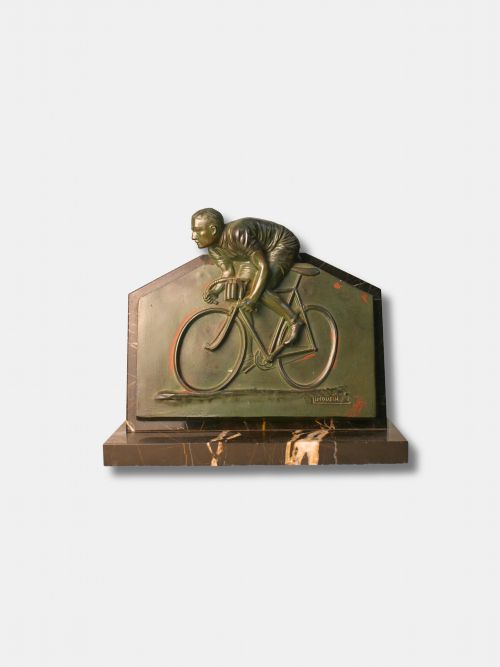
The selection draws heavily on French manufacturing traditions, spanning neoclassical revival subjects, Victorian orientalist pieces and dynamic sporting motifs like cyclists, tennis players and hunting dogs. Figures of women, panthers, stags and pheasants dominate the nineteen-twenties and thirties inventory. Many items pair the greyish metal directly with contrasting stone bases to anchor the composition.
How they were made
Manufacturers cast these objects primarily in spelter, a zinc-based alloy that flowed easily into moulds and took fine surface detail without the high cost of bronze. Because the base metal was softer and less resilient than bronze, workshops applied patinated metal finishes, cold painted pigments or metallic coatings to imitate more expensive materials. These surfaces were prone to wear over time, which explains why many surviving examples show touch-ups or altered patination.
Makers mounted the heavier figural groups onto substantial bases of black marble, onyx or alabaster to give stability to the softer metal sculptures. Glass components also appear integrated into lighting designs, particularly in Art Deco standing lady lamps where frosted shades complement the patinated metal figures. Wood occasionally supports smaller decorative elements or clock chassis.
Vintage Spelter Sculpture Retail Price Guide 2026
Typical asking prices for vintage spelter sculpture among the pieces listed under this phrase on Sellingantiques today, from the lower quarter to the upper quarter. They describe what is for sale here now, not the wider market.
Among the athletic human figures and fierce panthers, a nodding dog quietly bounces its head across the decades.
What varies in quality
The survival of original surface treatments marks another distinction between pieces. Original patinated metal finishes and intact cold painted details command greater appreciation than heavily stripped or repainted surfaces. The choice of base material likewise influences the tier of the piece, with dense multi-coloured marble and onyx plinths indicating higher production ambitions than plain wooden mounts.
Josef Lorenzl·P. Sega·Geo Maxim·Chiparus·C Masson
The Vintage Spelter Sculpture Glossary
- Spelter
- A zinc-based alloy commonly used in the nineteenth and twentieth centuries as an economical substitute for bronze. It accepts detailed casting moulds but requires careful handling due to its relative softness.
- Patinated metal
- A chemically or manually treated surface applied to the base alloy to simulate aged bronze or create specific dark and metallic tonal effects. It protects the underlying metal while defining the visual contours of the sculpture.
- Onyx
- A banded variety of chalcedony quartz frequently utilised for the heavy plinths and bases of Art Deco figural groups and table lamps. Its translucent layers provide a polished contrast to the matte metal above.
- Cold painted
- A decorative technique where oil paints are applied to the unheated metal surface after casting. This finish is delicate and tends to flake or wear if exposed to excessive handling or cleaning.
- Figural lamp
- A functional lighting object where the sculptural figure forms the primary stem or support for the bulb and shade. These pieces combine illumination with decorative statuary.
Vintage Spelter Sculpture: Frequently Asked Questions
What is spelter?
Spelter is a zinc-rich alloy that factories utilised as a cheaper alternative to bronze for decorative figures and clocks. It allowed makers to produce intricate casts at scale during the nineteenth and twentieth centuries.
The metal is softer than bronze and heavier than aluminium, which means pieces require stable bases and careful placement to avoid bending or surface damage.
How do I clean vintage spelter?
Cleaning requires only a dry microfibre cloth or a very soft brush to remove dust from crevices and patinated surfaces. Avoid all water, chemical solvents and abrasive polishes.
Moisture and harsh cleaners strip away original patination and cold painted details, leaving the soft grey zinc alloy exposed and vulnerable to oxidation.
Why are they mounted on marble?
Foundries mounted these softer metal figures onto dense black marble or onyx plinths to provide structural stability and weight. The stone base prevented the softer alloy sculptures from tipping over.
This combination became particularly popular during the Art Deco period, where contrasting geometric stone plinths enhanced the modern silhouette of the figures.
How do I spot Art Deco pieces?
Art Deco examples feature stylised streamlined forms, geometric clothing folds, and subjects such as running greyhounds, panthers, dancers and athletes. The fonts and proportions reflect industrial modernity from the nineteen-twenties and thirties.
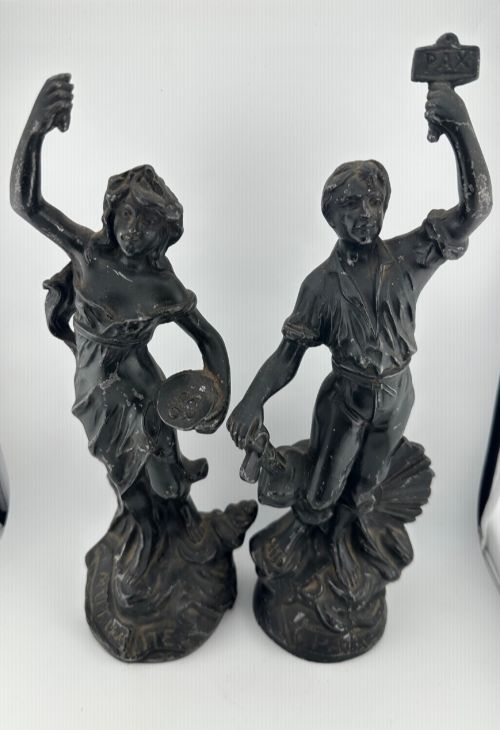
These designs contrast sharply with the earlier Victorian orientalist subjects, neoclassical revival figures and romantic military groupings found in nineteenth-century casting traditions.