
Vintage Specimen Cabinet
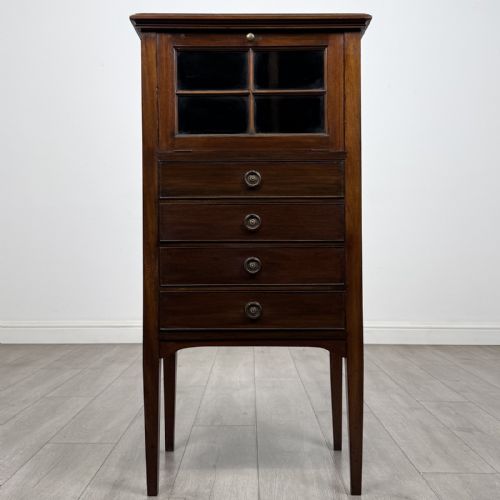
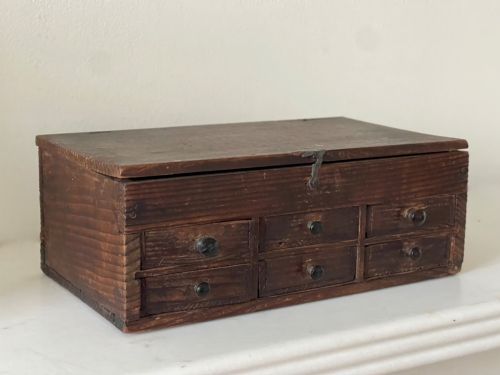
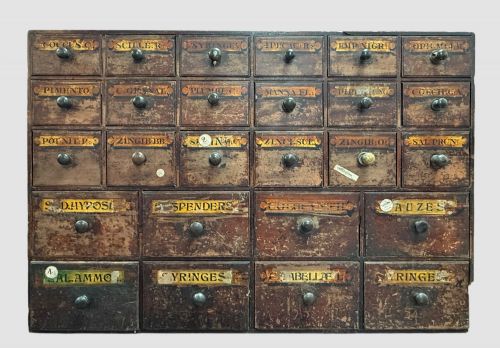
A vintage specimen cabinet holds natural history collections, medical instruments and small curiosities in orderly tiers of shallow drawers.
Vintage Specimen Cabinet
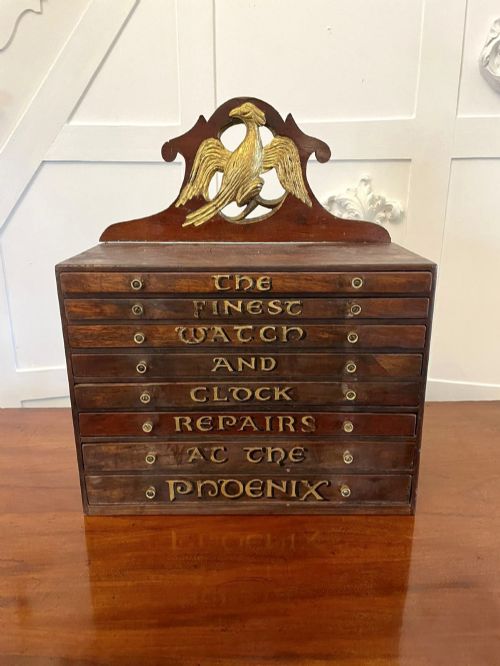
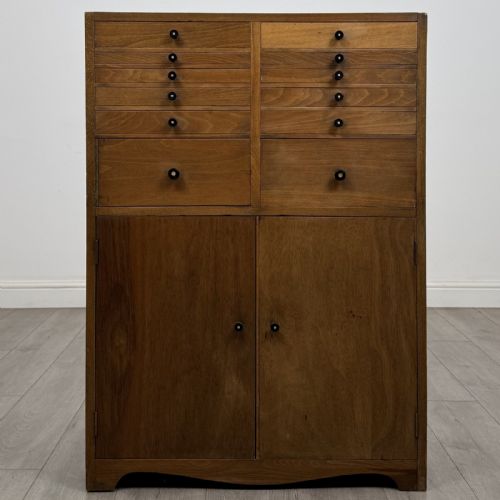
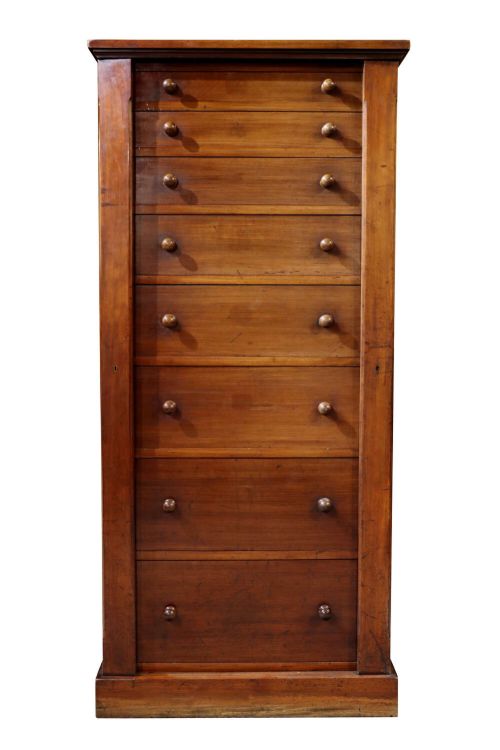
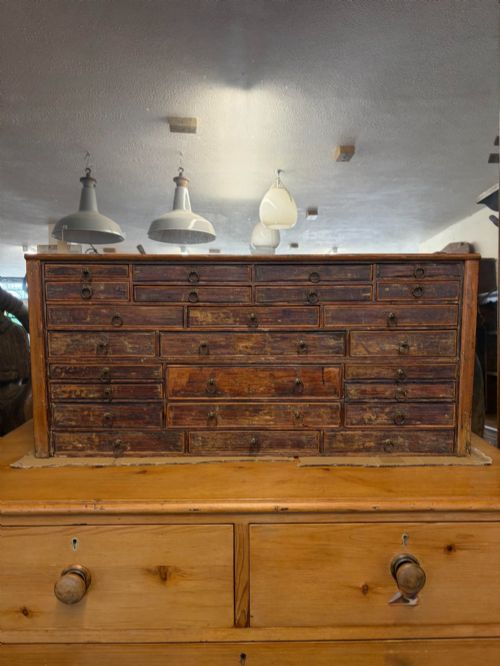
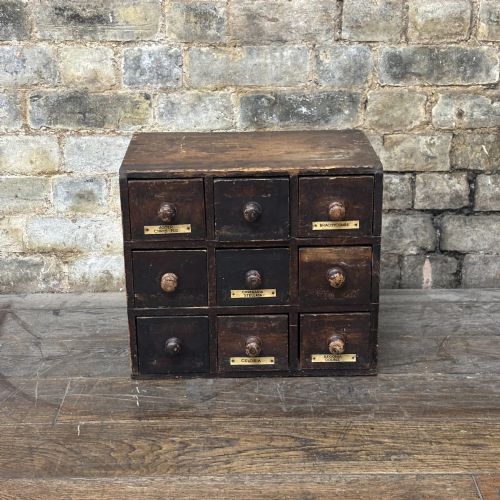
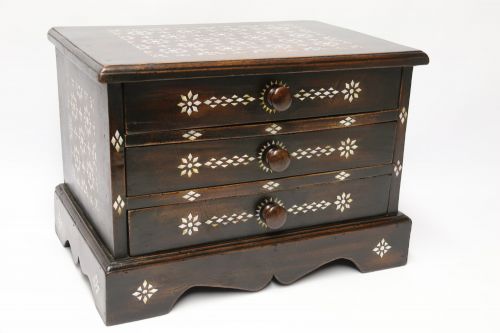
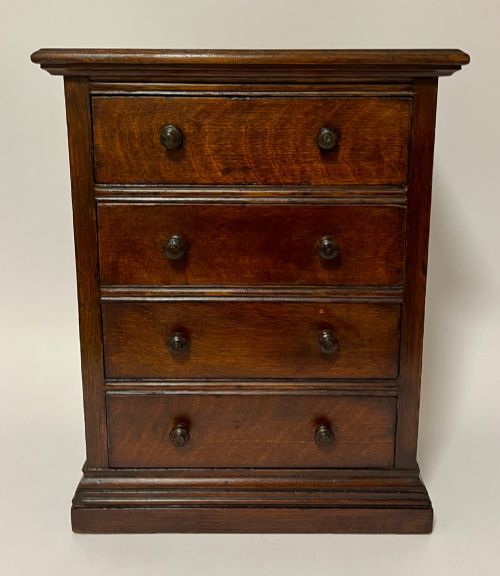
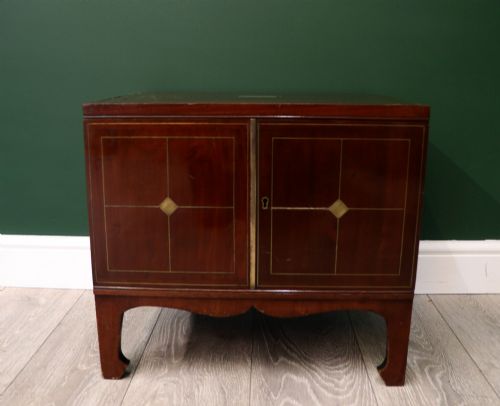
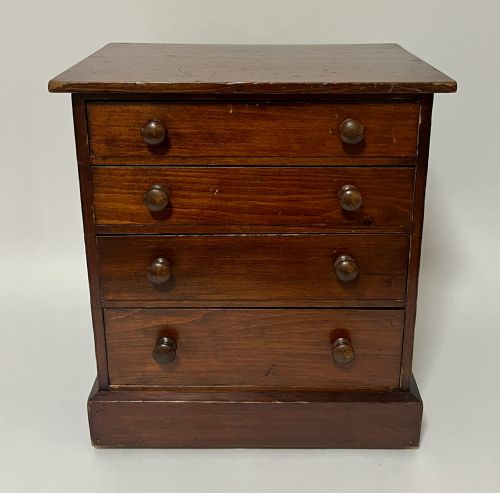
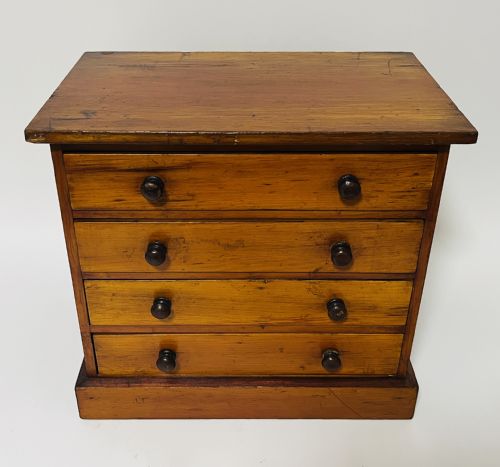
A vintage specimen cabinet is typically encountered as a multi-drawer chest or tabletop case designed for organising natural history collections or botanical samples. These pieces draw on Victorian and Edwardian utility, often taking the form of apothecary chests, banks of drawers, or tall collector cabinets with numerous glazed or panelled compartments.
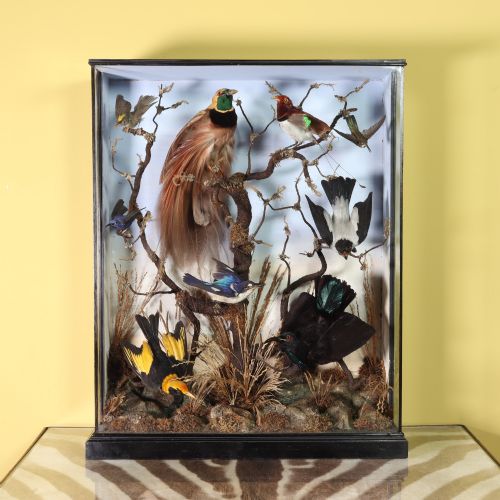
The selection ranges from compact oak and mahogany table cabinets to large banks with dozens of drawers, reflecting the domestic and professional pursuits of the nineteenth and early twentieth centuries. Alongside cabinetry, related natural history items such as taxidermy cases and coral collections appear within the same tradition of display.
Materials and Construction
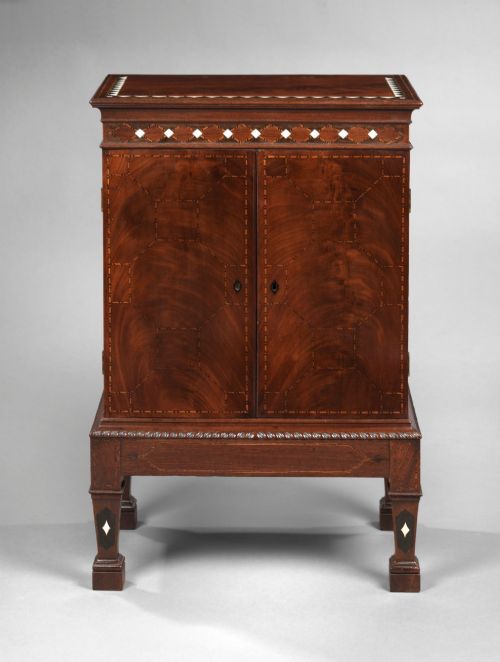
Cabinet makers utilised dense hardwoods such as mahogany, oak, and walnut, alongside more utilitarian softwoods like pine and deal. Brass handles, campaign mounts, and glass panels frequently complete the construction, securing small drawers designed to slide with precision.
Joinery techniques focus on housing numerous shallow drawers within a rigid frame, often incorporating internal dust lips and precise runners. Exterior finishes vary from polished mahogany and inlaid hardwood to stained deal and painted pine.
Among the scientific apparatus and taxidermy cases, occasional collections include preserved butterflies and anatomical wax heads.
Standards of Craftsmanship
The standard of a vintage specimen cabinet rests upon the density of its timber, the precision of drawer construction, and the integrity of any glass panels. Cabinets featuring solid mahogany or walnut with numerous smoothly running drawers represent higher tiers of production.
Scale and complexity also distinguish individual examples, as large banks with dozens of fitted drawers require greater joinery skill than smaller tabletop chests. The presence of original brass hardware and working locks contributes to the integrity of the piece.
Brady of Edmonton·Luxmore's of Ilfracombe·D Napier & Sons
The Vintage Specimen Cabinet Glossary
- Specimen cabinet
- A piece of furniture fitted with multiple shallow drawers designed to store natural history samples, fossils, or small artefacts. These cabinets often feature tight-fitting drawers to protect contents from dust and light.
- Bank of drawers
- A large cabinetry form comprising numerous small drawers arranged in a grid, historically used in pharmacies, workshops, and for botanical collections. They offer extensive compartmentalisation for systematic storage.
- Apothecary chest
- A set of small drawers utilised by chemists and doctors to hold medicinal ingredients, herbs, and preparations. They frequently appear in wood such as pine or mahogany with brass pulls.
- Taxidermy case
- A glass-fronted wooden enclosure built to protect and display preserved animals, birds, or fish in a naturalistic setting. These enclosures shield delicate specimens from humidity and handling.
Vintage Specimen Cabinet: Frequently Asked Questions
What were specimen cabinets used for?
These cabinets served naturalists, collectors, and scientists as secure storage for botanical specimens, insects, minerals, and shells. The shallow drawers kept delicate items flat and separated.
Over time, similar multi-drawer formats were adopted by apothecaries, botanists, and shops to organise small goods and medicinal ingredients systematically.
How do I style a cabinet at home?
Place a tabletop cabinet on a sideboard or desk where its drawers and glass panels can be viewed closely. The flat top surfaces also provide space for placing complementary ornaments or books.
Larger floor-standing banks of drawers function well as standalone statement pieces in living areas or studies, offering practical storage alongside historical character.
How do I date an antique cabinet?
Dating relies on timber choices, construction methods, and hardware styles associated with the Victorian, Edwardian, and Georgian periods. Mahogany and heavy brass work often indicate nineteenth-century production.
Labels, maker stamps on drawer linings, and specific joinery traits such as hand-cut dovetails help narrow down the decade of manufacture.