


Industrial Multi Drawer Unit
An industrial multi drawer unit brings heavy utility into domestic spaces, offering vast compartment storage shaped by trade and workshop use.
Industrial Multi Drawer Unit
When searching for an industrial multi drawer unit, collectors encounter heavy storage built for commercial, trade, and office tasks. These pieces range from extensive banks of drawers to specialised filing cabinets and locker units originating from the nineteenth and early twentieth centuries.
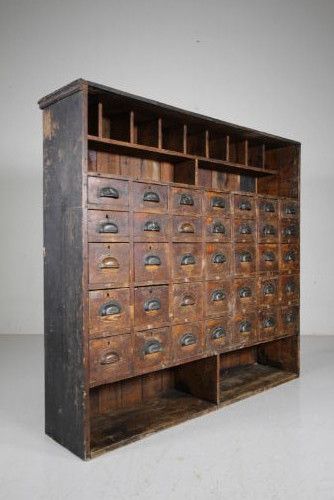
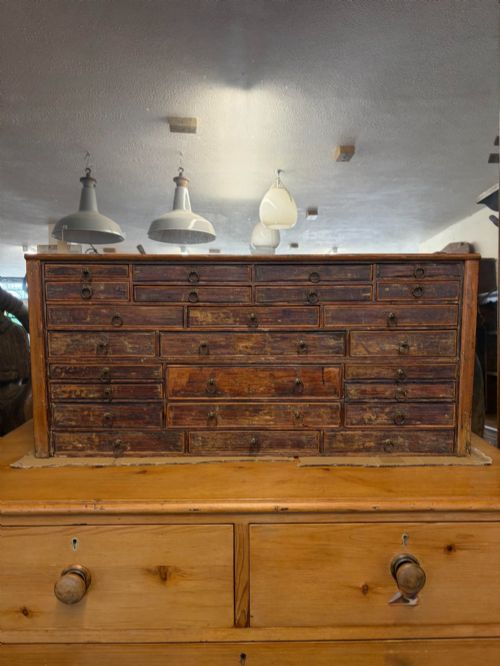
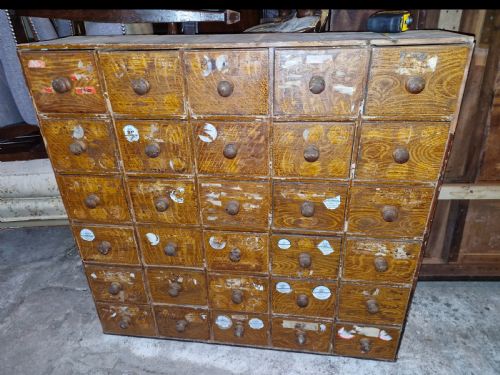
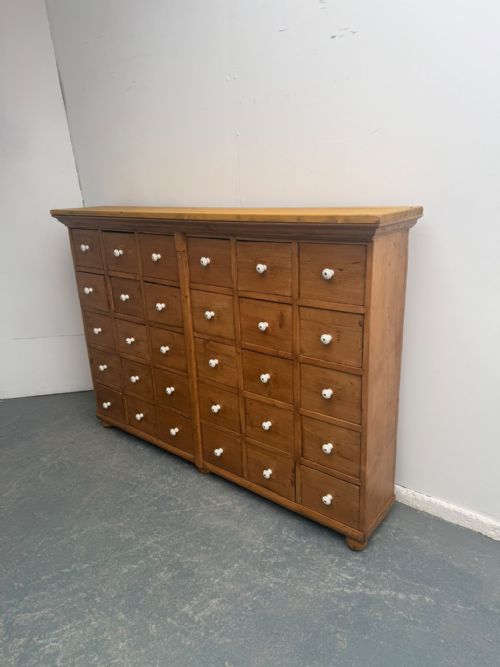
The most common examples on this page are large wooden banks of drawers and commercial storage pieces. Pieces span the Victorian, Edwardian, and nineteen-twenties periods, reflecting the robust demands of ironmongers, jewellers, and general merchants.
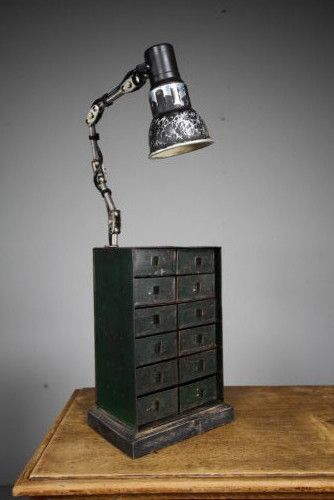
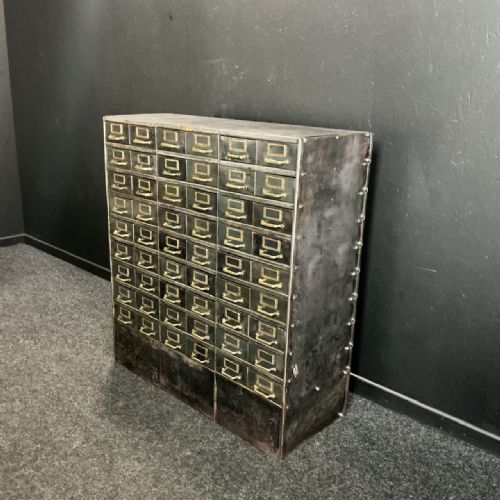
Forms vary from monumental thirty-drawer banks in pine to patent letter files and metal chests fitted with original light fittings. Each item demonstrates the practical necessity of sorting small components, correspondence, or retail stock before these items migrated into modern interiors.
How they were made
Construction relies heavily on sturdy timbers such as pine alongside durable metals including iron, steel, and brass. Joinery prioritises utilitarian strength over ornament, ensuring each bank of drawers could withstand the daily friction of a bustling workshop or commercial premises.
Hardware components like cast iron pulls, brass label holders, and structural iron braces are integral to the build. Materials are chosen for their resilience, combining solid timber carcases with robust metal mechanisms designed for heavy trade use.
Some industrial chests come with their own vintage lighting attached, proving that nineteenth-century jewellers appreciated good task illumination just as much as we do.
What varies in quality
Scale and compartment density dictate the character of each piece, ranging from modest filing setups to monumental banks holding twenty-five or thirty individual drawers. The presence of original manufacturer details, patent fittings, or associated trade provenance elevates the historical interest of a cabinet.
Integrity of the original materials, from uncompromised pine carcases to authentic ironmongery and brass pulls, determines the standard of preservation. Units retaining their untouched working patina show a truer reflection of their commercial origins than heavily restored examples.
The Industrial Multi Drawer Unit Glossary
- Bank of drawers
- A large piece of furniture comprising numerous small compartments stacked in tiers. These units were standard in trade and commercial settings for sorting hardware, documents, or small merchandise.
- Patent letter file
- A specialised storage cabinet engineered for efficient document organisation, often featuring mechanical mechanisms or indexed housing. Amberg's Patent Cabinet Letter File is a notable nineteenth-century example.
- Ironmongers drawers
- Multi-compartment storage furniture originating from hardware and general merchant shops. They are typically constructed to hold a multitude of small ironmongery items and fixings.
- Carcase
- The main structural body or frame of a cabinet or chest of drawers. In industrial pieces, the carcase is built from thick pine or heavy timber to support numerous loaded drawers.
Industrial Multi Drawer Unit: Frequently Asked Questions
What were industrial multi drawer units used for?
These units served as functional storage systems in commercial shops, offices, and workshops. Tradespeople utilised the numerous compartments to organise small hardware, documents, jewellery components, and merchant stock.
Over time, their robust capacity and compartmentalised design made them practical for organising collections and dry goods in industrial workplaces before transitioning into homes.
How do I date an antique drawer unit?
Dating relies on observing construction methods, timber choice, and associated hardware styles. Pieces from the nineteenth century often feature heavy pine carcases and hand-forged or cast iron handles.
Patent markings, maker stamps, and stylistic cues from the Edwardian era or the nineteen-twenties help narrow the manufacturing window of commercial storage furniture.
Are these units suitable for modern homes?
Their substantial storage capacity makes them practical for organising kitchen items, studio supplies, or hallway accessories. The strong aesthetic brings utilitarian character to contemporary living spaces.
Placement requires measuring floor space and ceiling clearance carefully, as many surviving commercial banks of drawers possess deep proportions and heavy timber frames.
What is a patent letter file?
A patent letter file is a specialised filing cabinet designed to keep business correspondence ordered and accessible. These units incorporate specific mechanical filing systems patented by inventors to improve office efficiency.
They represent a more specialised form of office storage compared to standard multi-drawer merchant chests, often featuring distinct interior mechanisms.