





Vintage Southeast Asian Sculpture
Vintage Southeast Asian sculpture brings regional form and religious iconography into interior spaces through bronze figures, carved wood and terracotta.
Vintage Southeast Asian Sculpture
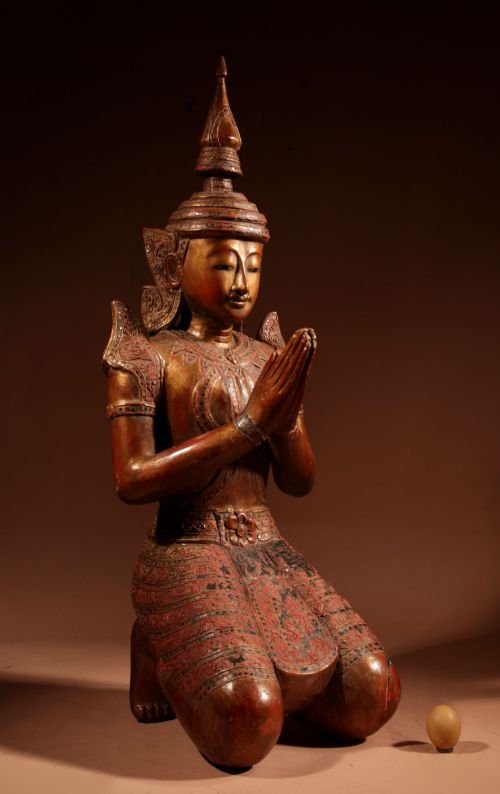
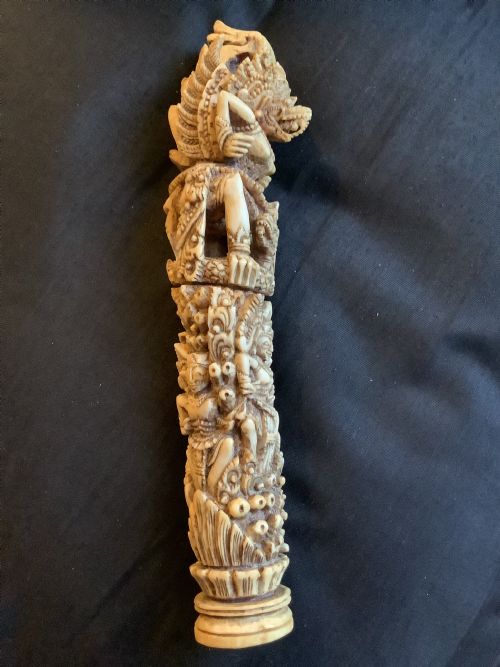
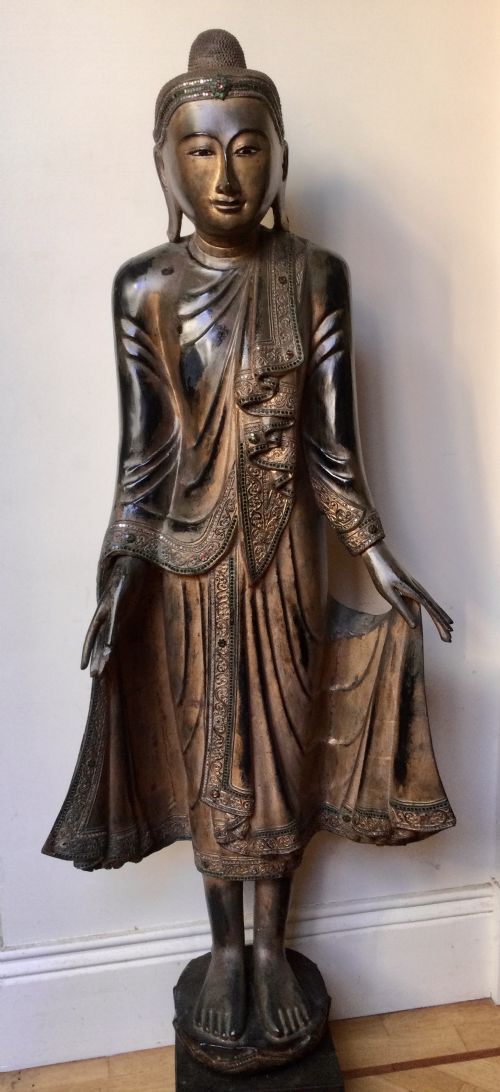
These vintage southeast asian sculpture works span periods from the eighteenth century to the early decades of the twentieth century, originating from regions including Thailand, Burma, Cambodia, and Indonesia. You find religious figures such as Buddha and Garuda alongside secular representations like the Indonesian Janger dancer and wall relief carvings.
The objects take diverse forms, ranging from solid bronze figures and terracotta statues to carved teak wall hangings and even antler sword hilts. Pieces connect directly to distinct regional traditions, including Khmer, Rattanakosin, and Balinese styles, shaped by local beliefs and craftsmanship.
How they were made
Metal sculptures utilise bronze cast with patinated brown surfaces, occasionally finished with gilding or polished solid metal. Wood pieces employ hardwood, teak, and gilt wood shaped by hand carving.
Terracotta and clay provide sculptural mediums for figures and wall relief carvings, while glass inlay adds decorative detail to specific surfaces.
Listings feature materials such as bronze, terracotta, teak, gilt wood, and glass inlay across pieces dating from the eighteenth to twentieth centuries.
What varies in quality
The refinement of the hand carving dictates distinction in wooden and terracotta works, separating fluid, detailed articulation from simpler execution. Detail in facial expressions, drapery folds, and surface ornamentation elevates individual statues.
Material treatment also defines standard, with patination, gilding preservation, and the integrity of cast bronze or polished teak displaying the maker's discipline.
The Vintage Southeast Asian Sculpture Glossary
- Bronze
- An alloy of copper and tin utilised across multiple centuries for casting figures and animals. It takes patination well.
- Garuda
- A mythical bird creature featured in regional iconography. Sculptures depict this figure in carved wood.
- Khmer
- A style and civilisation associated with stone and terracotta figures from Cambodia. Pieces reflect traditional religious subjects.
- Gilt wood
- Timber surfaces coated with a thin layer of gold leaf. This technique highlights carved details on Buddhist figures.
Vintage Southeast Asian Sculpture: Frequently Asked Questions
How do I identify a bronze Buddha?
Bronze Buddha figures appear in patinated brown or polished finishes, dating from the eighteenth century onward. They reflect traditional iconography specific to Thai, Burmese, and broader Southeast Asian origins.
Examine the casting quality and surface patination to understand the period. Figures often display distinct regional styling in the hair, robes, and posture.
Where were wooden sculptures made?
Wooden sculptures originate from workshops across Southeast Asia, including Bali and Thailand. Artisans utilised teak, hardwood, and gilt wood for these items.
Subjects range from mythological creatures like Garuda to dancers and religious figures. Hand carving remains the primary technique across these wooden objects.
What is terracotta used for?
Terracotta serves as a medium for sculptural statues and wall relief carvings. Pieces from the nineteenth century portray priests and human figures.
This fired clay material allows for three-dimensional modelling with detailed surface textures. It appears frequently in Khmer and Cambodian styled works.
How do I care for bronze figures?
Bronze figures require stable indoor environments away from excessive moisture to protect the metal and patination. Dusting with a dry, soft cloth maintains the surface.
Avoid chemical cleaners that strip the original patina or polish. Proper placement ensures the longevity of these cast metal objects.